In the current era of education culture wars — banning books, monitoring curriculum, adjusting school policies — supporting students in a culturally sensitive, relationship-focused way is sometimes presented as being in conflict with maintaining academic rigor.
But balancing these approaches is more important than ever as our schools continue to rebound from pandemic-related learning loss coupled with the ongoing social-emotional needs of students. We should not have to prioritize one approach over the other: academic rigor, or supporting students’ social-emotional needs through culturally relevant teaching and experiences. Individually, each approach falls short in providing all students with the support they require for a successful future. By reframing them as mutually reinforcing rather than mutually exclusive, we have the potential to significantly transform education for every child.
Culturally relevant teaching is the conduit to academic success, and rigorous instruction is effective when grounded in culturally relevant teaching. To support our students, we must equip them with the tools for empowerment while also working to create inclusive educational environments that foster support.
In practice, this means everything from ensuring our teachers and staff reflect the demographic makeup of our students, to examining the resources and professional development we bring into our schools to make sure all our students’ needs are met. It means having data-driven conversations, grounded in equity, about how we are serving our most marginalized students.
As a school leader at Aspire Public Schools in Los Angeles, we knew some of our most vulnerable students were those who were chronically absent. Diving into the data, we discovered that many of our students missed school around three-day weekends and holidays. As a part of the implementation of our positive behavioral and intervention support framework, we focused on timing school celebrations and family engagement activities before and after three-day weekends and holidays so that students wouldn’t want to miss out on the fun. Additionally, teachers reach out to families of absent students to provide a more personal touch and communicate the positive impact their child has in their classroom community when they are at school. The early results of implementing this PBIS approach are showing promise in reducing absenteeism, with a year-over-year decrease in chronic absenteeism rates across our 11 Los Angeles schools.
Recommended for you
A data-driven approach grounded in equity can also help serve special education students. For example, at one of our schools, students in special education demonstrated notable progress in math, surpassing the growth rates in math seen among their peers in general education, both in LAUSD and statewide. The schools took a different approach to intervention than they had in the past. Previously, students with individual education plans, which are required for all students in special education, were not included in math interventions — an additional 20-minute small-group math instruction during the school day. Last year, students with IEPs participated in these math interventions along with general education students. This additional intervention, combined with regular “teach back” sessions during which teachers practice delivering content to their peers, gathering feedback and strengthening their practice, yielded positive results among our special education learners.
Developing partnerships to incorporate Afrocentric and LGBTQ+ curriculum and resources can also make an impact. This has included everything from the establishment of several Black student union chapters to a Black families advisory council, where families meet quarterly to discuss Black educational content and curricula. I can say firsthand that we’re seeing these partnerships show promising results. Participants in Black student union programs experienced an average reduction of eight days in absenteeism compared to the previous year. Plans are also underway to pilot an LGBTQ+ course that aligns with state A-G standards (courses required for admission in California public universities). Lastly, dedicating resources to cultivate a pipeline of Black educators is critical to establishing a more diverse teaching staff.
To deliver on the promise of excellent education for every child, it is time to chart a path that is both rigorous and culturally relevant. This is how we deliver on the promise of an education model that serves all students.
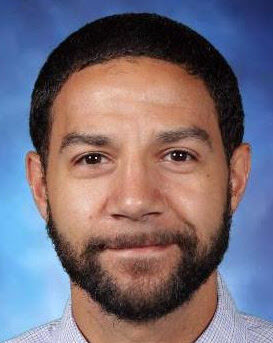
Chris Carr is the executive director for the Los Angeles region of Aspire Public Schools, a nonprofit charter management organization. He wrote this for EdSource.org. Views his own.
Thanks for your letter, Mr. Carr, but it seems to me that before all these new-fangled attempts to change the education system and the curricula, students had no problems attaining higher academic scores than now. I don’t believe using racism, or discrimination, or laying guilt trips on kids will increase test scores. I’d say we return to stressing the basics and finding ways to get parents involved in teaching their kids. For those kids needing extra help, let’s provide help, but not at the expense of lowering academic standards for everyone else.
Lots of fancy verbiage that alleges to justify his employment. His approach reminds me of a fancy BMW car that I had once. Totally overengineered, a delight to drive, but because of frequent malfunctions, it did not serve my purpose of having a reliable car. Using his own data, absenteeism was reduced by a mere 5%, not something to write home about. He should step out of the way, and yes, get parents to take responsibility for their kids' education instead of pointing fingers.
Totally agree that teaching in a diversely aware manner does not have to be a choice between rigorous academics and "cumbaya". In high school I had a semester of Asian History to fulfill history electives, and one in World Religions to fulfill literature. I learned to think critically and avoid overlying my own cultural bias. It prepared me to understand current world events and the ramifications of US foreign policy. I wish all Americans had the benefit of this perspective.
We can have the best education programs but it won't make any difference if kids don't do their home work at night. There's no substitute for parents in this regard.
Keep the discussion civilized. Absolutely NO
personal attacks or insults directed toward writers, nor others who
make comments. Keep it clean. Please avoid obscene, vulgar, lewd,
racist or sexually-oriented language. Don't threaten. Threats of harming another
person will not be tolerated. Be truthful. Don't knowingly lie about anyone
or anything. Be proactive. Use the 'Report' link on
each comment to let us know of abusive posts. PLEASE TURN OFF YOUR CAPS LOCK. Anyone violating these rules will be issued a
warning. After the warning, comment privileges can be
revoked.
Please purchase a Premium Subscription to continue reading.
To continue, please log in, or sign up for a new account.
We offer one free story view per month. If you register for an account, you will get two additional story views. After those three total views, we ask that you support us with a subscription.
A subscription to our digital content is so much more than just access to our valuable content. It means you’re helping to support a local community institution that has, from its very start, supported the betterment of our society. Thank you very much!



(6) comments
Thanks for your letter, Mr. Carr, but it seems to me that before all these new-fangled attempts to change the education system and the curricula, students had no problems attaining higher academic scores than now. I don’t believe using racism, or discrimination, or laying guilt trips on kids will increase test scores. I’d say we return to stressing the basics and finding ways to get parents involved in teaching their kids. For those kids needing extra help, let’s provide help, but not at the expense of lowering academic standards for everyone else.
Lots of fancy verbiage that alleges to justify his employment. His approach reminds me of a fancy BMW car that I had once. Totally overengineered, a delight to drive, but because of frequent malfunctions, it did not serve my purpose of having a reliable car. Using his own data, absenteeism was reduced by a mere 5%, not something to write home about. He should step out of the way, and yes, get parents to take responsibility for their kids' education instead of pointing fingers.
End the public school monopoly. Be pro-choice on where you spend your education dollar - which would be real diversity.
Totally agree that teaching in a diversely aware manner does not have to be a choice between rigorous academics and "cumbaya". In high school I had a semester of Asian History to fulfill history electives, and one in World Religions to fulfill literature. I learned to think critically and avoid overlying my own cultural bias. It prepared me to understand current world events and the ramifications of US foreign policy. I wish all Americans had the benefit of this perspective.
Best (and really important) approaches are stated by Terence and Dirk. Thanks!
We can have the best education programs but it won't make any difference if kids don't do their home work at night. There's no substitute for parents in this regard.
Welcome to the discussion.
Log In
Keep the discussion civilized. Absolutely NO personal attacks or insults directed toward writers, nor others who make comments.
Keep it clean. Please avoid obscene, vulgar, lewd, racist or sexually-oriented language.
Don't threaten. Threats of harming another person will not be tolerated.
Be truthful. Don't knowingly lie about anyone or anything.
Be proactive. Use the 'Report' link on each comment to let us know of abusive posts.
PLEASE TURN OFF YOUR CAPS LOCK.
Anyone violating these rules will be issued a warning. After the warning, comment privileges can be revoked.