To be proactive and train deputies on better responses to specific mental health crisis situations, the San Mateo County Sheriff’s Office is launching a new Enhanced Crisis Intervention Team program, the first of its kind in the state.
The Sheriff’s Office hopes the team, or ECIT, will help it improve crisis response and communication in stressful mental health situations and to de-escalate. It also hopes to reduce violent outcomes between law enforcement and people who experience mental illness by training deputies and providing community resources. Once deputies complete the ECIT training, they will be part of the ECIT team. The Sheriff’s Office hopes to have all deputies complete the ECIT training in the future and be part of the team.
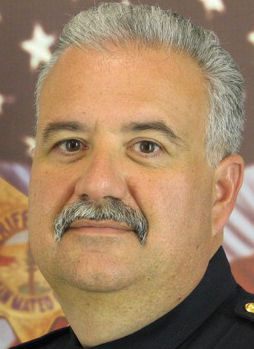
Mark Duri, the assistant sheriff for San Mateo County, said its new ECIT program is the first in the state, and the Sheriff’s Office hopes it will be a trailblazing program for others in the area. The Sheriff’s Office said it wanted to be proactive in mental health training programs to ensure its deputies have the best preparation and training needed to prepare and respond to mental health situations.
“These responses have to be consistent, and everyone has to have the same training. Everyone has to have the same response capabilities. We all have to be on the same page. That’s why we developed this program,” Duri said.
The ECIT program trains officers on dealing with specific mental health crises, focusing on critical and potentially dangerous situations, like a barricaded person in their home. The ECIT program was launched in 2019 and will become active starting in 2021 after the January training. ECIT was originally scheduled to start earlier, but COVID-19 has delayed the program and training.
ECIT is different from the Crisis Intervention Training, or the CIT program. CIT focuses on foundational training for mental health whereas ECIT deals with the operational aspect of situations and specific crisis scenarios.
Erik Rueppel is a sheriff’s detective with the Psychiatric Emergency Response Team, or PERT, a partnership between the Sheriff’s Office and San Mateo County Behavioral Health and Recovery Services to respond to mental health crises. PERT pairs sheriff’s detectives and mental health clinicians to respond to situations that call for it. PERT will help lead some of the training with the Sheriff’s Office in January. Rueppel said the Sheriff’s Office realized it needed to be more proactive in training deputies in dealing with different types of mental health situations. Rueppel said deputies want to have a plan in place when responding to a potentially dangerous situation. He hopes the program and training will help deputies prepare for a mental health crisis.
“We needed to have tactics, communication and appropriate response, which is where the development of the ECIT program came from. Focus on high-risk mental health calls,” Rueppel said.
Recommended for you
Rueppel said its program is based on the ECIT model from the Portland Police Department. Officers with the San Mateo County Sheriff’s Office traveled to Portland to observe and go on patrol with people trained with Portland’s ECIT program. The PERT team will initially have 14 deputies and four sergeants, Rueppel said in an email.
The ECIT program will have its first training in the third week of January, the Sheriff’s Office said. The Sheriff’s Office will monitor the team and see how it’s achieving its goals. The goal would then be to roll out the training for all deputies in the Sheriff’s Office. Training will focus on figuring out ways to help deputies gather as much information beforehand to decide how to best place themselves and help a mental health crisis situation. The class will also focus on the idea of disengagement during a mental health situation. While not a new idea, the Sheriff’s Office is trying to incorporate disengagement in its thought process and decision-making for mental health crisis calls. Deputies know their presence can escalate situations, and they want to help the situation as best they can, Rueppel said.
An example scenario to be discussed at a training situation in January would be the Sheriff’s Office responding to the home of someone who is suicidal, and authorities are unable to get them to come out, according to Cole Armando, a detective with the PERT team. The best option might be for deputies to stand back and not force entry into the home to get help because that could escalate a situation. Deputies would instead let PERT take the lead. PERT would take over and receive advice and help from family members and mental health professionals, Armando said. Learning to plan and recognize what to do in specific situations is important for deputies and the public to ensure the best possible outcome for everyone involved, Armando said. Jessica Zamora, a clinical and program specialist on PERT, will also be part of the training.
Once the Sheriff’s Office holds the January class, PERT will receive feedback and make modifications based on what deputies say, Armando said.
“We always have to try and get better. We always have to try and improve because mental illness is not going to go away. We just have to get better at it,” Duri said.
Keep the discussion civilized. Absolutely NO
personal attacks or insults directed toward writers, nor others who
make comments. Keep it clean. Please avoid obscene, vulgar, lewd,
racist or sexually-oriented language. Don't threaten. Threats of harming another
person will not be tolerated. Be truthful. Don't knowingly lie about anyone
or anything. Be proactive. Use the 'Report' link on
each comment to let us know of abusive posts. PLEASE TURN OFF YOUR CAPS LOCK. Anyone violating these rules will be issued a
warning. After the warning, comment privileges can be
revoked.
Please purchase a Premium Subscription to continue reading.
To continue, please log in, or sign up for a new account.
We offer one free story view per month. If you register for an account, you will get two additional story views. After those three total views, we ask that you support us with a subscription.
A subscription to our digital content is so much more than just access to our valuable content. It means you’re helping to support a local community institution that has, from its very start, supported the betterment of our society. Thank you very much!








(0) comments
Welcome to the discussion.
Log In
Keep the discussion civilized. Absolutely NO personal attacks or insults directed toward writers, nor others who make comments.
Keep it clean. Please avoid obscene, vulgar, lewd, racist or sexually-oriented language.
Don't threaten. Threats of harming another person will not be tolerated.
Be truthful. Don't knowingly lie about anyone or anything.
Be proactive. Use the 'Report' link on each comment to let us know of abusive posts.
PLEASE TURN OFF YOUR CAPS LOCK.
Anyone violating these rules will be issued a warning. After the warning, comment privileges can be revoked.