

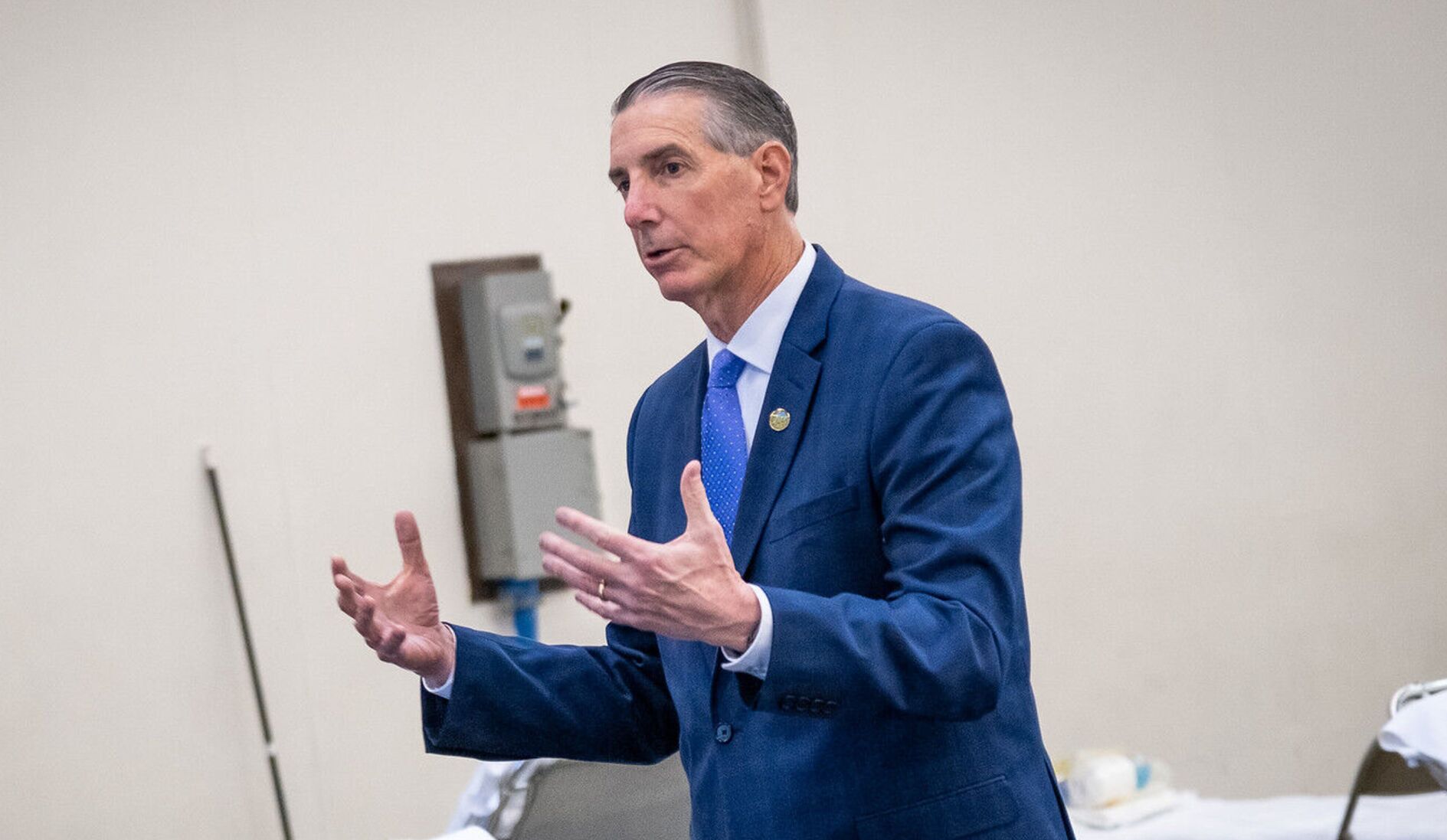
Half Moon Bay farmworkers displaced after a mass shooting in January will continue to receive housing support from San Mateo County after supervisors unanimously approved a $750,000 contribution to the 18 families Tuesday morning.
Since a mass shooter claimed the lives of seven co-workers on two farms in Half Moon Bay in late January, the county, with support from local nonprofits, has been providing wraparound services to 38 people making up 18 families.
Immediately after the incident, families were housed in hotel rooms in Half Moon Bay. Most recently, Airbnb, the Bay Area vacation rental company, has been housing individuals in properties in the area.
County Executive Officer Mike Callagy thanked the company for its support, which he said has enabled the families to return to a level of independence they missed, including cooking their own meals.
But the current arrangement was only meant to be temporary as well, Callagy noted. The families will have 30 days in the units before being relocated. The county has identified places in the area where the families can stay over the next year but that arrangement will likely cost about $1.5 million, Callagy said.
The board’s $750,000 contribution will come from its federal American Rescue Plan Act allocation. Meanwhile, Callagy said the county will be looking to philanthropic support, nonprofits and the owners of the properties where the families once resided to help cover the rest.
County ordinance requires that the farm owners provide relocation assistance to its residents for up to three months given that the property has been red-tagged while California law requires assistance to be given to those displaced from substandard living for up to two months, Callagy and County Attorney John Nibbelin said.
Callagy said owners of both farms, California Terra Garden and Concord Farms, have expressed an interest in collaborating with the county on solutions. In January, Terra Garden announced it plans to construct new permanent homes on a separate portion of the property for employees and their families.
Eventually, Callagy said he and county staff will return with additional information on more medium- and long-term planning for where the families will be placed once the year expires.
“We need longer term housing for them,” Callagy said. “We want to try to get these people settled into housing for a longer period of time.”
Recommended for you
Given the region’s ongoing housing crisis, finding permanent places for the 18 families to call home has been a challenge, the officials acknowledged. Early on, the county put a call out to those living in or around Half Moon Bay to open their doors to the families.
The county still faced some resistance, Supervisor Noelia Corzo said. While grateful the county was able to identify places where the families can relocate temporarily, Corzo said she’d like to see more conversations about the conditions that led the families to be displaced.
Following the shooting, officials described the substandard conditions in which people were living at the two farms. Other unpermitted, or “shadow housing” sites likely exist in the county, officials said. In hopes of cracking down on such sites, the county on Monday announced its plans to launch a task force that will be charged with ensuring property owners are following local and state regulations.
While supportive of the measures being taken, Corzo also acknowledged the challenges that come with addressing the issue, underscoring the importance of working with local organizations familiar with the community.
“It’s a Catch-22,” Corzo said. “I recognize that we’re calling for action and it’s a necessary action but maybe there could be conversations with community organizations so we have the right approach and we’re not forcing people to then become unhoused.”
Callagy noted the county’s efforts will largely be focused on seeking out “bad actors” and will loop in staff from a variety of county departments and agencies.
Some called on the board to continue tapping into what remains of its ARPA funds to address the lack of housing stock and poor conditions, including Victoria Sanchez De Alba, a community leader and former farmworker. Sanchez De Alba said she previously asked the board to take action in 2021 and succeeded in convincing former District 3 Supervisor Don Horsley to contribute $500,000 to coastside farmworkers.
Belinda Hernandez-Arriaga, founder and director of the Half Moon Bay nonprofit Ayudando Latinos A Soñar, also pushed for more ARPA funds to be spent on coastside farmworkers, arguing the community has gone ignored for far too long.
Officials did not respond to the suggestion but District 3 Supervisor Ray Mueller did note that the county has received overwhelming support from local, state and federal representatives and agencies. In addition to seeking out grant support for more permeant housing solutions, community stakeholders have also come forward offering land at cost and other support, he said.
“We have a moment here in San Mateo County to really do something that will strengthen our agricultural economy here in this county, that will treat farmworkers with respect and dignity that they deserve and hopefully be a beacon to the rest of the state of what can be accomplished coming out of a crisis like this, a tragedy like this,” Mueller said.





(0) comments
Welcome to the discussion.
Log In
Keep the discussion civilized. Absolutely NO personal attacks or insults directed toward writers, nor others who make comments.
Keep it clean. Please avoid obscene, vulgar, lewd, racist or sexually-oriented language.
Don't threaten. Threats of harming another person will not be tolerated.
Be truthful. Don't knowingly lie about anyone or anything.
Be proactive. Use the 'Report' link on each comment to let us know of abusive posts.
PLEASE TURN OFF YOUR CAPS LOCK.
Anyone violating these rules will be issued a warning. After the warning, comment privileges can be revoked.