Aiming to bridge the gap between safety and social services for people with disabilities, a multi-agency task force has developed within San Mateo County to ultimately bring an end to abuse against one of the most vulnerable populations.
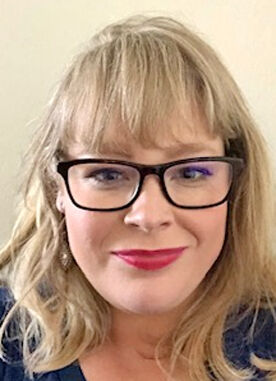
Elisa Kuhl
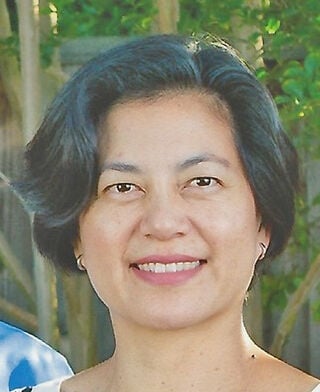
Florence Wong
“This issue exists. This is a population that is historically underserved across all boards and when community members are caring for their loved ones or their neighbor they can look for the signs. They can be aware there are services available, our law enforcement take this very seriously,” said Elisa Kuhl, the victims services manager with the county District Attorney’s Office.
Organization of the multi-agency group was spearheaded in partnership between Kuhl and Florence Wong, a member of the San Mateo County Commission on Disabilities. Wong is also a member of the Burlingame Elementary School District Board of Trustees. Through collaboration, both were able to bring nonprofit and public agencies to the table including Adult Protective Services, Community Overcoming Relationship Abuse and Legal Aid Society of San Mateo County. Representatives from the San Mateo, Belmont and East Palo Alto police departments have also participated.
“They’re all kind of separate from each other and no cross communication for no better reason than they don’t think of doing that. So this was a way to get everybody to work together because it’s just not going to work if everybody is separate like that,” said Wong, compelled toward disability rights advocacy as the mother of a 17-year-old daughter with developmental disabilities.
Through fostering dialogue between agencies, Wong and Kuhl hope to find short- and long-term solutions for ending violence and abuse toward people with disabilities. Their primary goal was to develop first responder training material to help educate members of law enforcement and dispatch on how to interact with people with disabilities.
“The disability community, I would say, is objectively vulnerable. This is not a social construct that’s been created to make things difficult for this group. It is truly just difficult to be a person with disabilities,” said Wong. “Depending on what your disability is, you can’t run away from danger, maybe you don’t even describe your danger because you can’t speak. There’s just so many ways a person can be vulnerable to abuse.”
Training development
Ideally, the material would be administered regularly during police department briefings in 15- to 20-minute durations rather than sending officers on expensive full-day workshops, said Wong. Linda Siino, the director of client advocacy and community resources at the nonprofit Hope Services, said the training model was a good idea following her experience providing similar training to police departments in Santa Clara County.
“From my personal experience doing training for five days, I don’t know if they have a way of using all the information,” said Siino. “I think [short training] makes sense. Sometimes those workshops started at 6 or 7 in the morning and I understand how stressful they can be. It’s a real challenge.”
Though longer workshops came with challenges, Siino noted officers showed a great interest in the material which focused on how to identify various physical and intellectual disabilities as well as how to communicate once a disability is identified. She also noted that shorter training periods come with challenges of their own.
“Obviously it will be a challenge for the person providing training to extrapolate the important information and boom hit them with it,” said Siino.
Throughout her time working as a clients advocate, Siino said she’s familiar with social service agencies and community groups collaborating on solutions for issues faced by people with disabilities but not in the way being done in San Mateo County.
“It was pretty impressive. That doesn’t mean that it doesn’t happen but I’ve never had that experience, yes with social services but not with people that represent the criminal justice system,” she said. “I left feeling like I wanted to be more involved … it just left me feeling really excited.”
Consumer and advocate
Recommended for you
Sharing feelings of hope was Ligia Andrade Zuniga, fellow roundtable participant and member of the Commission on Disabilities. As a longtime disability rights advocate and a quadriplegic herself, Zuniga said the work to advance causes for people with disabilities has left her cautiously optimistic.
“Unfortunately, I’m a little jaded. I’ve been in this type of work for a long time and when we see momentum something happens and we see no follow through. It’s something as we move forward we’ll have to wait and see. I want to stay hopeful,” she said.
Much of Zuniga’s work has centered on sexual education for people with disabilities, an area Kuhl said many educators and agencies overlook. Zuniga said providing sex positive education to people with disabilities can make people better equipped to identify and work through cases of abuse such as sexual harassment or rape.
“Sex and disability is about self-worth and self-esteem. It can have a huge impact on how they see abusers and how people address their own abuse,” said Zuniga. “If I’m abused in a chair because I have a disability I might feel like I’m worthless. It’s about changing the conversations in your head and changing what society perceives as valuable.”
People with disabilities are also disproportionately vulnerable to other forms of abuse as well, said Zuniga, including emotional, physical, financial and negligent abuse. Deepening first responder’s understanding of how to engage people with disabilities, such as language barriers and forethought on access to necessary mobility equipment is vital, she said.
‘It’s long overdue’
The fight to end abuse toward people with disabilities is also personal for Zuniga, who has herself been victimized by a former caretaker after falling asleep. She never spoke out about the abuse she experienced, blaming herself for not being more aware but said over time she developed power over the memories.
“We should be able to fall asleep if we want to and know people will be respectful of us but that’s not reality. We have to stay awake and when we are awake, we have to pay attention,” said Zuniga who added that those entering care-giving should be respectful. “Don’t get into this job if you don’t have the heart for it. We’re human beings and if you feel the desire to do something like that to someone or rape them get some help.”
Zuniga also said she’s grateful agencies have shown an openness to listening to the concerns of people with disabilities but noted they should have always had a seat at the table.
“Recognize we have value in the conversation. … To me it’s long overdue,” she said. “Sometimes people look at us like we’re stupid. Being there is empowering. … It feels good to advocate for a community that is totally invisible.”
Long term, roundtable participants hope to develop a public registry of individuals performing caregiver work, develop a multi-agency crime database and to lobby state legislatures on making undue influence or manipulation of a person with disabilities by an able-bodied person grounds for a police report. At the very least, roundtable participants want perpetrators to know they’re being watched.
“Multiple people and agencies are looking at this problem and they’re taking it seriously. And we want people to know that so that if it prevents even one person from thinking they can get away with this then we would have been successful,” said Wong.
Note to readers: An article in the Monday, Sept. 28 edition included an inaccuracy. Disability rights activist Ligia Andrade Zuniga is a quadriplegic.
Keep the discussion civilized. Absolutely NO
personal attacks or insults directed toward writers, nor others who
make comments. Keep it clean. Please avoid obscene, vulgar, lewd,
racist or sexually-oriented language. Don't threaten. Threats of harming another
person will not be tolerated. Be truthful. Don't knowingly lie about anyone
or anything. Be proactive. Use the 'Report' link on
each comment to let us know of abusive posts. PLEASE TURN OFF YOUR CAPS LOCK. Anyone violating these rules will be issued a
warning. After the warning, comment privileges can be
revoked.
Please purchase a Premium Subscription to continue reading.
To continue, please log in, or sign up for a new account.
We offer one free story view per month. If you register for an account, you will get two additional story views. After those three total views, we ask that you support us with a subscription.
A subscription to our digital content is so much more than just access to our valuable content. It means you’re helping to support a local community institution that has, from its very start, supported the betterment of our society. Thank you very much!














(0) comments
Welcome to the discussion.
Log In
Keep the discussion civilized. Absolutely NO personal attacks or insults directed toward writers, nor others who make comments.
Keep it clean. Please avoid obscene, vulgar, lewd, racist or sexually-oriented language.
Don't threaten. Threats of harming another person will not be tolerated.
Be truthful. Don't knowingly lie about anyone or anything.
Be proactive. Use the 'Report' link on each comment to let us know of abusive posts.
PLEASE TURN OFF YOUR CAPS LOCK.
Anyone violating these rules will be issued a warning. After the warning, comment privileges can be revoked.