
Ivette White to represent USA on world championship team in the Netherlands
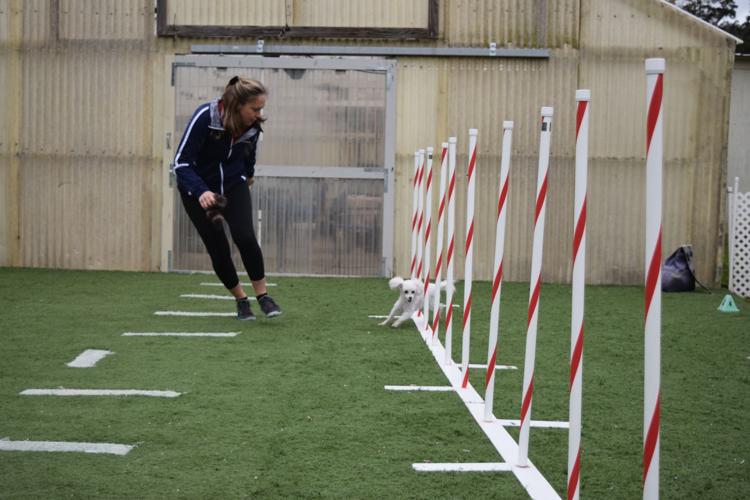
Longtime agility trainer and Half Moon Bay resident, Ivette White, trains with her poodle Roxy on the weave pole obstacle in preparation for the 2019 World Agility Championships, to be held in The Netherlands this April.
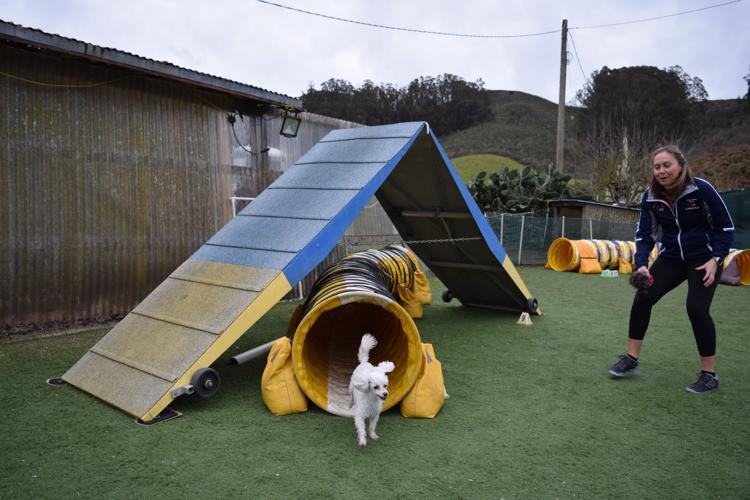
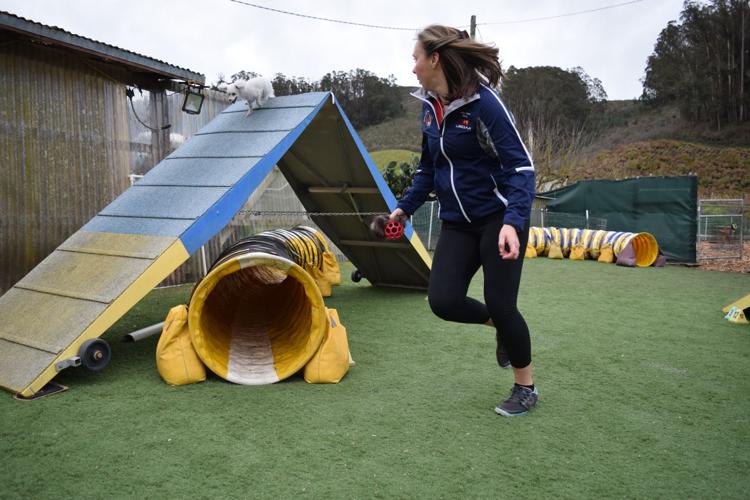
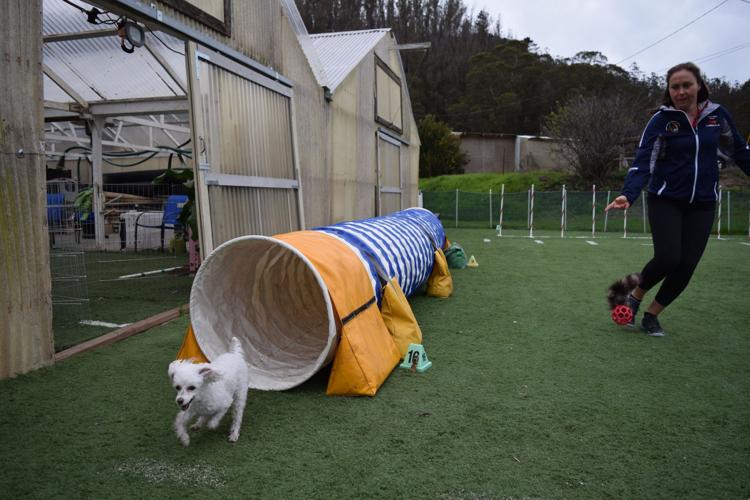
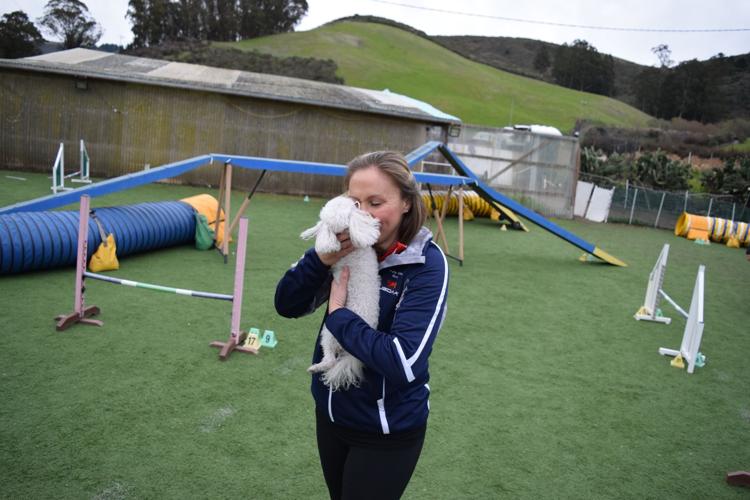
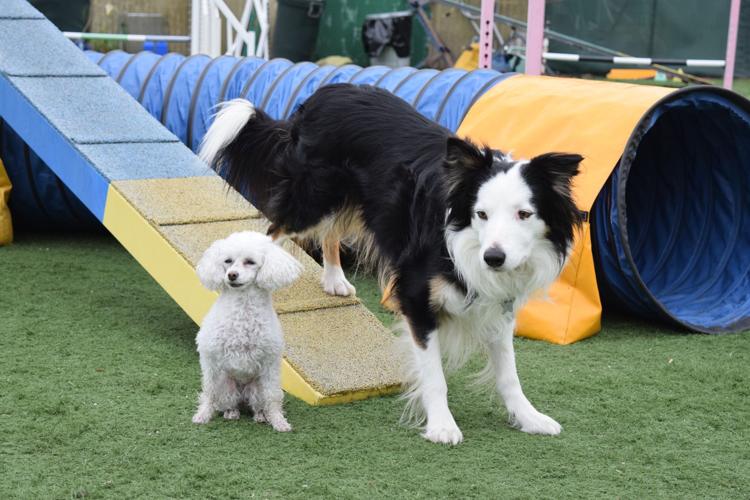
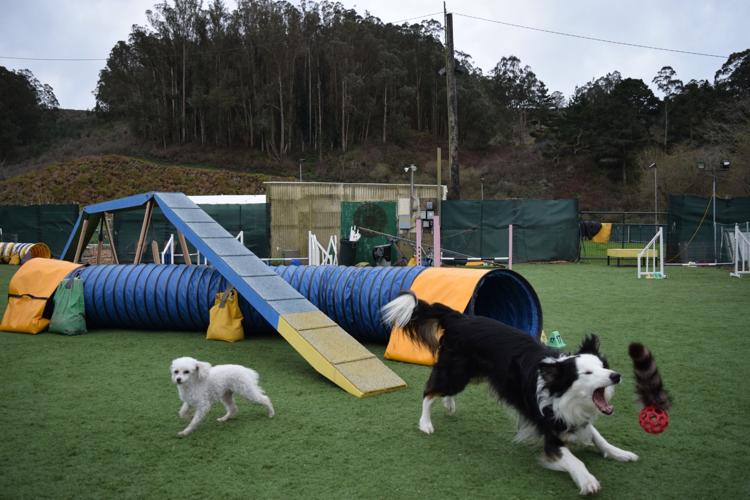
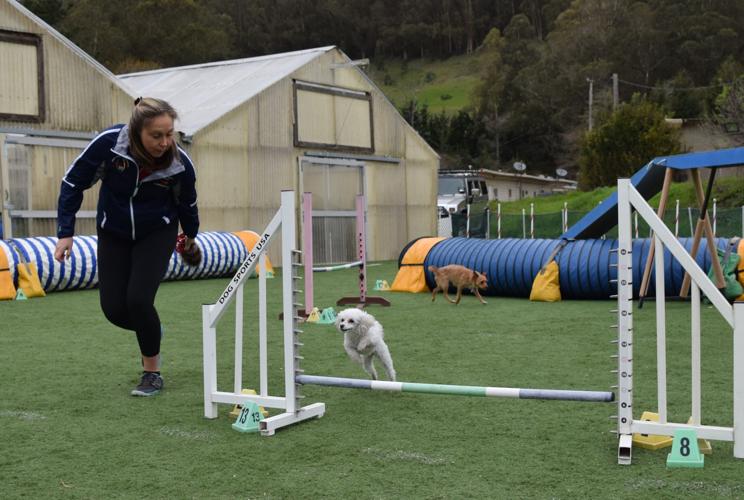
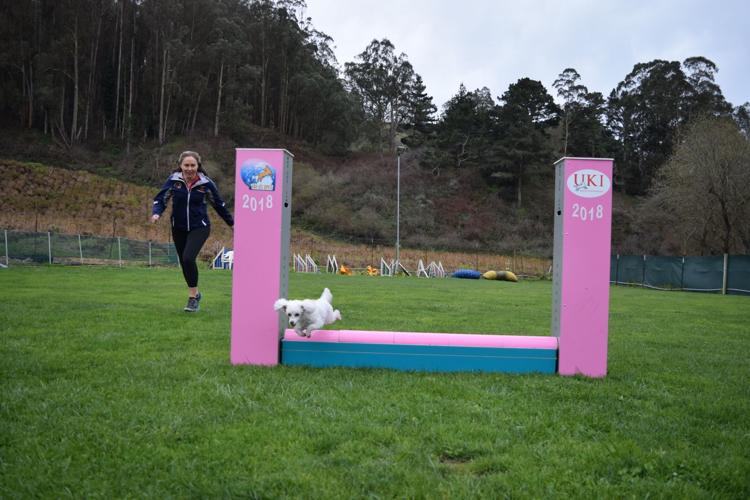
Half Moon Bay resident Ivette White has been a dog agility trainer for 22 years, leading her canine partners through timed obstacle courses that include jumps, tunnels and seesaws.
Throughout her agility career, she’s competed all over the world with three Jack Russell terriers — they’ve since retired from the sport — and has racked up numerous titles.
Now she’s training with an up-and-coming contender: her 5-year old poodle Roxy. The two will travel to Hellendoorn, the Netherlands from April 10 to April 14 to represent the United States at the 2019 World Agility Championships, hosted by the International Federation of Cynological Sports and Federatie Hondensport Nederland.
“I love competing and the big international events are really fun to go to regardless of the outcome,” White said. “I really enjoy the head-to-head competition and the adrenaline rush you feel when you come to these big events.”
About 200 competitors representing more than 15 countries will participate in the April championships.
White discovered the sport after bringing her dog to a basic obedience class more than two decades ago. She asked her instructor about other activities she could do with her dog and the instructor suggested trying an agility class.
“I had no idea what it was and I went one time and I was hooked,” she said. “When you train with your dog, you really get to know them, what they like, what they don’t like and how they learn. I also like running so it was a big draw for me to be able to run along with my dog.”
Trainers run along with their dog during competitions, too, and can use only verbal and physical cues to guide it along the course — no food or toys are allowed.
“I’m doing all the steering,” White said. “[The dog] is relying on me to give her the information quickly and as early as possible so she knows where she’s going at least an obstacle or two ahead of time.”
It took her about seven to 10 days, with about 5 minutes a day, to teach Roxy to weave between poles. Courses always include the same elements — a jump bar, tunnels, teeter totter and weave polls, to name a few — but the layout of those obstacles is never the same.
Recommended for you
Typical competitions have multiple rounds, which span 30 to 40 seconds, and a performance is judged based on time and the number of faults a dog accumulates; faults are given to dogs who refuse an obstacle or run it out of sequence, for example.
“Milliseconds can be make or break. A lot of times the difference between first place and seventh place is less than one second,” White said.
White is feeling confident about Roxy’s chances of winning a medal after the 5-pound poodle placed first in the tryouts held in Tennessee last year. The two will compete in other local events leading up to the world championships to help Roxy feel comfortable in the presence of large crowds. The world championships typically have a total of 500 people there.
“Roxy’s big challenge is crowds create stress for her so a lot of our training has been getting acclimated to different environments, working with strange people and dogs and getting her confidence up,” White said. “If she’s relaxed and confident, she’s going to run great.”
White is a part-time agility instructor at Jump’n Java Agility in Half Moon Bay, is a member of The Bay Team, a local agility club that hosts USDAA trials and is a OneMind Dogs assistant coach. Outside of agility, White manages a family office and works for a tech startup.
White said certain breeds, particularly border collies and other herding dogs, excel at agility, but top performers are by no means limited to those breeds or to a particular size.
There’s also a push to make agility an Olympic sport, White said, but the Olympic committee is currently reluctant to make it one. The effort is also controversial within the agility community, with many worried that if it were included in the Olympic games, then it might lead to overbreeding, performance enhancing drug use and other forms of abuse. White shares those concerns.
“But on the other hand, I think it would be really cool and would give our sport a lot of international recognition,” she said.
(650) 344-5200 ext. 102











(0) comments
Welcome to the discussion.
Log In
Keep the discussion civilized. Absolutely NO personal attacks or insults directed toward writers, nor others who make comments.
Keep it clean. Please avoid obscene, vulgar, lewd, racist or sexually-oriented language.
Don't threaten. Threats of harming another person will not be tolerated.
Be truthful. Don't knowingly lie about anyone or anything.
Be proactive. Use the 'Report' link on each comment to let us know of abusive posts.
PLEASE TURN OFF YOUR CAPS LOCK.
Anyone violating these rules will be issued a warning. After the warning, comment privileges can be revoked.