
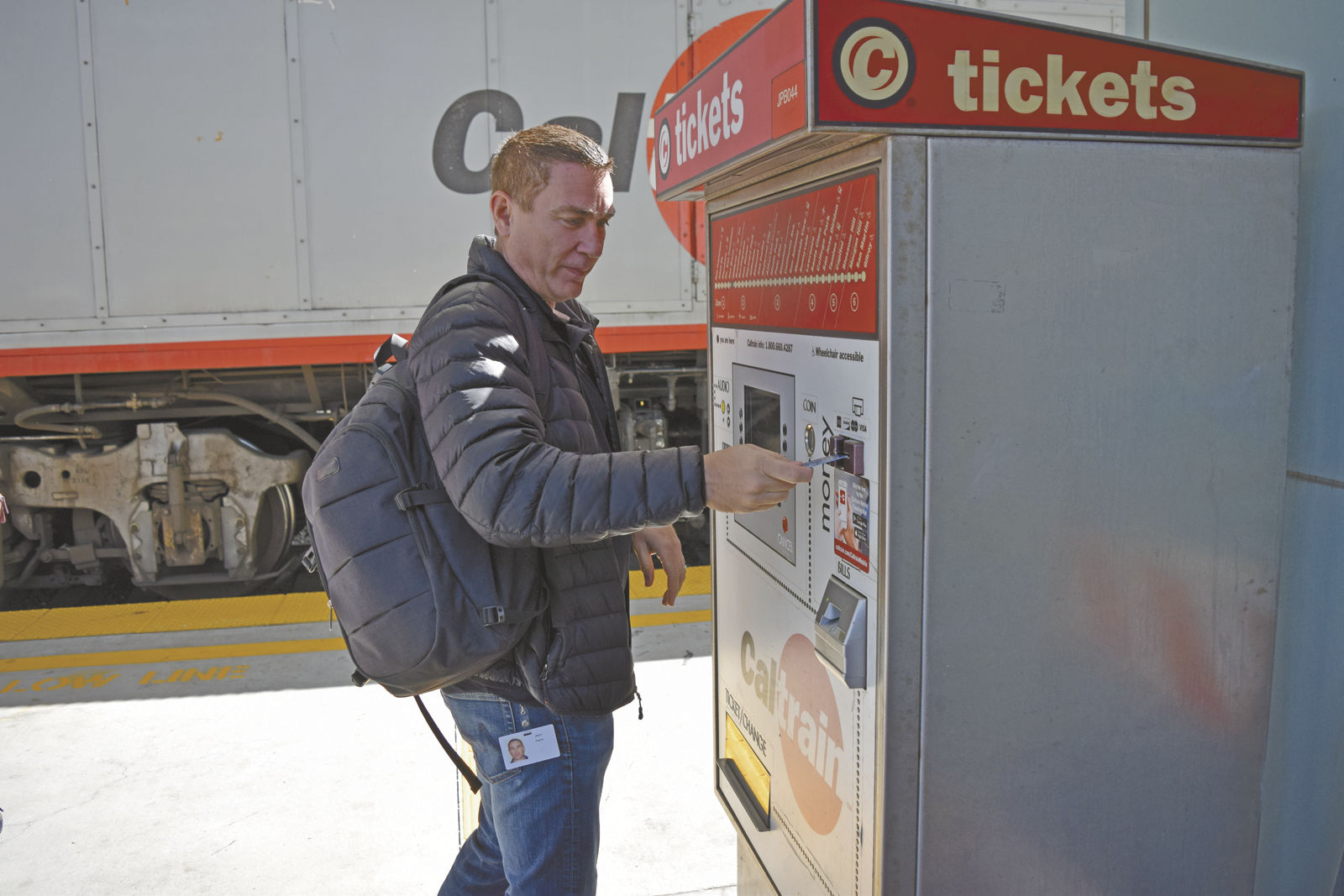
Caltrain officials are interested in participating in a regional pilot program that would offer fare discounts to low-income riders for at least a year, but they’re also concerned about the financial impacts of the program.
That concern left some board members in need of more information before officially signing off on the pilot so the final vote will occur at a meeting in February.
“For my part I would be in on this pilot proposal,” said Board Member Monique Zmuda at a meeting Jan 10. “It’s a value that we expressly put into our fare policy and it could give us additional riders. I think Caltrain is seen by the public as a high-end and expensive service and we’ve heard from a lot of testimony that people don’t ride it because they can’t afford it. This is an opportunity to make the service more inclusive and get people out of their cars and use public transit.
“I for one am very concerned about the financial issues but I don’t think that should prevent us from moving forward,” she continued. “I understand a need to get more information and/or think about it some more but I think it’s a value we’ve expressed as a group and I’d be ready to support it.”
The regional means-based fare pilot program would offer at least a 20 percent discount on single-ride adult Clipper Card fares for riders earning less than 200 percent of the federal poverty level annually. One person earning 200 percent of the federal poverty level makes $24,280, for example.
The pilot program would be implemented through the existing Clipper Card system and it would run for 12 to 18 months.
The Metropolitan Transportation Commission would manage the program and, for the first year or so, it would reimburse Caltrain for up to 50 percent of revenue losses. MTC estimates Caltrain would lose between $400,000 and $1.8 million a year if it implemented the program, depending on participation, but MTC would cover half of those losses for the first year. In other words, Caltrain is estimated to lose between $200,000 and $900,000 for the first year.
What happens after that first year is a concern for many board members.
Recommended for you
“The problem with a pilot of this nature is if we’re wildly successful and you put no caps on who can jump into this — if it’s 100 percent of people who meet this qualification and we have no clue whether that’s all existing riders or new riders who come in, but it’s open to everyone who qualifies — that’s OK except at the end of this pilot when there’s no more money then that doubles our cost,” said Board Member Jeannie Bruins. “You cannot and we will not — I don’t think there’s any board member up here who’ll feel good about saying ‘that was only a pilot, sorry guys now you’ll be paying full fare again.’
Board member Dev Davis expressed similar concerns.
“Knowing MTC, the pilot won’t be expanded, this is a one-time thing and they will just pull the rug out and we will be caught with $1.8 million,” she said. “I agree once we put it in place without any caps the first year, it doesn’t look like a pilot to the public. It looks like this is something that you’ve done and you’ve made a commitment. It’s not something we can take away. The budget forecast for the next few years doesn’t look good the way it is and it doesn’t include these potential costs. That’s just putting us further in the red. We’ve agonized over fare increases in the past and we’d have to cover this with fare increases because I know my member agency can’t come up with any additional dollars.”
MTC has allocated $11 million for the program. Implementation and administration costs are estimated at $3 million, which leaves $8 million to refund operators’ revenue losses.
Beyond Caltrain, other potential participants in the pilot include the Bay Area Rapid Transit District, the Golden Gate Bridge, Highway and Transportation District for both its bus and ferry services; and San Francisco Municipal Transportation Agency.
“We talked so much about how to make our fares equitable because we all recognize our fares are not equitable,” Board Member Cheryl Brinkman said. “My hope is this pilot program will give us a better chance toward making those fares equitable. Maybe by the time this pilot program ends we’ll be ready to address our own fare and equities — that’s my hope with this.”
(650) 344-5200 ext. 102


(0) comments
Welcome to the discussion.
Log In
Keep the discussion civilized. Absolutely NO personal attacks or insults directed toward writers, nor others who make comments.
Keep it clean. Please avoid obscene, vulgar, lewd, racist or sexually-oriented language.
Don't threaten. Threats of harming another person will not be tolerated.
Be truthful. Don't knowingly lie about anyone or anything.
Be proactive. Use the 'Report' link on each comment to let us know of abusive posts.
PLEASE TURN OFF YOUR CAPS LOCK.
Anyone violating these rules will be issued a warning. After the warning, comment privileges can be revoked.