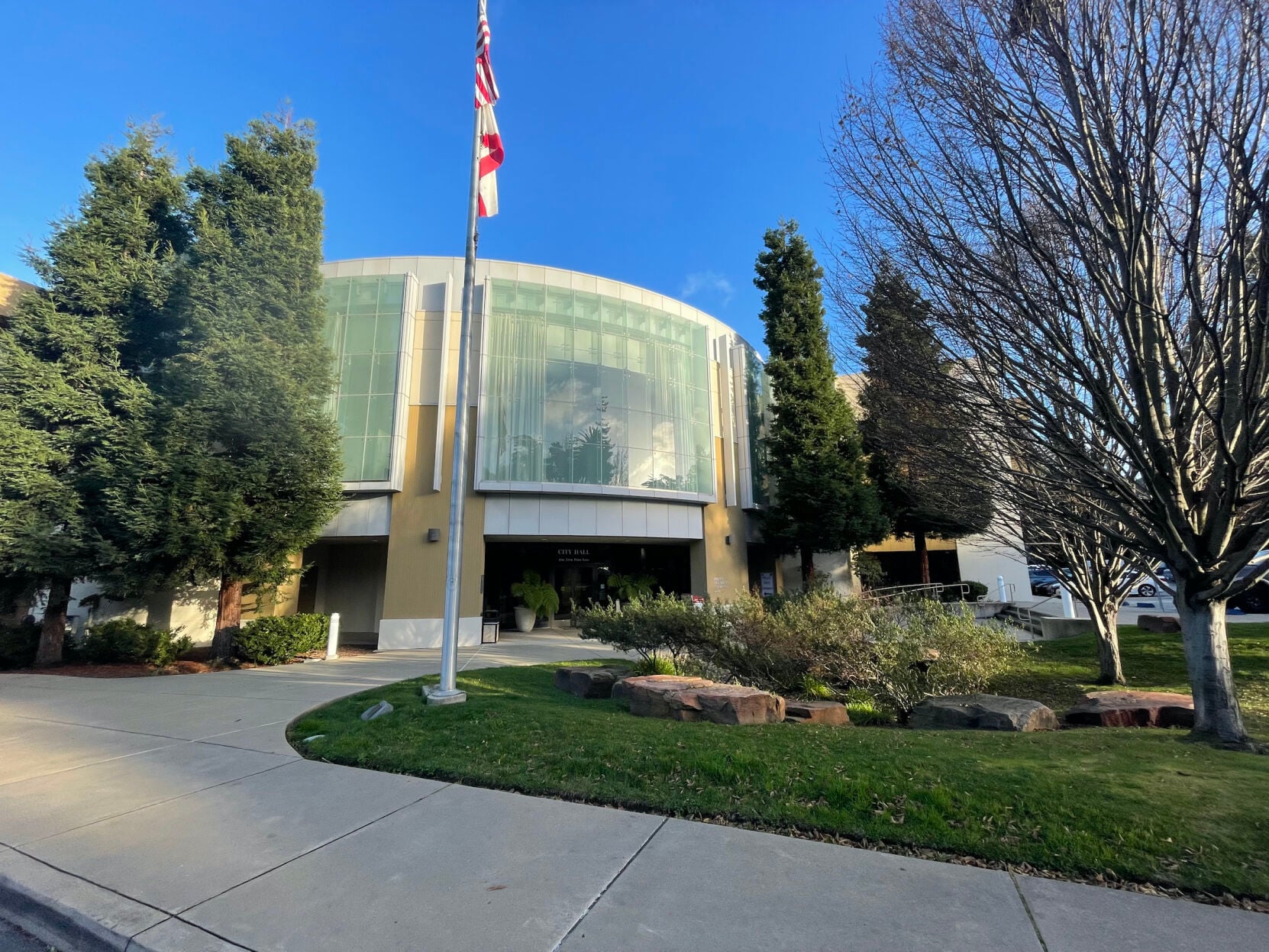
Belmont is one step closer toward receiving state certification for its mandatory housing plan, though the lengthy process highlights the increasingly stringent standards set by the California Housing and Community Development Department in light of the state’s affordability crisis.
Every eight years, each city is assigned a minimum number of housing units it must plan for over that time period — known as the Regional Housing Needs Allocation — and they must submit detailed plans, or housing elements, to the state outlining how their zoning policies and programs will allow them to achieve their RHNA goals.
The RHNA process has been in place for decades, but the most recent 2023-31 cycle has put significantly more pressure on cities to adopt policies that encourage more residential development, especially below-market-rate units, given the statewide housing affordability crisis.
Belmont must plan for 1,785 new housing units by 2031 — a quarter of which must be for low-income households — which is almost four times the number of assigned units from the previous round. But a year and a half into this cycle, and the city still hasn’t received formal certification from HCD over its housing element.
As of July 30, however, it has gotten an unofficial stamp of approval, which Mayor Julia Mates said is a critical step in the process.
“This [cycle] was quite challenging, but we’re obviously pleased that it made the progress that it did,” Mates said.
The plan has undergone numerous revisions as a result of HCD feedback, though the back-and-forth is not unique to Belmont. More than 40% of the county’s jurisdictions have yet to receive official certification — the highest noncompliant rate in the Bay Area — with some city leaders and pro-housing advocates sparring over whether stubborn local governments or the state are to blame for certification delays.
Recommended for you
But despite some cities’ resistance to the state’s more assertive housing approach, Belmont has made good-faith efforts to improve its housing supply, Jeremy Levine, policy manager at Housing Leadership Council, said.
“In the last few months, Belmont made some incremental but important changes, and I think it reflects what HCD has been looking for,” Levine said. “They have a lot of potential to implement their housing element, but there’s going to be a lot to do beyond the housing element to make housing more affordable, in Belmont and in every city. Housing elements are going to be just the start.”
The city’s housing element outlines small changes, such as updating density requirements and floor area limits in certain areas, such as El Camino Real and downtown, and it cements by-right designations into the city’s zoning ordinance — which help fast-track housing developments that offer at least 20% of their units to lower income households. It also identifies current and potential sites ripe for development.
Mates said small cities without a strong commercial base face unique challenges, as the more aggressive housing mandates also require significant investments for infrastructure and public service upgrades.
“There’s always the concern over whether we have enough resources and infrastructure to handle the increase in residents. That’s something that the state, unfortunately, doesn’t help us out with,” she said. “I think small cities like ours are trying to find creative ways to do that.”
The city is on track to see significant real estate changes in the not-so-distant future, however. It has continued with plans to annex the currently unincorporated Harbor Industrial area, a 62-acre site that has long been considered ripe for redevelopment, including adding more office and retail use. The Planning Commission recently showed support for eight- and nine-story life science developments on Shoreway Road, and several other developments have already been approved, including nine- to 11-story commercial buildings on Island Parkway, which would make them the tallest structures in the city.
The Planning Commission and City Council are expected to adopt the finalized version by September, at which point HCD will likely certify the plan within 60 days.
Keep the discussion civilized. Absolutely NO
personal attacks or insults directed toward writers, nor others who
make comments. Keep it clean. Please avoid obscene, vulgar, lewd,
racist or sexually-oriented language. Don't threaten. Threats of harming another
person will not be tolerated. Be truthful. Don't knowingly lie about anyone
or anything. Be proactive. Use the 'Report' link on
each comment to let us know of abusive posts. PLEASE TURN OFF YOUR CAPS LOCK. Anyone violating these rules will be issued a
warning. After the warning, comment privileges can be
revoked.
Please purchase a Premium Subscription to continue reading.
To continue, please log in, or sign up for a new account.
We offer one free story view per month. If you register for an account, you will get two additional story views. After those three total views, we ask that you support us with a subscription.
A subscription to our digital content is so much more than just access to our valuable content. It means you’re helping to support a local community institution that has, from its very start, supported the betterment of our society. Thank you very much!




(0) comments
Welcome to the discussion.
Log In
Keep the discussion civilized. Absolutely NO personal attacks or insults directed toward writers, nor others who make comments.
Keep it clean. Please avoid obscene, vulgar, lewd, racist or sexually-oriented language.
Don't threaten. Threats of harming another person will not be tolerated.
Be truthful. Don't knowingly lie about anyone or anything.
Be proactive. Use the 'Report' link on each comment to let us know of abusive posts.
PLEASE TURN OFF YOUR CAPS LOCK.
Anyone violating these rules will be issued a warning. After the warning, comment privileges can be revoked.