Cloudy early then becoming windy with periods of rain this afternoon. High 61F. Winds SSW at 20 to 30 mph. Chance of rain 100%. Rainfall near a half an inch..
Tonight
Rain early. Scattered thunderstorms overnight. Low 52F. Winds SW at 10 to 20 mph. Chance of rain 100%.
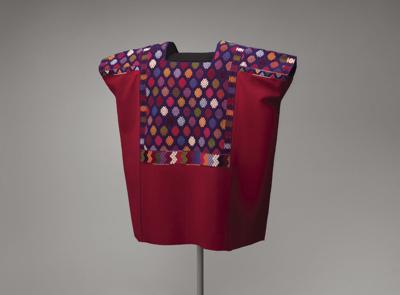
Traditional Mayan women’s attire includes a decorated, flat-sewn blouse, often made by the wearer or another local weaver. This contemporary brocaded and embroidered cotton blouse by María Hernández Ruíz Bayalemó, San Andrés Larráinzar, is on view as part of Empowering Threads: Textiles of Jolom Mayaetik, at the San Francisco International Airport Museum through April 1, 2018.
Traditional Mayan women’s attire includes a decorated, flat-sewn blouse, often made by the wearer or another local weaver. This contemporary brocaded and embroidered cotton blouse by María Hernández Ruíz Bayalemó, San Andrés Larráinzar, is on view as part of Empowering Threads: Textiles of Jolom Mayaetik, at the San Francisco International Airport Museum through April 1, 2018.
Chad Anderson SFO Museum
EMPOWERING THREADS: TEXTILES OF JOLOM MAYAETIK, AT THE SAN FRANCISCO AIRPORT MUSEUM. A unique and dedicated community of Mayan artisans are weaving brilliantly colored textiles in Los Altos de Chiapas, Mexico. Working on backstrap looms, these weavers utilize methods passed down through generations to combine old-world symbolism with new colors and designs. Their most striking textiles are the huipiles woven as ceremonial garments and women’s attire. Huipiles are traditional, loose-fitting women’s blouses, handwoven by panel and sewn together flat. Mayan huipiles vary in style throughout the culturally distinct regions of Chiapas and distinguish the wearer by their locale. Blouses in the blusa Maya style are modern adaptations, with traditional symbols rendered in bright colors never envisioned by their makers’ ancestors. Examples of these various creations are on display in Empowering Threads: Textiles of Jolom Mayaetik, at the SFO Museum.
DIAMONDS AND TOADS: DESIGNS FROM ANCIENT MAYAN CIVILIZATIONS. Many symbols and patterns woven into the textiles of Los Altos adapt designs from ancient Mayan civilizations. The universe design is a diamond-shaped motif that illustrates the edges of the Mayan cosmos by each of its four sides. The sapo, or toad, is a symbol of fertility that springs to life at the start of each rainy season, when singing toads proliferate in cornfields and call for another bountiful harvest. Mayan symbolism may change with each weaver and their interpretation of designs. Meanings of certain older symbols are lost to the ages, with others altered by time and their respective places and cultures. Today, a multitude of contemporary designs are being created by the weavers of Chiapas as personal expressions of their skill and craft.
INTRICATE BROCADE AND THE BACKSTRAP LOOM. Traditional Mayan weaving is produced on the backstrap loom, a simple and portable device used for centuries that creates complex work in the hands of a skilled artisan. Textiles may be decorated with intricate brocade, a technique that introduces designs directly into the weaving process with colored thread. In the past, weavers made woven items for themselves, for family members, and to trade. Now they are also produced for sale, and backstrap weaving has become a primary means for indigenous women to earn supplementary income. With recessions, globalization, and privatization of communal farming lands, weaving is increasingly crucial for many families in Chiapas.
WOMEN WHO WEAVE: PROGRESSIVE WEAVING COOPERATIVES. Weavers are able to get the best prices for their handwoven textiles through cooperatives. Jolom Mayaetik, which translates to “Women Who Weave” from Mayan Tzotzil, was founded in 1996 and is one of the most progressive weaving cooperatives in Chiapas. The organization promotes sustainable economic development for indigenous women, in a democratic structure run collectively by general assemblies and a popular vote. Unlike more traditional cooperatives in Mexico, the weavers of Jolom Mayaetik are also advancing human rights through educational programs, cultural empowerment and political mobilization. Committed to improving the lives of indigenous women, members of the Jolom Mayaetik are weaving with a powerful, collective voice. The SFO Museum exhibition features textiles woven by Jolom Mayaetik artisans from the municipalities of San Andrés Larráinzar, Pantelhó and Oxchuc.
MUSEUM PARTICULARS. The SFO Museum, the first of its kind in the United States and a widely imitated model for museums operating in public arenas, features approximately 20 galleries throughout the airport, displaying a rotating schedule of art, history, science and cultural exhibitions. Information about these exhibits may be found at flysfo.com/museum. Empowering Threads: Textiles of Jolom Mayaetik is on view through April 1 at the airport’s International Terminal, Departures — Level 3 — Pre-Security. No ticket is required to see the exhibit.
Keep the discussion civilized. Absolutely NO
personal attacks or insults directed toward writers, nor others who
make comments. Keep it clean. Please avoid obscene, vulgar, lewd,
racist or sexually-oriented language. Don't threaten. Threats of harming another
person will not be tolerated. Be truthful. Don't knowingly lie about anyone
or anything. Be proactive. Use the 'Report' link on
each comment to let us know of abusive posts. PLEASE TURN OFF YOUR CAPS LOCK. Anyone violating these rules will be issued a
warning. After the warning, comment privileges can be
revoked.
Please purchase a Premium Subscription to continue reading.
To continue, please log in, or sign up for a new account.
We offer one free story view per month. If you register for an account, you will get two additional story views. After those three total views, we ask that you support us with a subscription.
A subscription to our digital content is so much more than just access to our valuable content. It means you’re helping to support a local community institution that has, from its very start, supported the betterment of our society. Thank you very much!





(0) comments
Welcome to the discussion.
Log In
Keep the discussion civilized. Absolutely NO personal attacks or insults directed toward writers, nor others who make comments.
Keep it clean. Please avoid obscene, vulgar, lewd, racist or sexually-oriented language.
Don't threaten. Threats of harming another person will not be tolerated.
Be truthful. Don't knowingly lie about anyone or anything.
Be proactive. Use the 'Report' link on each comment to let us know of abusive posts.
PLEASE TURN OFF YOUR CAPS LOCK.
Anyone violating these rules will be issued a warning. After the warning, comment privileges can be revoked.