A pair of grim 80th anniversaries will be observed next week. Taken as a pair, their historical significance resonates down to this day and age. So does intense debate about the many reasons and circumstances surrounding them.
The arguments revolve around the controversial decisions by U.S. President Harry Truman to drop not one but two atomic bombs on Japan on Aug. 6 and Aug. 8 in 1945 as World War II in the Pacific Theater slowly edged toward a bloody conclusion.
The overriding question that continues to divide historians (and others) is a relatively simple one: Should those terrible weapons have been loosed on Hiroshima and Nagasaki at all?
More than 200,000 people were estimated to have perished in the twin bombings; more died years after the actual events due to the after-effects of the radiation involved. Atomic weapons have not been used in wartime since then.
Proponents of employing the bombs insist they were vital to end the war without the need for a massive and costly Allied invasion of Japan’s home islands (which were being fire-bombed relentlessly at that time), saving countless lives on both sides in the end.
Opponents strongly counter that the bombings were unnecessary because an exhausted and beaten Japan was close to surrendering by that time in the war.
This writer does not claim to possess any special expertise on the morality or military need to use those devastating weapons on the two Japanese cities and their inhabitants, both civilians and military personnel. There are informed views on all sides. We are hearing some of them again.
To stay reasonably informed on these weighty matters, we can recommend some well-researched books that are worth perusing. Each sheds considerable well-documented light on the subjects at hand. They are:
• “Rain of Ruin — Tokyo, Hiroshima and the Surrender of Japan” by Richard Overy.
• “Prompt and Utter Destruction — Truman and the Use of the Atomic Bombs Against Japan” by J. Samuel Walker.
• “The Decision to Use the Atomic Bomb” by Gar Alperovitz.
Recommended for you
• “Code-Name Downfall — The Secret Plan to Invade Japan” by Thomas B. Allen.
• “Road to Surrender — Three Men and the Countdown to the End of World War II” by Evan Thomas.
That is just a partial list. Other books, essays, military analyses and opinion pieces, along with documentary films and popular movies (“Fat Man and Little Boy” and “Oppenheimer” come to mind immediately) are available for examination as well.
MANHEIMER AN OBVIOUS CHOICE: As San Mateo County’s Board of Supervisors moves inexorably toward firing Sheriff Christina Corpus at some point this year (pending legal gymnastics that are proceeding at a drawn-out and expensive snail’s pace), speculation about her potential replacement has inevitably begun.
One candidate for at least an interim appointment to fill her important chair stands out: Susan Manheimer. The former police chief of San Mateo, she has spent her years since holding that position performing with distinction as an interim chief in a variety of Bay Area communities, including Oakland and, most recently, San Bruno.
Manheimer is highly regarded as a professional law enforcement veteran who can handle, and even enhance, a police or sheriff’s operation in a leadership capacity. Her resume and reputation are well-known and very public. And she lives right here in the county. What’s not to like, assuming she would consider the post?
A FOSTER CITY LAGOON TOUR: The history of Foster City, in many significant ways, revolves around water. What was once Brewer Island is now a thriving community of 34,000 souls who rely on an extensive levee system to protect them from San Francisco Bay.
The town’s man-made lagoon waterway is an integral focus of the Bayside city’s aquatic ambience. So a tour on the lagoon is an apt event for the Foster City Historical Society. A lagoon boat ride sponsored by the society will be held Aug. 31, beginning at 10 a.m. Reservations are required.
One caveat: Once the tour begins, there will be no stops for restroom breaks, according to the society. Visit its website, fostercitylife.org, for more information.
BRING BACK FOSTERS FREEZE: A random plea to close out our weekly Peninsula-centric exercise: Bring back Fosters Freeze. There was a time when that yummy fast-food enterprise had a number of outlets in San Mateo County. No more. They are all gone now. The nearest one is located in Santa Clara County. We do miss that refreshing root beer freeze.
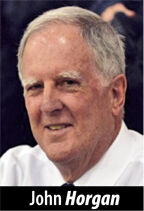
John Horgan began writing a neighborhood diary at the tender age of 9 in San Mateo. He’s been doing much the same thing as a Peninsula journalist for decades ever since. You can contact him by email at johnhorganmedia@gmail.com.
Thanks for your column today, Mr. Horgan, and a list of well-researched books. Is there a favorite among your list? Perhaps the overriding question now should be whether the dropping of those two bombs have kept the world in check by resisting urges to drop nuclear bombs on anyone else. Peace through strength in action? I’d like to hope so. I’m waiting on books, if they’re not already out, either second-guessing or supporting the recent actions in Iran to hobble their nuclear program. Perhaps this action prevented nuclear bombs dropping on anyone else?
Interesting to note that we always seem to remember the number of Japanese that were killed by the nuclear bombs. Nowhere mentioned, for example, are the hundreds of thousand of Filipinos that were murdered by the Japanese, the hundreds of thousands of other islanders that disappeared. The bottom line remains that had the Japanese access to such weapons they would have been thrilled to destroy our major cities. No quarter for them at all! Truman did the right thing for us and the rest of the world. I have also read many books on this topic and after finishing each one I was even more convinced that the Japanese fully deserved this punishment. Ironically, the true war criminal, Emperor Hirohito, managed to save his skin by convincing us that Japan would never surrender if he were held accountable for his actions. That is the remaining controversy.
From the 1940s to 1980s, traditionalist historians held sway, mirroring the U.S. public’s strong support for the atomic bombings of Japan (85% approval in 1945, per Gallup). They argue Truman’s decision was driven by the urgent need to end World War II, avoid a costly invasion, and counter Soviet influence. Revisionist views, sparked by Gar Alperovitz’s 1965 book Atomic Diplomacy, gained traction during the Vietnam War era, fueled by anti-war sentiment and skepticism of U.S. motives. By 2025, Pew Research shows approval of the bombings has fallen to 35%, reflecting growing doubts about the traditionalist narrative, particularly among younger scholars.
In my view, traditionalists better capture the 1945 context—public pressure, military casualty estimates (e.g., 500,000 for an invasion), and geopolitical fears of Soviet expansion. Revisionists, leveraging declassified documents like MAGIC intercepts, argue Japan was near surrender, but their critiques often suffer from hindsight bias, judging Truman’s choices with post-war knowledge unavailable at the time. It’s like critiquing a poker player’s bet after seeing all the cards. Their work pushes for critical reexamination of U.S. actions, but some alternatives they propose (e.g., a demonstration bomb) were impractical in the moment.
Looking ahead, I worry that narratives may shift further, potentially overshadowing events like Pearl Harbor or D-Day with a focus on U.S. wartime actions like Hiroshima, framing them solely as atrocities. This risks distorting the broader context of World War II’s complexities.
Keep the discussion civilized. Absolutely NO
personal attacks or insults directed toward writers, nor others who
make comments. Keep it clean. Please avoid obscene, vulgar, lewd,
racist or sexually-oriented language. Don't threaten. Threats of harming another
person will not be tolerated. Be truthful. Don't knowingly lie about anyone
or anything. Be proactive. Use the 'Report' link on
each comment to let us know of abusive posts. PLEASE TURN OFF YOUR CAPS LOCK. Anyone violating these rules will be issued a
warning. After the warning, comment privileges can be
revoked.
Please purchase a Premium Subscription to continue reading.
To continue, please log in, or sign up for a new account.
We offer one free story view per month. If you register for an account, you will get two additional story views. After those three total views, we ask that you support us with a subscription.
A subscription to our digital content is so much more than just access to our valuable content. It means you’re helping to support a local community institution that has, from its very start, supported the betterment of our society. Thank you very much!




(4) comments
Thanks for your column today, Mr. Horgan, and a list of well-researched books. Is there a favorite among your list? Perhaps the overriding question now should be whether the dropping of those two bombs have kept the world in check by resisting urges to drop nuclear bombs on anyone else. Peace through strength in action? I’d like to hope so. I’m waiting on books, if they’re not already out, either second-guessing or supporting the recent actions in Iran to hobble their nuclear program. Perhaps this action prevented nuclear bombs dropping on anyone else?
Interesting to note that we always seem to remember the number of Japanese that were killed by the nuclear bombs. Nowhere mentioned, for example, are the hundreds of thousand of Filipinos that were murdered by the Japanese, the hundreds of thousands of other islanders that disappeared. The bottom line remains that had the Japanese access to such weapons they would have been thrilled to destroy our major cities. No quarter for them at all! Truman did the right thing for us and the rest of the world. I have also read many books on this topic and after finishing each one I was even more convinced that the Japanese fully deserved this punishment. Ironically, the true war criminal, Emperor Hirohito, managed to save his skin by convincing us that Japan would never surrender if he were held accountable for his actions. That is the remaining controversy.
the emperor is still there.
From the 1940s to 1980s, traditionalist historians held sway, mirroring the U.S. public’s strong support for the atomic bombings of Japan (85% approval in 1945, per Gallup). They argue Truman’s decision was driven by the urgent need to end World War II, avoid a costly invasion, and counter Soviet influence. Revisionist views, sparked by Gar Alperovitz’s 1965 book Atomic Diplomacy, gained traction during the Vietnam War era, fueled by anti-war sentiment and skepticism of U.S. motives. By 2025, Pew Research shows approval of the bombings has fallen to 35%, reflecting growing doubts about the traditionalist narrative, particularly among younger scholars.
In my view, traditionalists better capture the 1945 context—public pressure, military casualty estimates (e.g., 500,000 for an invasion), and geopolitical fears of Soviet expansion. Revisionists, leveraging declassified documents like MAGIC intercepts, argue Japan was near surrender, but their critiques often suffer from hindsight bias, judging Truman’s choices with post-war knowledge unavailable at the time. It’s like critiquing a poker player’s bet after seeing all the cards. Their work pushes for critical reexamination of U.S. actions, but some alternatives they propose (e.g., a demonstration bomb) were impractical in the moment.
Looking ahead, I worry that narratives may shift further, potentially overshadowing events like Pearl Harbor or D-Day with a focus on U.S. wartime actions like Hiroshima, framing them solely as atrocities. This risks distorting the broader context of World War II’s complexities.
Welcome to the discussion.
Log In
Keep the discussion civilized. Absolutely NO personal attacks or insults directed toward writers, nor others who make comments.
Keep it clean. Please avoid obscene, vulgar, lewd, racist or sexually-oriented language.
Don't threaten. Threats of harming another person will not be tolerated.
Be truthful. Don't knowingly lie about anyone or anything.
Be proactive. Use the 'Report' link on each comment to let us know of abusive posts.
PLEASE TURN OFF YOUR CAPS LOCK.
Anyone violating these rules will be issued a warning. After the warning, comment privileges can be revoked.