

A man who was stabbed inside a Redwood City grocery store over the weekend fired a gun at his attacker but missed and hit a computer monitor, …
A man who was stabbed inside a Redwood City grocery store over the weekend fired a gun at his attacker but missed and hit a computer monitor, …
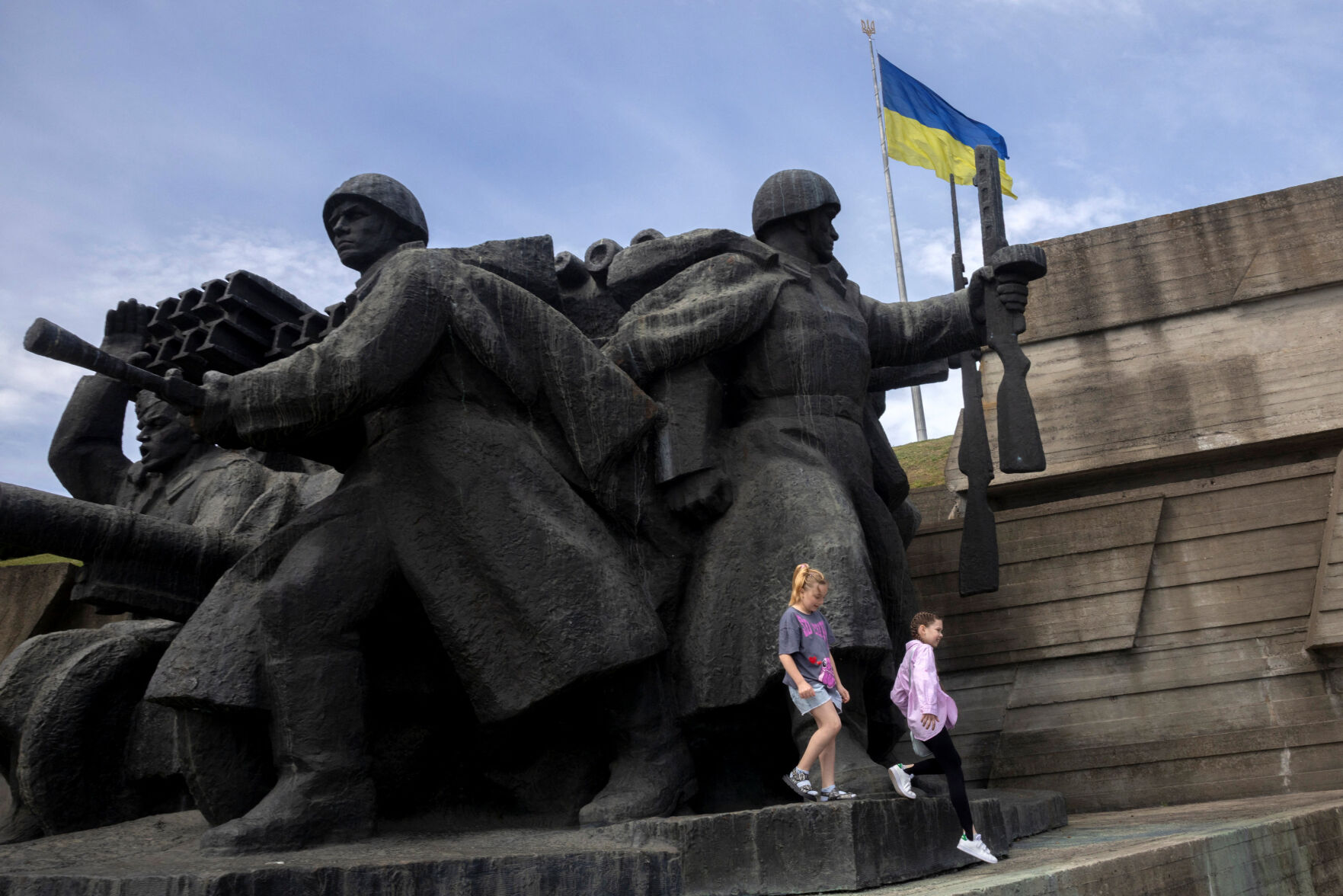
President Donald Trump says the leaders of Russia and Ukraine have agreed to his request for a three-day ceasefire and an exchange of prisoners. Trump said Friday that such a halt to hostilities could be the "beginning of the end" of the long war between them. Trump announced on social media that the ceasefire would run Saturday through Monday. Saturday is Victory Day in Russia, a holiday that commemorates its victory over Nazi Germany 81 years ago in World War II. Trump says he's "pleased to announce that there will be a THREE DAY CEASEFIRE." The Republican president says the ceasefire includes a suspension of all kinetic activity and the exchange of 1,000 prisoners by each country.

The U.S. military says its forces fired on and disabled two Iranian oil tankers after exchanging fire with Iranian forces in the Strait of Hormuz overnight. The United Arab Emirates, meanwhile, reported another missile and drone attack Friday. The violence further undermines a month-old ceasefire that U.S. officials insist remains in effect. Iran says the U.S. strikes violate the truce. Washington is awaiting Tehran's response to the latest U.S. proposal aimed at ending the war launched by the U.S. and Israel on Feb. 28.

Russia's Defense Ministry reports that air defenses shot down 347 Ukrainian drones overnight. This major attack comes after Moscow rejected Kyiv's ceasefire earlier in the week. Drones were destroyed in over 20 Russian regions, including Moscow. The attack is Ukraine's second-biggest aerial assault since Russia's invasion over four years ago. It occurred ahead of Russia's Victory Day celebrations, marking the defeat of Nazi Germany in World War II. Tensions have risen as the celebrations approach, with Russia scaling back its traditional military parade due to security concerns. Authorities blame Ukraine for the heightened security measures.

Russia has fired dozens of drones at Ukraine, ignoring a unilateral ceasefire announced by Kyiv. Ukrainian officials reported the attacks on Wednesday. The Russian Defense Ministry claimed Ukraine violated its own ceasefire, saying air defenses shot down 53 Ukrainian drones. Moscow had shown no sign of respecting Kyiv's ceasefire, and hopes for a pause in hostilities remain low. Ukrainian President Volodymyr Zelenskyy announced the ceasefire after Russia said it would hold its own later this week. Ukrainian Foreign Minister Andrii Sybiha criticized Russia's actions, calling for increased international pressure on Moscow.

Ukrainian authorities say Russian drone and missile strikes during the night and into daylight hours Tuesday killed at least 22 people and wounded more than 80 others. President Volodymyr Zelenskyy on Tuesday criticized Moscow for launching the attacks after Russia announced a temporary unilateral ceasefire for later this week. Russia's Defense Ministry declared a ceasefire for Friday and Saturday. But it warned of retaliation if Kyiv disrupts Victory Day festivities. Ukrainian forces have also continued their attacks on Russian areas by targeting oil facilities. Russia said that it destroyed 289 Ukrainian drones overnight across 18 regions. Both sides remain deeply mistrustful of each other which is complicating ceasefire efforts.

U.S. military leaders say a ceasefire with Iran is still in effect a day after Tehran was blamed for new attacks in the Strait of Hormuz and against the United Arab Emirates. The UAE, a key American ally, said it came under attack by Iranian missiles and drones for a second day on Tuesday. Still, the fragile truce reached nearly a month ago appeared to be holding. U.S. forces are pressing ahead with efforts to reopen the strait, a vital waterway for global energy. It's unclear whether U.S. military action can reassure shippers without reigniting the conflict. A spokesman for Iran's joint military command denied striking the UAE "in recent days."

Russia's Defense Ministry has declared a unilateral ceasefire in Ukraine to mark Victory Day, commemorating the defeat of Nazi Germany in World War II. The ceasefire is set for Friday and Saturday. The ministry warns of a massive missile strike on Kyiv if Ukrainian forces disrupt the celebrations. This announcement comes as Ukraine has been launching drone attacks deep inside Russia. The traditional military parade in Moscow will be pared down due to security concerns. Victory Day has been a key pillar of President Vladimir Putin's tenure, showcasing military might and patriotic pride.

The U.S. military says it fired on Iranian forces and sank six small boats as it moved to reopen the Strait of Hormuz. The United Arab Emirates, a key American ally, said it had come under attack from Iran on Monday. It was the first such attack on the UAE since a fragile ceasefire took hold in early April. The attacks appeared to be in response to U.S. President Donald Trump's latest efforts to reopen the strait, a critical waterway for global energy. The U.S. military said two American-flagged merchant ships had successfully transited the strait on Monday.

Ukrainian forces have struck an oil terminal in the Russian Black Sea city of Tuapse, according to Ukraine's General Staff. This marks the fourth attack on the region's oil infrastructure in just over two weeks. Local officials in Russia said a Ukrainian drone attack sparked a blaze, but no casualties were reported. Meanwhile, Russian attacks continue to hit Ukraine. On Friday, Russia attacked the western Ukrainian city of Ternopil with over 50 drones, wounding at least 10 people. President Volodymyr Zelenskyy said Russia continues to target energy and civilian infrastructure with drone strikes.


