

Traffic, housing and growth.
In 2019, nothing dominated our time, attention and public agendas as much as these three issues.
Looking ahead to 2020, there is every reason to think these three deeply interconnected matters will continue to preoccupy us.
But there are cautionary signals of a slowing in the pace of growth — the principle factor that has driven our decision-makers and has driven those who fight to preserve a way of life that was more typical of a generation ago, and, in fact, is gone forever, if it ever truly existed.
I mean this without criticism, but policy-makers understandably tend to be reactive. That clearly has been the case in the response of city councils to the need for more housing. And that is the natural reaction to the widespread and urgent demand 15 years ago to build more commercial and corporate space.
The push to approve office buildings and corporate campus projects — to make the Peninsula “a place” — has rivaled the housing boom after World War II, both in the volume of new construction and in the manner in which it transformed the region.
Prior to World War II, the Peninsula was a sleepy and disconnected string of small communities. After World War II, it became a sprawling, interconnected series of booming residential developments that provided homes for the workforce that initially served San Francisco as the regional center of commerce and business, and later, the burgeoning Silicon Valley.
In a parallel way, the office building boom of the past decade-plus has transformed the Peninsula from a series of bedroom communities into its own center of commerce and business, one of national and international scope and size.
NO GOING BACK: Undoubtedly, this is a source of disappointment, if not outrage, to those who are unhappy at the business boom on the Peninsula. But it is not going away and we are not going back to the Peninsula that consisted almost entirely of suburban homes. We are an urban region now with urban problems. Change has no reverse gear. Outrage doesn’t address the fundamental issues of — we can all recite this together — traffic, housing and growth.
Recommended for you
Now to 2020, where we can expect more efforts to approve housing projects and units, on top of garages, in backyards, in El Camino Real high-rises, in underutilized spaces, such as Sequoia Station in Redwood City and in the remaining vacant lands that invite consideration of large-scale development, such as the Brisbane Baylands and the Century 12 theater site in Redwood City.
Even as cities barrel ahead on approving housing, there are anecdotes that invite questions about what 2020 might hold. There are apartment complexes offering incentives to potential tenants — a month’s free rent, for example, and at the top end of the rental market, homes are staying on the market for extended periods of time with associated drops in monthly rents. It’s the kind of thing that doesn’t happen — hasn’t happened — in the overheated market that has been the Peninsula.
Last year was supposed to be a year of luscious IPOs that would enrich thousands of young tech employees. Instead, it fizzled, and the rebounding effect on the prices of high-end homes is discernible and could trickle into the mid-range market. Certainly, the length of time a house is on the market is stretching out.
A lot of this is anecdotal and the long-term effect is conjecture, which is column-speak, meaning I don’t really know if any of this is something more.
But, as I said above, policy-makers tend to follow trends, not create them. There would be no small irony if we ended up with too much office space and housing in 2020.
WHAT ELSE? It’s an election year in 2020 with an early statewide presidential primary on March 3, and that will generate its own measure of excitement. I’m willing to predict that for the first time in decades, California will play a critical role in selecting the Democratic nominee. In years past, that has been wishful thinking but this time it looks like Assemblyman Kevin Mullin’s legislation to move the primary was timely and even prescient.
Many city councils have moved their elections to the even years and this is the first real bite out of that apple. It is likely that more people will vote in the city elections, which will be overshadowed — overwhelmed — by the presidential race. More attention, less attentiveness. Now, that’s an odd dichotomy.
And given the tone and nature of our national discourse, I expect public trust — or more precisely distrust — in government will be a dominant talking point, led by Foster City’s recall election aimed at Herb Perez.
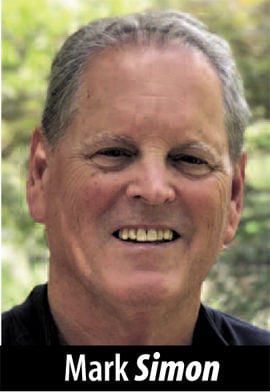
Mark Simon is a veteran journalist, whose career included 15 years as an executive at SamTrans and Caltrain. He can be reached at marksimon@smdailyjournal.com.



(3) comments
Please do not equate public opinion with any other issues distrust etc. in your coliumn too much attention has been levied on our town in public discourse of recent issues You bring more attention a cadre of mistrust trying to levy importance that is is what The they think.. Very sad indeed Please don't add to that hate that is sitiring like everybody thinks like that..sad really. Like a rumor the more attention the bigger it gets embarassing for this community to tolerate it like the everybody thinks that not so here in my opinion. . Same group extolled how wonderful the gun possessor was and the present councilmembers like corruption lingers in a bunch of it's okay to brown act etc double standard with recall candidate included.. What a loss of intelligence to be a bunch of sheeples lead to the thinking here. less said the better too much wasted breath already. . .
Nice try, but the developers of Sequoia Station are proposing an incredibly miscast 1.6M square foot office park (equal to 8,000 office workers) with only a modicum of housing.
Aball gets it. You just can't responsibly report on these issues with a sense of inevitability like that. Kris also gets it, Sequoia Station is a major office project, it isn't housing, but the Caltrain Samtrans benefits are tremendous and important.
Welcome to the discussion.
Log In
Keep the discussion civilized. Absolutely NO personal attacks or insults directed toward writers, nor others who make comments.
Keep it clean. Please avoid obscene, vulgar, lewd, racist or sexually-oriented language.
Don't threaten. Threats of harming another person will not be tolerated.
Be truthful. Don't knowingly lie about anyone or anything.
Be proactive. Use the 'Report' link on each comment to let us know of abusive posts.
PLEASE TURN OFF YOUR CAPS LOCK.
Anyone violating these rules will be issued a warning. After the warning, comment privileges can be revoked.