
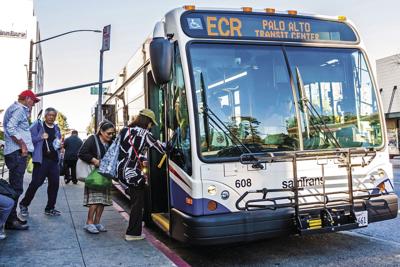
SamTrans bus schedules should be aligned with Caltrain schedules to minimize wait times for transferring riders and Caltrain should take on a more proactive role in advancing grade separation projects throughout its corridor, according to two recently published Civil Grand Jury reports.
SamTrans currently operates 16 bus lines labeled “Caltrain connection” that service Caltrain stations in San Mateo County during commute hours, and the ECR bus line also takes riders to train stations. But SamTrans makes no effort to coordinate those buses’ arrival and departure times at Caltrain stations with the railroad’s train schedules, according to the San Mateo County Civil Grand Jury report.
The report defines an optimal wait time between a bus unloading a passenger at a train station and the next train taking off as between five and 15 minutes.
Only 35% of SamTrans’ “Caltrain connection” buses are scheduled to arrive within five and 15 minutes of a Caltrain departure during commute times, according to the report. And only 43% of those same buses are scheduled to depart Caltrain stations between five and 15 minutes after the previous train is scheduled to arrive, according to the report.
About 8,000 commuters travel north or south each workday from San Mateo County Caltrain stations, of which about 10% take the bus from their home to the train station while about three times as many Caltrain riders drive to the station, according to the report. Needless to say those commuters contribute to increasingly worse traffic congestion.
“Better coordination of “Caltrain Connection” bus schedules with Caltrain during commute hours could make using SamTrans, rather than cars, for the trip between home and Caltrain stations more appealing to commuters,” according to the report. “This, in turn, could increase ridership on SamTrans and decrease car traffic. Decreased wait times could also incentivize commuters living on these routes and who currently commute to work by car to try commuting on Caltrain instead.”
Keeping Caltrain on track
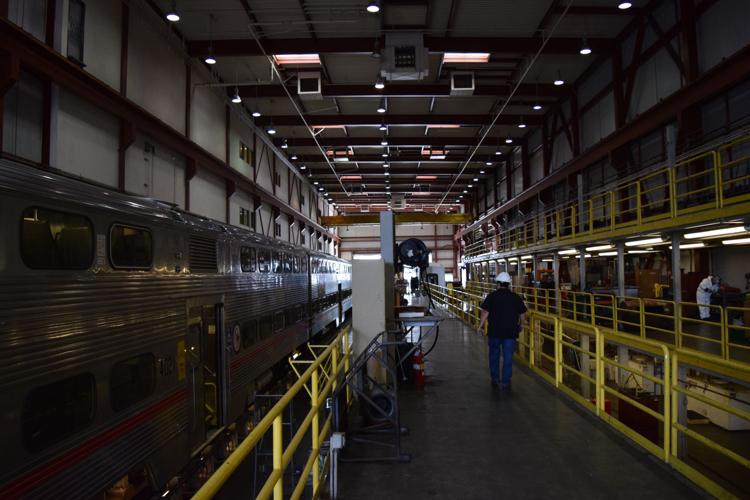
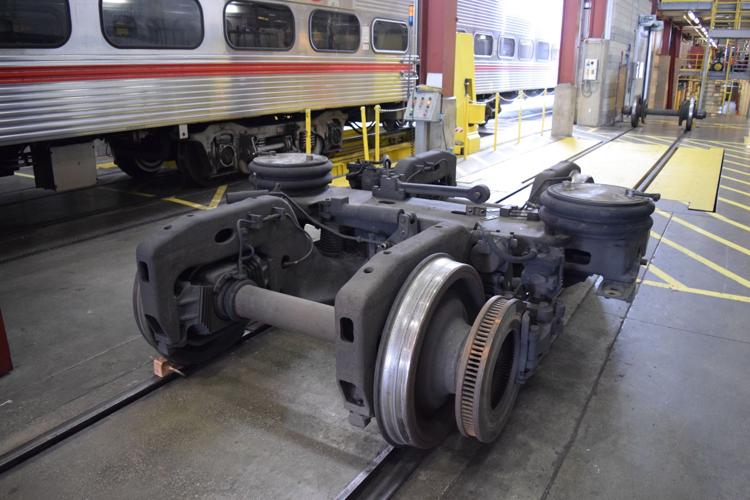
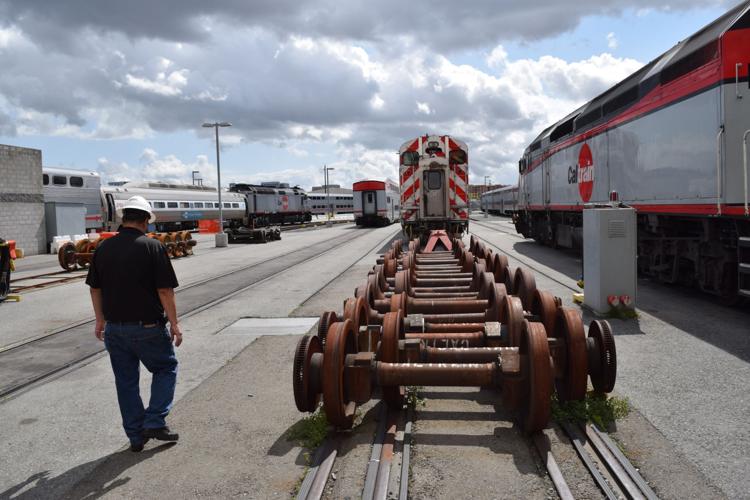
Caltrain’s commuter experience is largely determined by a little known, though loud and bustling operation roughly 2 miles from San Jose’s Diridon station — the maintenance yard.
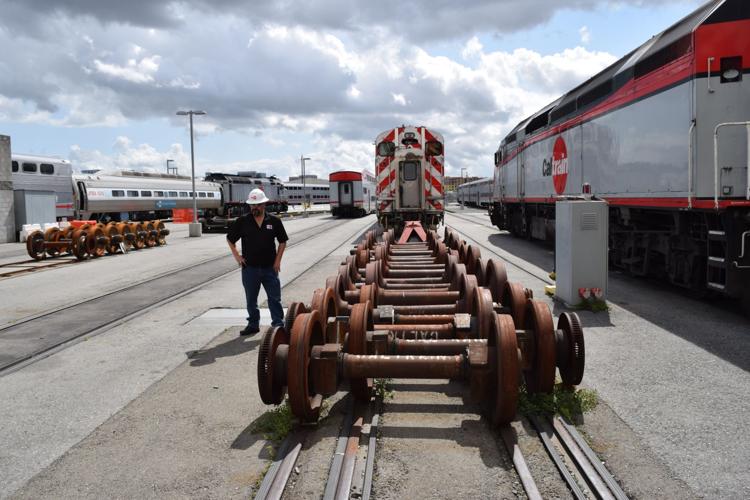
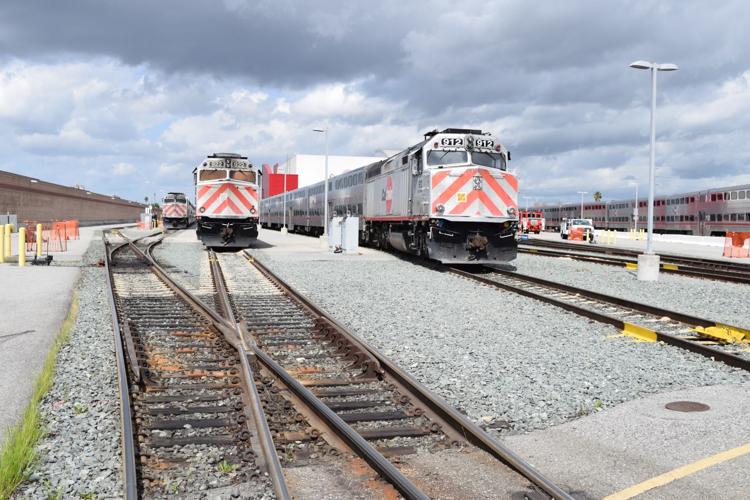
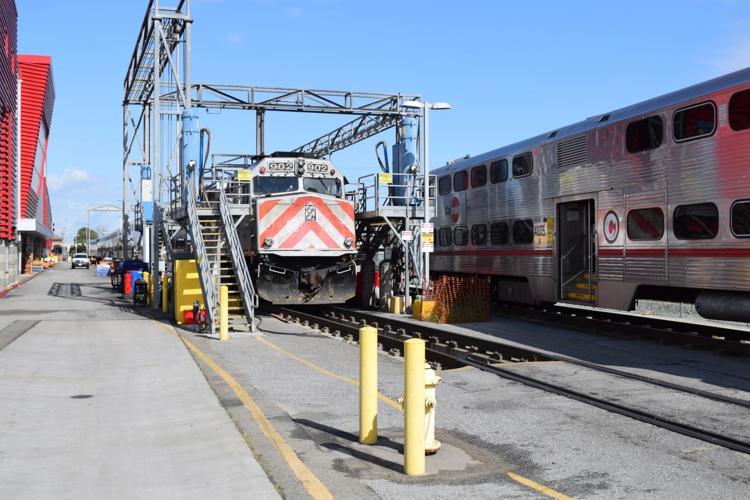
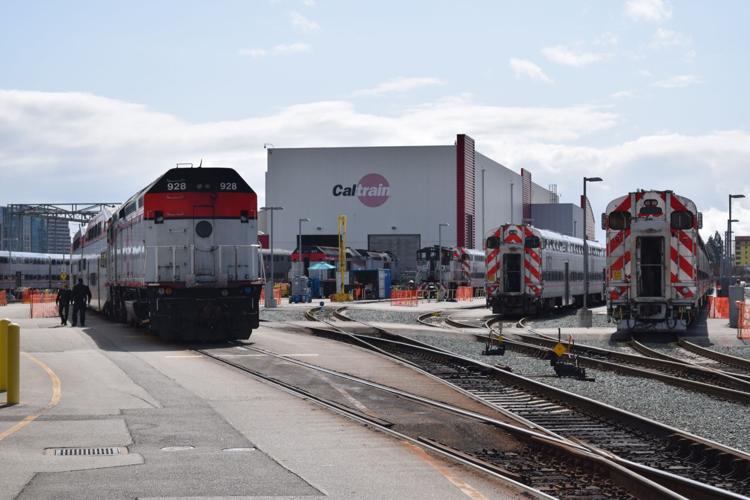
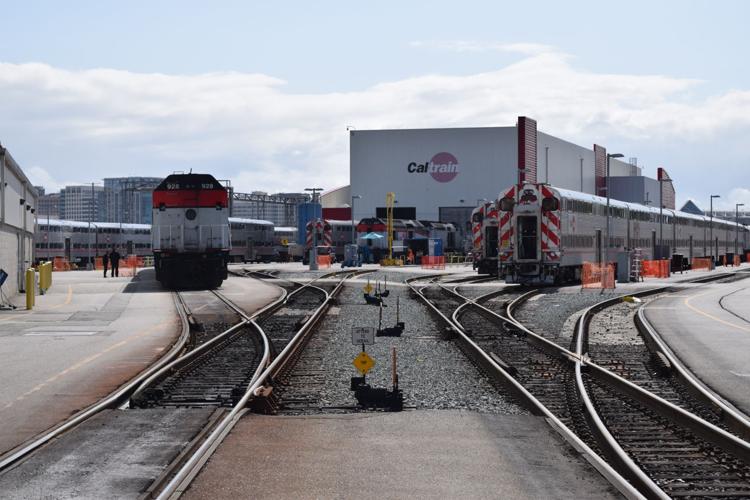
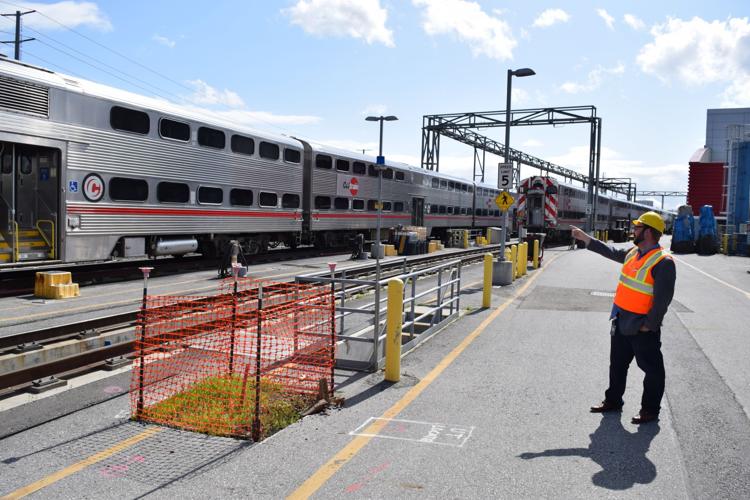
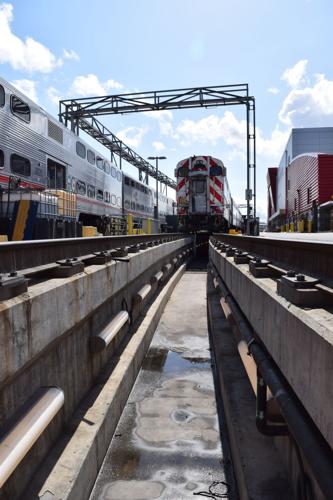
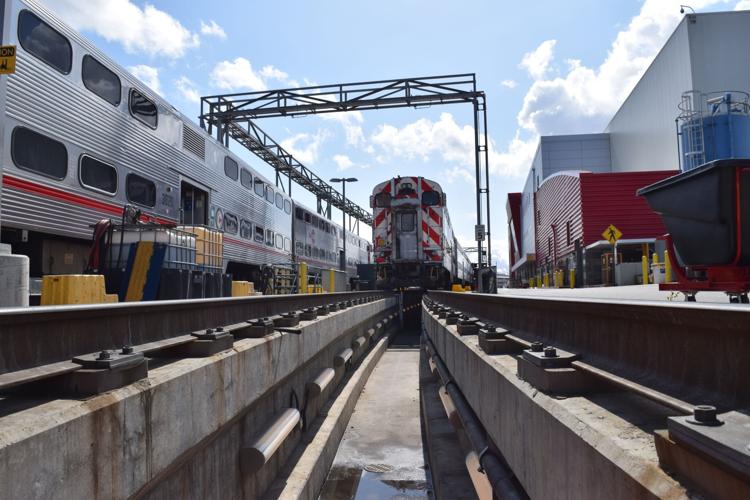
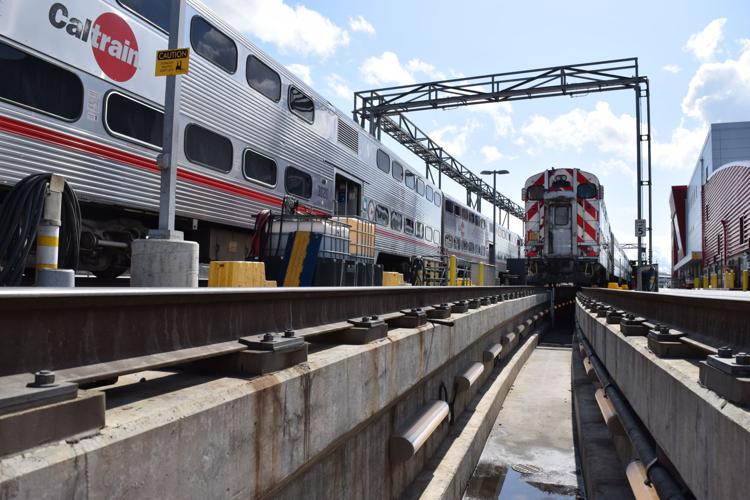
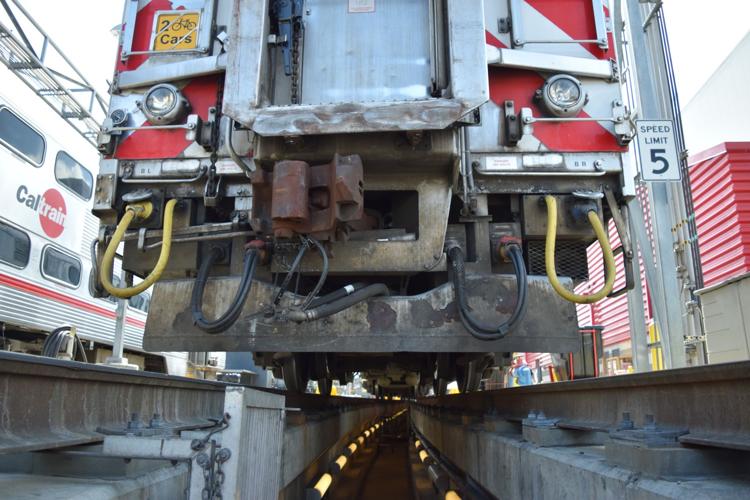
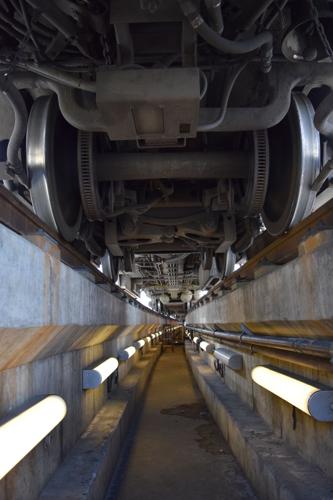
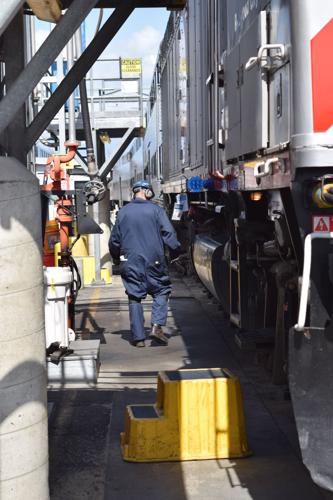
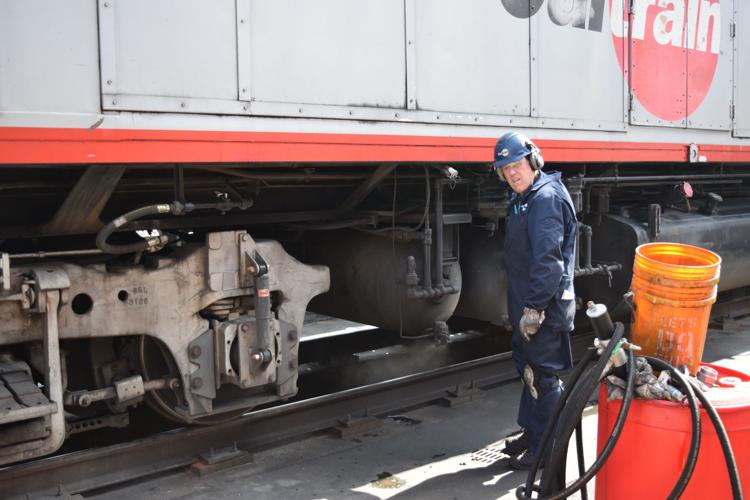
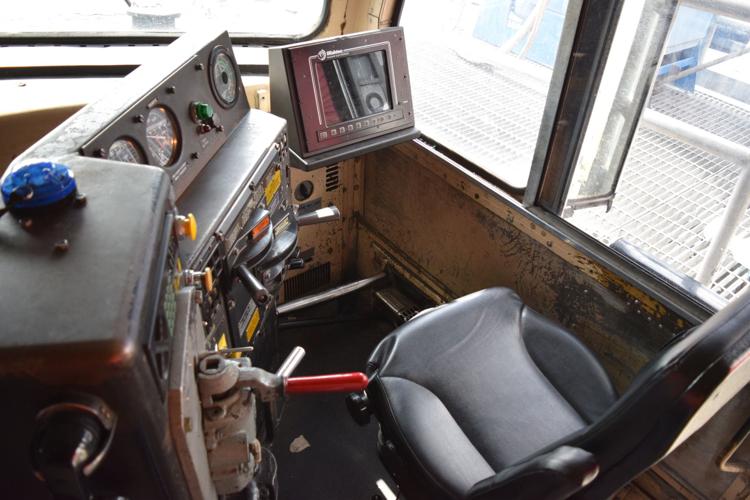
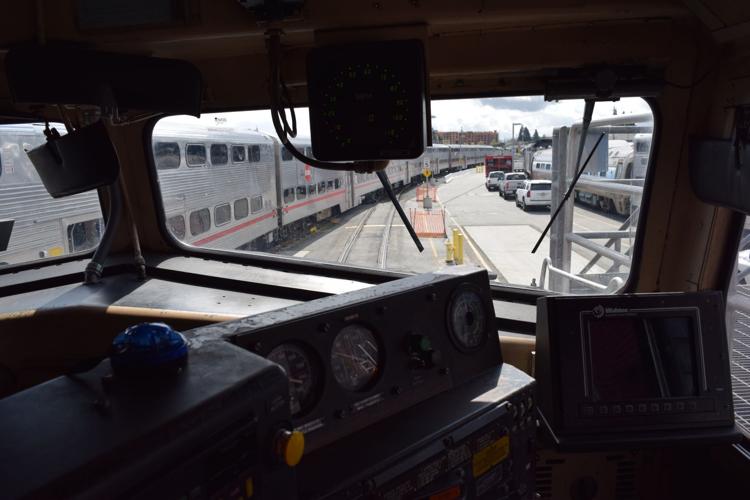
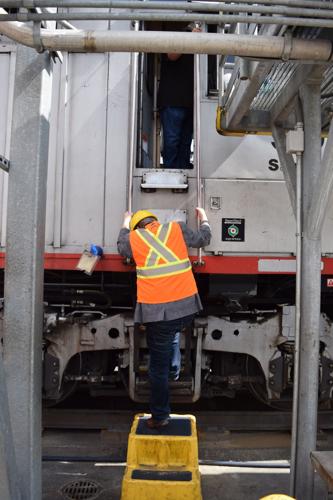
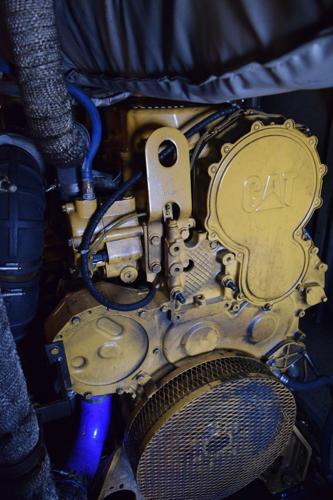
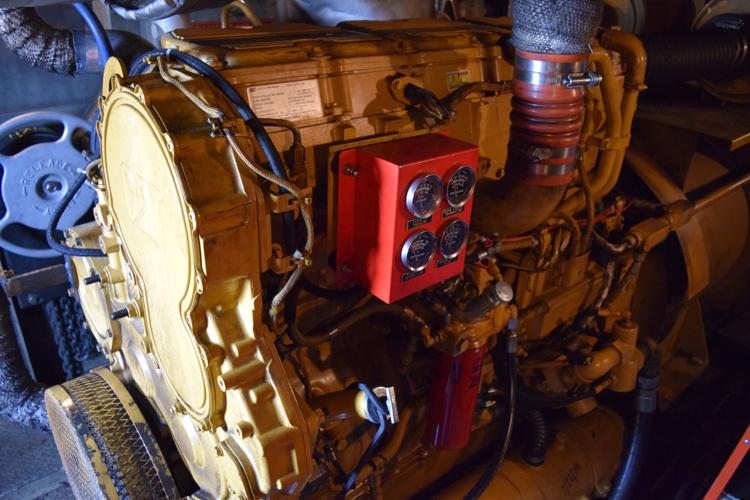
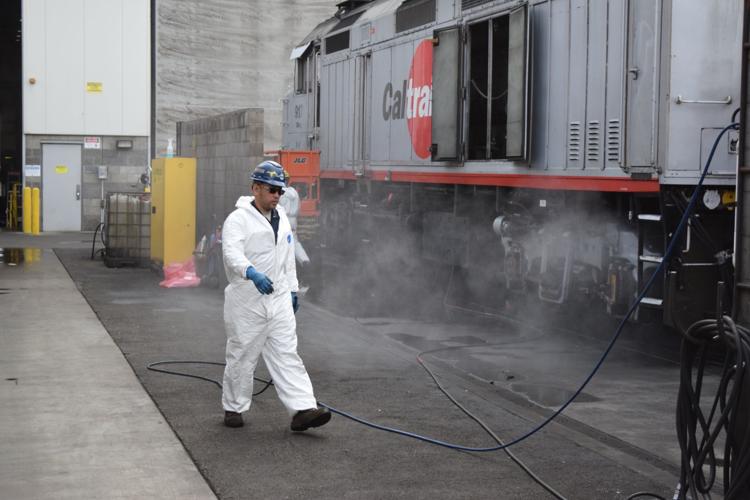
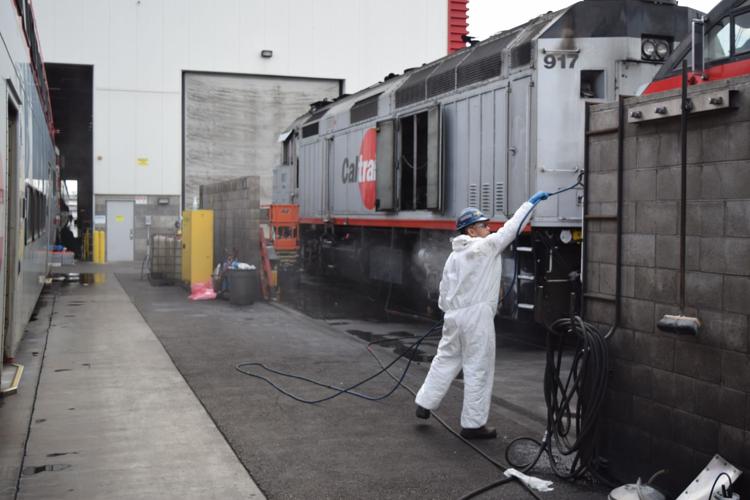
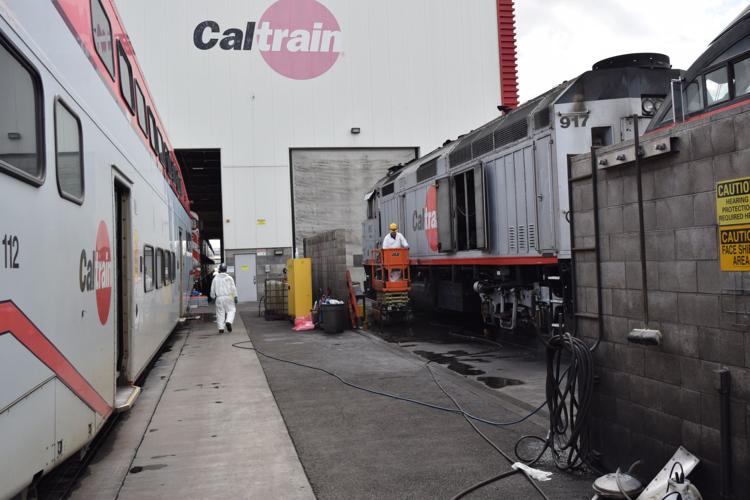
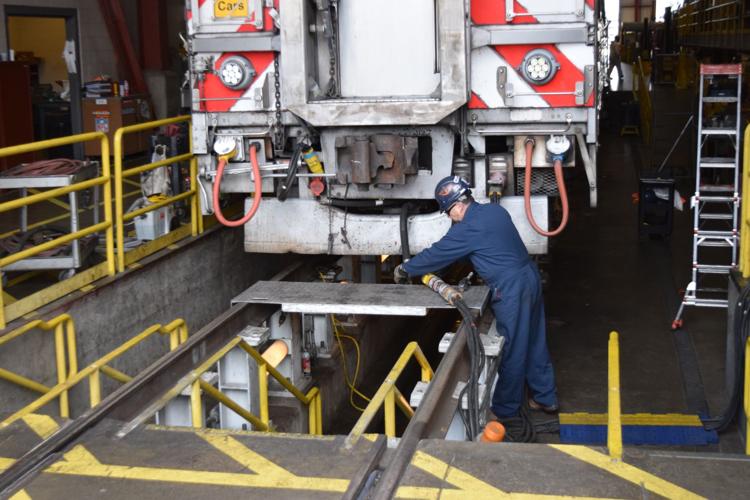
A mechanic working on a train’s cables inside Caltrain’s 22-acre Central Equipment and Maintenance Facility in San Jose.
- Zachary Clark/Daily Journal
To that end, the report recommends SamTrans study the feasibility of coordinating bus schedules with train schedules to facilitate transfers and minimize wait times. The report also recommends SamTrans survey potential riders and Caltrain survey existing riders to gauge their interest in coordinating schedules. The Grand Jury recommends holding public hearings on the results of each of those studies by June 2020.
Dan Lieberman, spokesman for both SamTrans and Caltrain, said the former has already undertaken a comprehensive operational analysis study, known as Reimagine SamTrans, to better understand ridership markets. The 18-month deep dive into the operational and ridership conditions of the SamTrans system began in June and will result in a series of route recommendations that will improve bus connections to other regional transit in the area, Lieberman said.
“Ultimately the COA will tell us how passengers transfer between routes, between SamTrans and Caltrain, and between SamTrans and BART so that we can begin to frame and prioritize the route scheduling and transfer points in the system,” he said. “Where possible, the COA will also look at non-traditional mobility service models as ways to facilitate first/last mile connectivity to regional systems.”
Lieberman expects the COA to be approved by the board in early 2021 and implemented shortly thereafter.
Lieberman added that altering a bus route here or there before the COA is complete would be counterproductive.
“Rather than make piecemeal changes, we need the COA to give us a more holistic view of the needs of existing and potential riders. If we adjust a route to improve the connection to Caltrain that results in a missed bus connection down the line, we’re just trading one problem for another,” he said. “A better understanding of rider behavior and demand will let us reimagine the system from the ground up so we can correct these problems and start growing the amount of people we serve.”
Recommended for you
A separate Grand Jury report recommends Caltrain take on an enhanced role in facilitating the completion of grade separation projects along the railroad’s corridor. There are currently 42 at-grade crossings throughout the corridor and Caltrain estimates that it will cost between $8.5 billion and $11.1 billion to separate all of those grades.
At-grade crossings are a safety concern and also contribute to traffic congestion, according to the report.
Currently, cities initiate and fund grade-separation projects and consequently, “grade separations take place where funding is available, not necessarily where they are most needed,” according to the report.
The Grand Jury report recommends Caltrain complete a grade separation master plan that prioritizes all at-grade crossings in the corridor and takes into account “the needs and special circumstances of the cities and counties through which the corridor passes, with special attention to adjacent at-grade crossings so as not to limit future design alternatives.”
The report also recommends studying train corridors worldwide to learn how similar master plans were implemented and how funding was secured; engage all cities on the Caltrain corridor to gain support for the plan and then help cities design and secure funding for their grade separation projects.
Lieberman said Caltrain is currently finalizing its Business Plan, a comprehensive document outlining the future growth of the railroad that includes an evaluation of the need for grade separation projects in the context of corridor-wide infrastructure improvements.
“The role that Caltrain will have in developing that infrastructure will be discussed in the coming months, as part of the adoption of a Caltrain service vision,” he said.
Liberman added that Caltrain’s fiscal year 2019-20 budget includes a $5 million placeholder for a comprehensive grade separation study, the scope of which is still under development. He also said the agency is conducting case-study analysis of other corridors in the United States and internationally.
“We will present some of this work at a high level in the fall, but more focused analysis and research will be needed as part of a comprehensive grade separation study,” he said.
The San Mateo County Transit District and Joint Powers Board have 90 days to respond to the reports.
(650) 344-5200 ext. 102






(0) comments
Welcome to the discussion.
Log In
Keep the discussion civilized. Absolutely NO personal attacks or insults directed toward writers, nor others who make comments.
Keep it clean. Please avoid obscene, vulgar, lewd, racist or sexually-oriented language.
Don't threaten. Threats of harming another person will not be tolerated.
Be truthful. Don't knowingly lie about anyone or anything.
Be proactive. Use the 'Report' link on each comment to let us know of abusive posts.
PLEASE TURN OFF YOUR CAPS LOCK.
Anyone violating these rules will be issued a warning. After the warning, comment privileges can be revoked.