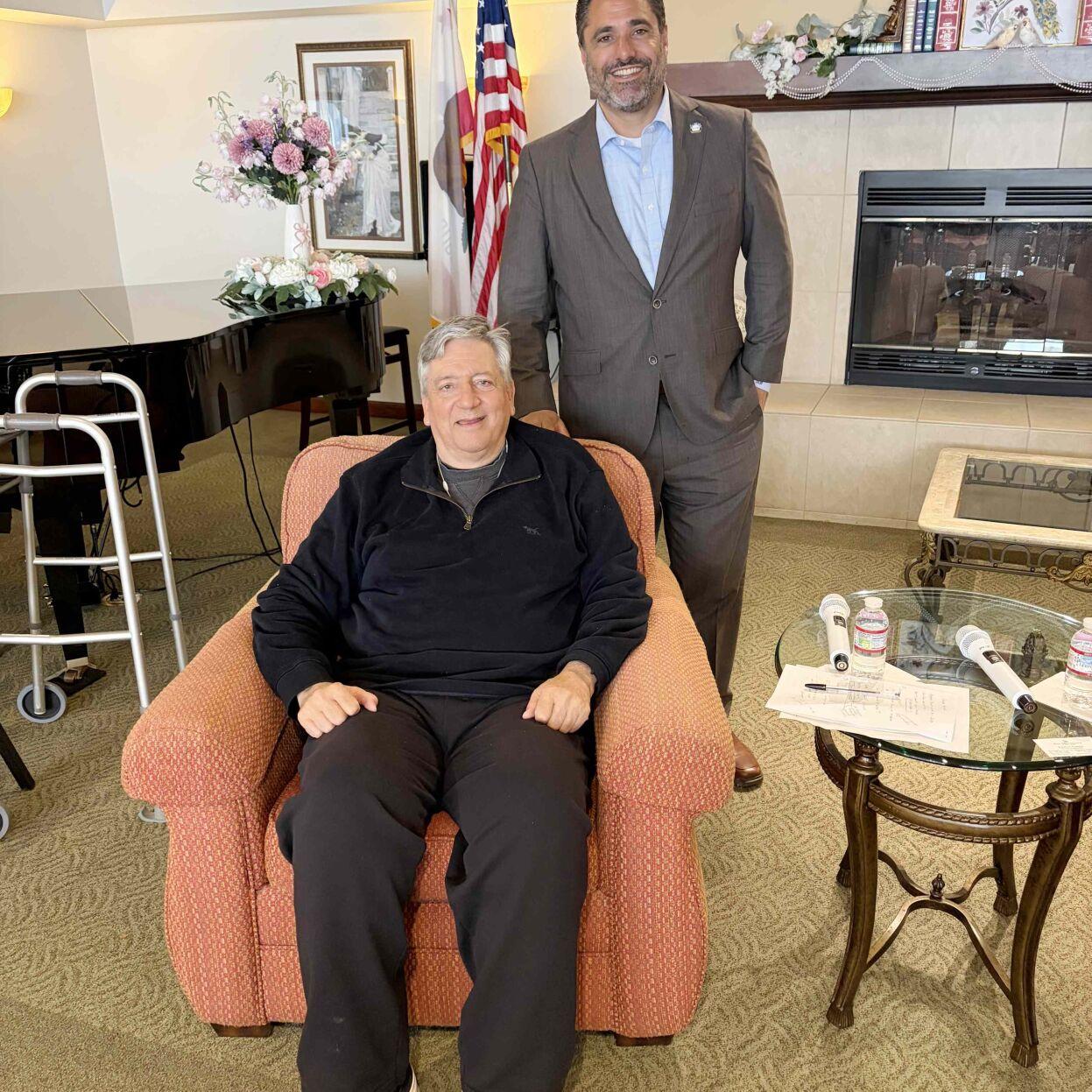
U.S. Rep. Kevin Mullin, D-South San Francisco, is being challenged for his District 15 U.S. House of Representatives seat by four candidates that run the gamut from progressive Democrats to a Republican.
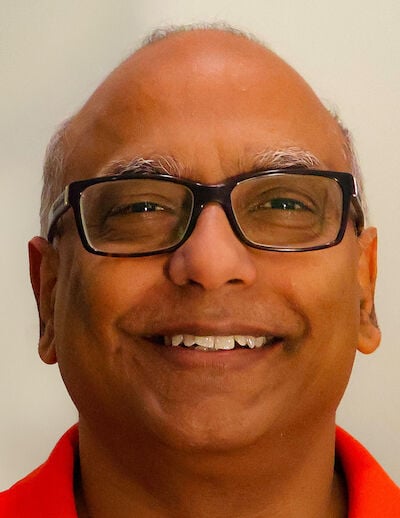
Mantosh Kumar, a former tech executive, and Anthony Dang, a Marine Corps veteran who worked in defense oversight, are both Democrats running for Congress because they see the traditional Democratic party as ineffectual on kitchen-table issues and beholden to corporate interests.
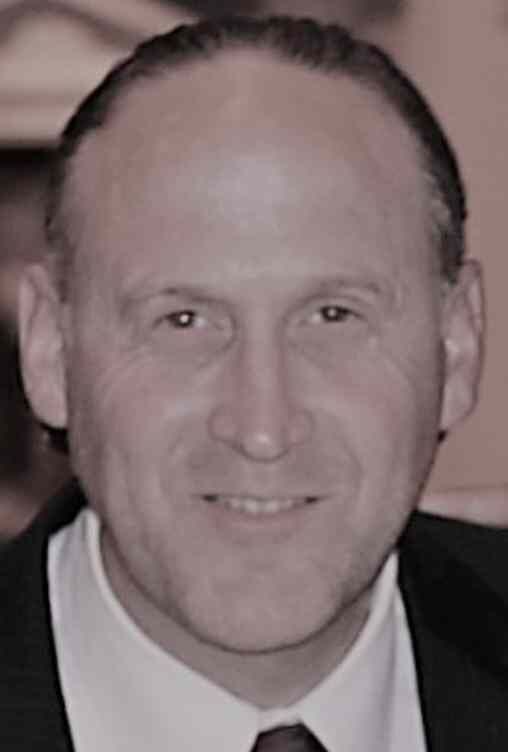
Jim Garrity, an independent and former police officer, describes himself as a “middle-of-the-road guy” who wants to bridge the partisan divide. And Republican Charles Hoelter, a retired UPS supervisor, says his platform is one of common sense issues that include lowering gas and electric prices and restricting sports by biological gender.
Mullin, who is running for a third term in the largely San Mateo County-based seat, emphasized the work he’s done for the district, including bringing home $27 million in funds for infrastructure and other improvements, as well as congressional work on the Energy and Commerce Committee pushing what he termed a “pro-clean energy, pro-climate resilience and pro-consumer agenda.”
He’s also looking toward a political future when Democrats take back control of the House and will ostensibly be able to reverse decisions made by the Trump administration and its Republican allies in Congress, including cuts to healthcare and social services programs made in the massive policy bill passed last year.
“When we take the majority, we will work to reverse those Medicaid cuts and restore the Affordable Care Act tax credits,” Mullin said. “I also want to be one of the leaders on moving a clean energy agenda, which will be good for people's pocketbooks over time and create jobs for the middle class in this country.”
Donations
Dang doesn’t believe in Mullin’s capacity to actually fight for what residents need, he said, citing his corporate donations as just one example. His own lived experience, first as a veteran and then later, as a Pentagon analyst and ultimately a whistleblower at a defense firm, made him realize the system was simply broken and gave him the motivation to try and fix it, he said.
“We're seeing problems around the whole nation, not only just this war, but a war on our democracy, a war on voting rights,” he said. “The future looks bleak for a lot of younger generations, and no one's standing up for them. I think that's wrong, that no one's saying anything, and no one's really challenging the status quo.”
Dang, who does not accept corporate money, said his priorities if elected would be to break ties with Israel, stop the war in Iran, fund Medicare for all, overturn the Supreme Court decision of Citizens United and fund veterans’ services.
Kumar also cited his desire to break the cycle of what he termed corporate-backed, establishment politicians. In addition, of his 11-point platform, a multitude of those points are designed to take on the cost-of-living crisis, he said, including the introduction of a property tax circuit-breaker bill that would credit back a portion of property tax when it exceeds income.
“Any society, which, if they aim to create an equitable and fair society, must cater to their seniors, vulnerable and kids who are the future of our country,” he said.
In response to Kumar’s and Dang’s criticisms of establishment politicians and the impact corporate money has on elections, Mullin said he is pro-finance disclosure and has a policy of what political action committees, like the gun lobby, from which he does not accept money. Mullin has not received any money from the American Israel Public Affairs Committee this cycle, he said, which is a donation group from which Kumar and Dang were particularly critical of him previously accepting money.
“I have not accepted any AIPAC money this cycle, and I don't expect to, because the reality is, I've been far too vocal in my criticism of how the war has been executed for that to be an issue,” he said.
Garrity painted himself as a more moderate candidate that would work to protect senior benefits, like Medicare and Social Security, while supporting immigration policy that adhered to “common sense” policies of charging and deporting violent criminals and leaving immigrants who are not committing crimes alone.
“I'd work with both sides, the Republicans or the Democrats. Come up with something, and it's good for our district here, it's good for the country, I’d most likely be for it,” he said.
Although Hoelter said he largely supported current Republican policy, including the Trump administration’s stance on immigration and disallowing gender-affirming care for minors, he also said he was “not a photocopy” of a Republican candidate.
“I'm at least about 80% in this stuff that [Trump’s] into, but I think that he's one of the few people that we needed, especially at that point, to change things,” Hoelter said. “He is very strong when it comes to that. We had the open borders, people were just pretty much walking in and allowing citizenship.”
Affordability
When it comes to the affordability issue, Hoelter took a far different tack than his competitors, suggesting that California’s policies on clean energy were pushing import costs up and that the federal government could somehow, in an unspecified manner, assist in changing those regulations, particularly if California sees a Republican governor.
“I want to help them from the outside in, so that when they get their stuff through, we can make sure that it's federally taken care of,” he said.
Mullin proposed that working toward a clean energy agenda “will be good for people's pocketbooks over time and create jobs for the middle class,” and re-emphasized restoring cuts to social services as a major priority if re-elected.
The lack of regulation around utilities and grocers alike creating monopolies is one source of rising cost challenges for consumers that the federal government must work to address, Dang said, pointing to New York City Mayor Zohran Mamdani’s goal of launching city-owned grocery stores as one positive example of challenging those institutions.
“We need to have better protection on the ability for these companies to consolidate and corner markets where there aren't any competitors and they can just jack up the price,” he said. “Everything got deregulated to s—, and so we need better regulations to keep them in check.”
Kumar also urged the federal government to think bigger when it came to solving cost-of-living issues, saying he would champion a federal renters’ tax credit if elected, among others.
“Nurses, teachers and baristas and others, they can't even afford to live in CA-15, so they are supposed to have a super commute, which is two to three hours to come and teach our kids in our community,” he said. “That is not acceptable.”
Garrity also acknowledged several issues making living more expensive in California and across the nation, including lowering inflation and creating housing stock. He didn’t have the solutions offhand, Garrity said, but noted that “you have to get your head together and figure something out.”
AI
The federal government’s lack of movement on an overarching regulatory framework for artificial intelligence has been an ongoing cause for conversation and concern across the United States this year. Mullin said he would not be supportive of federal preemption — prohibiting states from regulating the technology themselves — without meaningful work at the federal level, and he also eschewed the idea of a regulatory agency, he said.
Instead, it would be best for specific governmental agencies to create their own regulations for AI, Mullin said.
“I think we just need to embed within the various federal agencies some expertise on how AI works and how it affects these different departments and ultimately affects constituents,” Mullin said. “It's going to be extraordinarily challenging, because the reality is, I think there's a great unknown.”
Kumar and Dang shared similar sentiments on rapidly increasing the amount of federal oversight that companies using AI receive, with Kumar suggesting that those operating in “protected” sectors like direct patient care and childhood education and replacing workers with AI would be required to contribute to a worker transition fund.
“This is not punitive,” he said. “It is establishing accountability, and the profits generated by automation must possibly fund the social cost of that automation.”
The issue of artificial intelligence fundamentally comes back to the lack of regulation on the private sector as a whole, Dang said, warning that if left unchecked, companies will continue to use the technology for malicious purposes.
“I just think we let the private industry run amok for way too long, and now we're seeing the results,” he said.
It would once again be time for individuals to “get our heads together” and find the happy medium between technological progress and stopping AI-related job loss, Garrity said, though he did not provide specific solutions. And for Hoelter’s part, he emphasized that the federal government should “keep an eye on” the rapidly-changing technology.
Foreign policy
The U.S.-Israeli war against Iran — which has come to a confusing semi-halt in recent days — is bringing America’s foreign policy to the forefront in a multitude of ways. In Congress, Democrats reeled from the Trump administration’s decision for major military action without legislative approval. And generally, the conflict has continued to raise major concerns about the U.S.’s diplomatic and financial relationship to Israel, a tension that was already stretched to a breaking point over the Israel-Hamas war.
Kumar and Dang both termed Israeli killing of Palestinians as a genocide and said that the money spent on Israeli offensive military operations would be far better spent on domestic social programs. Aside from pulling military support for Israel as an issue of moral clarity, Dang said the military actions taken in Iran were “bulls—” that had weakened the United States on the global stage.
Fundamentally, those supporting war had never seen it firsthand, Dang — an Iraq war veteran — said.
“The people that vote for this war to continue have never been on the other side of it. They've never been wounded in combat. They never had to answer that door whenever people came knocking to tell them that their son or daughter has been killed in action,” he said.
Kumar said all military aid to Israel should be in predicated on full compliance with international humanitarian law and unrestricted humanitarian access to Gaza and that all arms transfers to countries under investigation for genocide should be banned. He also expressed concerns around the consolidation of unfettered military power under the president.
Mullin said he has continued to be “very critical” of Israeli Prime Minister Benjamin Netanyahu and the execution of the Israel-Hamas war. When it comes to direct U.S. military action in Iran, he maintained that Democratic control of Congress was essential to regaining the checks and balances that allow the legislature power in the foreign policy arena.
“This has been a disaster, and this is a president who promised no more wars and to make life more affordable, and he's done the exact opposite,” he said. “This is about gaining a majority and being a check, bringing checks and balances back to Washington.”
Offering an educated opinion on the war with Iran would require access to classified briefings that the president and other officials are receiving to make educated decisions, Hoelter said.
“I don't have a 100% opinion. I think there are good parts to it. I think there's parts that aren't good to it,” he said. “But I can't really say until I know exactly what's going on, until I would be getting the briefings on it.”
For Garrity’s part, he said the mission of stopping Iran’s alleged nuclear program was valuable, but that it was integral the conflict did not become protracted.
“I think we're doing the right thing, but it needs to end,” he said.
Note to readers: A previous version of this article misspelled Charles Hoelter's last name as Houlter. It has been corrected.











(1) comment
Based on this article, we can see that Kumar and Dang will continue to divide America and inflame the public with their hatred of Israel. And of course, we can see Mullin's record of putting America Last. If you don’t want more of the same Democrat treachery and destruction, vote for a Republican or an Independent. They both have a better grasp of putting Americans first, unlike the Democrat mantra of putting the welfare of criminals and terrorists over the American people.
Welcome to the discussion.
Log In
Keep the discussion civilized. Absolutely NO personal attacks or insults directed toward writers, nor others who make comments.
Keep it clean. Please avoid obscene, vulgar, lewd, racist or sexually-oriented language.
Don't threaten. Threats of harming another person will not be tolerated.
Be truthful. Don't knowingly lie about anyone or anything.
Be proactive. Use the 'Report' link on each comment to let us know of abusive posts.
PLEASE TURN OFF YOUR CAPS LOCK.
Anyone violating these rules will be issued a warning. After the warning, comment privileges can be revoked.