

In 1769, the Spanish empire needed to secure a firmer hold on the land they claimed in Alta California (Northern California). An expedition was set up in Baja California with Gaspar de Portola in command.
He and his explorers arrived in San Pedro Valley (Pacifica) on the coast in November of that year, weary and disenchanted after realizing that they had somehow passed Monterey. Their objective, finding the Monterey Harbor that had been recorded on maps made more than 150 years before, had been missed, but in their error, they discovered a completely new body of water that was massive.
They gave little importance to it, however, as they were only instructed to find the supposedly superior harbor of Monterey. After retracing their path south, the seat of government was established in Monterey with the newly discovered peninsula to be designated and used as a mission outpost and military garrison that would secure this Spanish area from other foreign governments. Little did they realize the importance and potential of the land and the larger body of water of San Francisco Bay that they had accidentally stumbled upon in 1769.
In 1776, after much preliminary exploration along the peninsula, a mission outpost was erected at the northern tip, Mission Dolores, and at the southern end, Mission Santa Clara. The two missions were within a day’s travel by walking if the trip was begun early in the morning. Fields, meadows, sand, solid and loose dirt, mud, creeks, and willow marshes had to be traversed to reach the Missions in either direction. The creeks, full of water and treacherous in the wintertime, proved to be the greatest challenge.
The easiest path, along the foothills in many places, became well-established in the following years. Crude wooden bridges were built to span the deep and troublesome creeks that flowed out from the hills to the west. As wagons and, later, stagecoaches became more common, the bridges would require a lot of care and repair when they washed out or were damaged by use.
Recommended for you
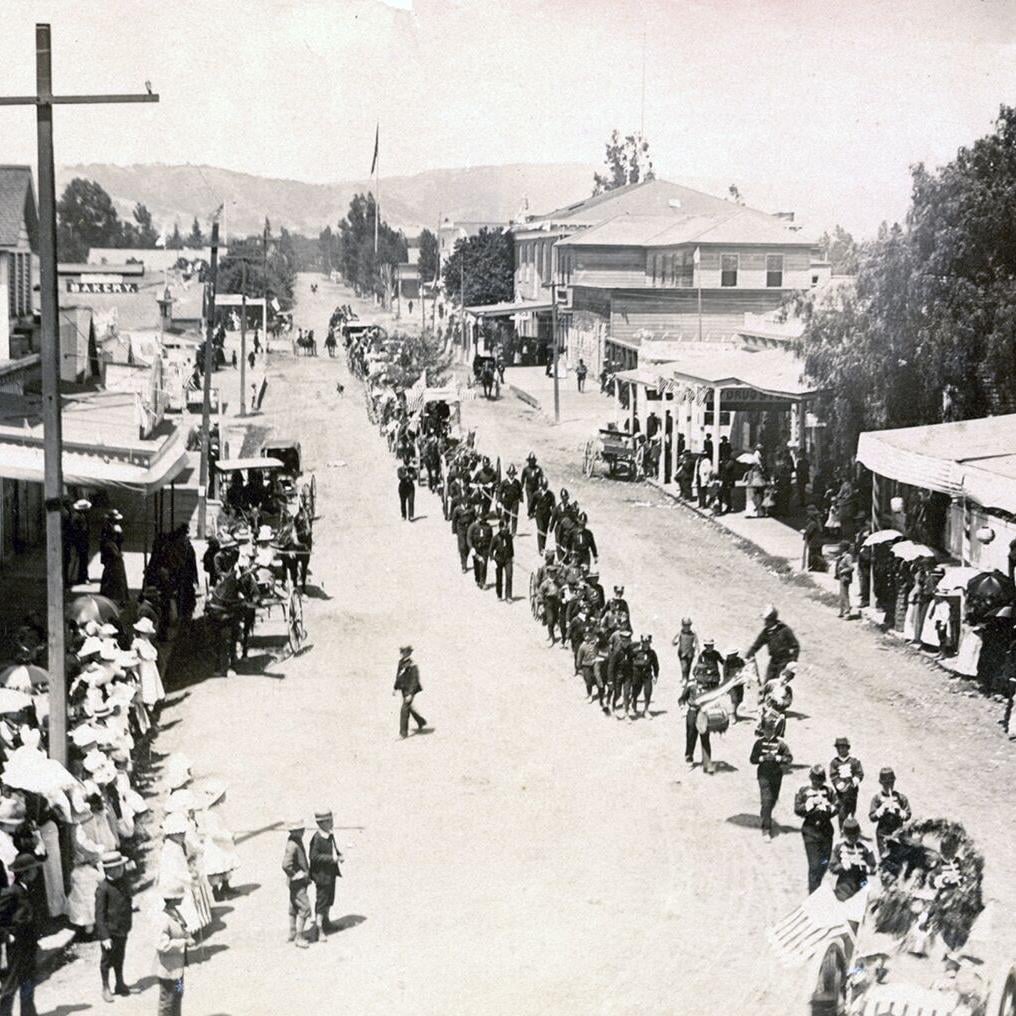
Much time was spent by travelers getting around these barriers, and over the years these obstacles to travel created the need for rest stops. Some of them developed into roadhouses, such as Uncle Tom’s Cabin (the 14-Mile House) that served the public for a hundred years. In the early 1900s this main route was given the name of El Camino Real (the "Royal Road”).
Most of the Peninsula was treeless in the early days, and the wind blew unmercifully at times. Trees were planted along the road to break the wind and to give shade and shelter from the sun that could beat down without mercy upon the travelers. After the 1850s, the tree of choice was the fast-growing eucalyptus that was imported from Australia. Many of these trees can still be seen along the El Camino in the city of Burlingame.
In 1912, in front of the ever-popular and well-patronized Uncle Tom’s Cabin roadhouse in San Bruno, the project of paving the El Camino Real was begun by the State of California after a highway department was formed.
A huge celebration was called for to announce the beginning of a system that would allow better and more rapid travel up and down the Peninsula. Speeches were made, food consumed, and the next day the project began. Gunny sacks full of cement and bags full of sand were laid beside the road waiting for the men in their gasoline-run mixing machines to turn the ingredients into a concrete road that would accommodate the rapidly-increasing number of automobiles.
The paved two-lane road was eventually widened to four lanes, but this proved inadequate to keep up with the ever-increasing traffic that used it. In the 1960s the El Camino Real was again widened, necessitating the removal of the last of the many historic buildings around Millbrae and San Bruno.
El Camino Real is a faster, more convenient road to travel on now. But with the loss of all of its roadhouses, it is a somewhat less colorful trip.














(0) comments
Welcome to the discussion.
Log In
Keep the discussion civilized. Absolutely NO personal attacks or insults directed toward writers, nor others who make comments.
Keep it clean. Please avoid obscene, vulgar, lewd, racist or sexually-oriented language.
Don't threaten. Threats of harming another person will not be tolerated.
Be truthful. Don't knowingly lie about anyone or anything.
Be proactive. Use the 'Report' link on each comment to let us know of abusive posts.
PLEASE TURN OFF YOUR CAPS LOCK.
Anyone violating these rules will be issued a warning. After the warning, comment privileges can be revoked.