While ensuring student safety is a goal we all share, research consistently shows increasing police presence does not necessarily lead to safer schools. Instead, proven strategies include mental health services, restorative justice initiatives, and school-based support systems that foster positive relationships and early intervention.
San Mateo County has implemented The Big Five emergency response system and the Student Threat Assessment Protocol, both of which focus on prevention and preparation rather than reactive policing. These proactive measures emphasize early intervention, reducing the need for law enforcement involvement. Expanding these approaches — rather than increasing police in schools — aligns with research-backed strategies that genuinely improve student safety.
Examining the role of SROs At a recent Blue Sky goal-setting workshop, San Mateo Councilmember, Danielle Cwirko-Godycki proposed funding school resource officers in local schools. Despite the belief that SROs deter violence, an analysis by Texas State University and the FBI, which examined more than 160 mass shooting incidents, found that not a single school shooting was stopped by an armed officer returning fire. Additionally, a 2021 study found that school shootings were 2.5 times more deadly in schools with SROs, underscoring the need for a broader approach to safety.
While overall youth crime rates have declined for decades, studies indicate that schools with SROs experience 3.5 times higher student arrest rates, often for minor infractions like tardiness or classroom disruptions — issues better addressed through counseling and restorative justice.
In California, Black students make up 6% of public school enrollment but account for 15% of student arrests, while Latino boys, who make up 28% of students, represent 44% of school-based arrests. Similarly, students with disabilities face referral rates to law enforcement nearly three times higher than their nondisabled peers. These statistics highlight the unintended consequences of school policing, which disproportionately impacts marginalized students.
Fiscal responsibility: Making sound investments in student safety
As San Mateo faces a $6 million general fund deficit, every dollar must be allocated effectively. Investing in SROs, which have not been proven to improve school safety significantly, raises concerns about fiscal responsibility. The city is also dealing with a $7 million shortfall in state reimbursements, further underscoring the need for thoughtful budget decisions. Given declining revenue from sales, business and hotel taxes, funding should be directed toward solutions that yield measurable benefits.
Recommended for you
To put SRO costs in perspective, a single officer costs between $75,000 and $120,000 per year, factoring in salary, benefits, training and equipment. Expanding SRO programs could require multiple officers, quickly pushing costs into the hundreds of thousands or even millions annually.
Meanwhile, the same funds could hire additional mental health professionals, counselors or social workers — positions that research shows improve student outcomes and reduce disciplinary issues.
Even one additional school psychologist or restorative justice specialist could provide direct interventions for hundreds of students in need of support. Given San Mateo’s financial landscape, prioritizing these proven alternatives is the most responsible approach.
A holistic approach to school safety
A strong and safe school environment is built on trust, support and evidence-based interventions. Schools that invest in mental health services and conflict resolution programs see lower suspension rates, higher graduation rates and fewer instances of violence. When students have access to counselors, social workers and community-based resources, they are more likely to seek help before conflicts escalate. Research confirms that preventative strategies — rather than punitive measures — create a learning environment where students feel supported rather than surveilled.
Rather than relying solely on law enforcement, a balanced approach that includes counseling, social-emotional learning and peer mediation has demonstrated long-term benefits for students and school communities. Suppose the goal is truly to foster a safe and thriving learning environment. In that case, we must look at what the evidence tells us works — not simply default to outdated strategies that feel familiar but fail to deliver results. The conversation about school safety is important, and decisions must be guided by research and the well-being of students. San Mateo has an opportunity to lead by example, prioritizing investments that create meaningful change. By focusing on approaches that build positive school climates and support students holistically, we can ensure that every young person in our community has the opportunity to learn, grow and succeed in an environment that truly supports them.
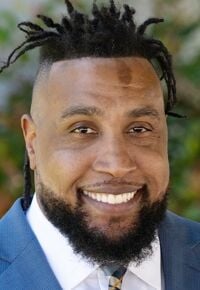
Dr. Charles Hansen is a nonprofit executive leader and resident of San Mateo.
Thanks for your letter, Mr. Hansen. To me, it basically comes down to a risk assessment of whether there is a greater or lesser chance of potentially harmful/violent episodes in the near future. Perhaps we can get the best of both worlds by arming school personnel, including teachers and mental health professionals, counselors, or social workers. If needed, they’ll have the proper tool to counter potential threats to students and others if they’re unable to de-escalate situations. Of course only for those personnel which have passed proper firearms safety and training courses and who are willing to be armed.
First she votes to take away safety bicycle lanes from children. Then she wants them to have easier access to Weed Shopes in downtown. Now she wants more police on campus beating up on children? Is she even a Democrat? Or is she more of a wolf in sheep clothing?
No one should recommend more police in schools. The research is very clear on that.
But for those who don't like research or researchers I recommend to check with the Jesters.
Like in the olden times jesters seem to be only ones able to talk truth to power:
School Police: Last Week Tonight with John Oliver (HBO)
Thank you for your more holistic approach to school violence and equity, Charles.
I would recommend that you broaden your discussion of safety to outside of the classroom, too. While statistics are lacking, my guess is that more kids are hurt or die on the streets heading to school than they are on campus. This is because of the failure of the City of SM to invest in adequate street safety, especially around schools. As a result, few parents are willing to let their kids walk or bike to school, increasing car traffic and danger around schools. National data shows that lower income, people of color are more likely to walk or bike to school and suffer disproportionately from traffic violence in their neighborhoods.
Unfortunately, Mr. Hansen hasn't been a strong advocate for kids' safety on our streets. During his run for SM City Council, he endorsed removal of the bike lanes next to SM High, College Park Elementary, and SM Adult Schools, on Humboldt, the most dangerous San Mateo street. Why, to add even more parking spaces to a street where most residents have driveways and garages.
I hope that Dr. Hansen will add traffic violence to his concerns on "school" safety going forward.
Keep the discussion civilized. Absolutely NO
personal attacks or insults directed toward writers, nor others who
make comments. Keep it clean. Please avoid obscene, vulgar, lewd,
racist or sexually-oriented language. Don't threaten. Threats of harming another
person will not be tolerated. Be truthful. Don't knowingly lie about anyone
or anything. Be proactive. Use the 'Report' link on
each comment to let us know of abusive posts. PLEASE TURN OFF YOUR CAPS LOCK. Anyone violating these rules will be issued a
warning. After the warning, comment privileges can be
revoked.
Please purchase a Premium Subscription to continue reading.
To continue, please log in, or sign up for a new account.
We offer one free story view per month. If you register for an account, you will get two additional story views. After those three total views, we ask that you support us with a subscription.
A subscription to our digital content is so much more than just access to our valuable content. It means you’re helping to support a local community institution that has, from its very start, supported the betterment of our society. Thank you very much!








(3) comments
Thanks for your letter, Mr. Hansen. To me, it basically comes down to a risk assessment of whether there is a greater or lesser chance of potentially harmful/violent episodes in the near future. Perhaps we can get the best of both worlds by arming school personnel, including teachers and mental health professionals, counselors, or social workers. If needed, they’ll have the proper tool to counter potential threats to students and others if they’re unable to de-escalate situations. Of course only for those personnel which have passed proper firearms safety and training courses and who are willing to be armed.
What is wrong with Danielle Cwirko-Godycki?
First she votes to take away safety bicycle lanes from children. Then she wants them to have easier access to Weed Shopes in downtown. Now she wants more police on campus beating up on children? Is she even a Democrat? Or is she more of a wolf in sheep clothing?
No one should recommend more police in schools. The research is very clear on that.
But for those who don't like research or researchers I recommend to check with the Jesters.
Like in the olden times jesters seem to be only ones able to talk truth to power:
School Police: Last Week Tonight with John Oliver (HBO)
https://www.youtube.com/watch?v=KgwqQGvYt0g
Thank you for your more holistic approach to school violence and equity, Charles.
I would recommend that you broaden your discussion of safety to outside of the classroom, too. While statistics are lacking, my guess is that more kids are hurt or die on the streets heading to school than they are on campus. This is because of the failure of the City of SM to invest in adequate street safety, especially around schools. As a result, few parents are willing to let their kids walk or bike to school, increasing car traffic and danger around schools. National data shows that lower income, people of color are more likely to walk or bike to school and suffer disproportionately from traffic violence in their neighborhoods.
Unfortunately, Mr. Hansen hasn't been a strong advocate for kids' safety on our streets. During his run for SM City Council, he endorsed removal of the bike lanes next to SM High, College Park Elementary, and SM Adult Schools, on Humboldt, the most dangerous San Mateo street. Why, to add even more parking spaces to a street where most residents have driveways and garages.
I hope that Dr. Hansen will add traffic violence to his concerns on "school" safety going forward.
Welcome to the discussion.
Log In
Keep the discussion civilized. Absolutely NO personal attacks or insults directed toward writers, nor others who make comments.
Keep it clean. Please avoid obscene, vulgar, lewd, racist or sexually-oriented language.
Don't threaten. Threats of harming another person will not be tolerated.
Be truthful. Don't knowingly lie about anyone or anything.
Be proactive. Use the 'Report' link on each comment to let us know of abusive posts.
PLEASE TURN OFF YOUR CAPS LOCK.
Anyone violating these rules will be issued a warning. After the warning, comment privileges can be revoked.