The UN's October 2024 Emissions Gap Report reveals that global emissions are essentially stagnant, with greenhouse gasses hitting a record 57 gigatons in 2023. The world is far from achieving the declines needed this decade – and that’s before any impact from a new Trump administration – underscoring the urgency for immediate action.
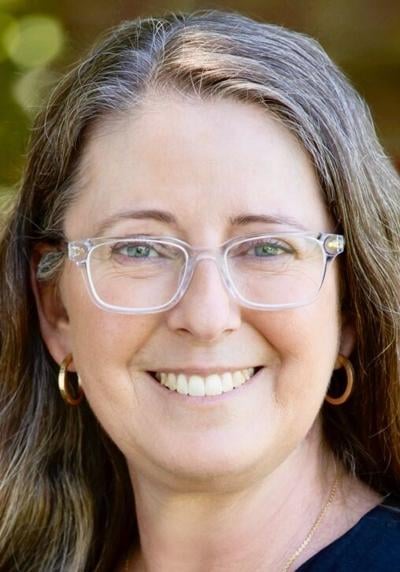
Sarah Hubbard
San Mateo County is addressing emissions, but further action across sectors is critical. Sustainable San Mateo County’s just released Indicators Report highlights transportation, responsible for 40% of the county’s emissions, and focuses on a key barrier to clean transportation: equitable access to electric vehicle charging.
From 2020-2023, zero-emission vehicles made up about a quarter of new sales, yet EVs are largely owned by higher-income, white or Asian residents. Black and Latino communities, with under 1% EV adoption, face significant climate and equity challenges under California’s 2030 and 2035 EV sales mandates.
While EVs are becoming more affordable, access to EV charging remains a significant issue. Nationally, 83% of EV charging is done at home. If you are a renter or live in a multifamily housing unit, you have very limited charging access. In the 20 cities that make up San Mateo County, where 36% of residents live in multifamily housing and 42% are renters, there are whole neighborhoods that have almost no charger access.
This is despite California’s Right-to-Charge policy, which establishes that access to EV charging should not be limited by housing type or ownership status. The policy ensures that homeowner associations and property owners cannot unreasonably block EV charger installations for residents in multifamily or rental units. However, this policy has not been enough to address the gap in charging for many in our community.
On Oct. 24, SSMC unveiled their new Indicators Report “Equitable Access to EV Charging” and hosted a discussion with representatives from local government, PG&E, Peninsula Clean Energy and Stanford. The report and event provided recommendations for what cities, utilities and residents can do to ensure all communities can partake in the transition to clean transportation.
First, cities need to address the gap in home charging access. Recommendations for cities include empowering residents and property owners with accessible information about EV charging options, costs, reputable installers, incentives and rebates. The report also recommended cities collaborate with Peninsula Clean Energy to identify apartment and multifamily building contacts to offer EV charger financial and technical support. While programs exist, in many cases the property owners, managers and residents who need this information are not receiving it.
The report also found that cities need to pay particular attention to EV charging costs and keeping it affordable. Currently, charging in apartments with third-party chargers is up to 50% more expensive than charging in a single-family home. One strategy discussed at the event and shared in Phillip Kobernick’s recent guest perspective is the idea of “right sized” charging–deploying lower power, less expensive chargers that can meet the overnight charging needs of most residents.
Recommended for you
Public charging access, provided by cities and businesses, is another key component. SSMC’s survey of local government found the biggest issues cities are having in installing public chargers to be funding and costs, issues related to the grid and Pacific Gas and Electric, and a lack of suitable sites. Recommendations for how cities and the county can build more publicly available and affordable charging included:
• Prioritize public EV chargers in key community spaces, solicit public feedback and identify high concentrations of multifamily units and renters;
• Band together to purchase EV chargers through pooled procurements;
• Consider installing streetlight chargers near apartments and multifamily units;
• Collaborate to identify public and private lands that might be made available to third-party EV charging network operators through long-term leases; and
• Promote equitable charging rates that offer residents of multifamily housing and CARE and FERA recipients access to local public DC fast chargers at lower-cost, off-peak residential utility EV rates.
The move to clean transportation holds significant promise for San Mateo County and globally. The technology exists and there is already strong momentum. But, without specific action from our cities, large portions of our community will be left behind.
Sarah Hubbard is the executive director of Sustainable San Mateo County. The 2024 Indicators Report is available at bit.ly/IndicatorsReport2024. Founded in 1992, Sustainable San Mateo County is a 501(c)(3) nonprofit dedicated to a vision of a sustainable future for everyone in the county. Sarah can be reached at shubbard@sustainablesanmateo.org.
Thanks for your guest perspective, Ms. Hubbard, but there’s an easy solution to this supposed inequity. Stop mandating electrification and stop feeding the climate industrial complex of waste and mismanagement. Why would folks waste time making their lives more difficult with range anxiety, charger anxiety (assuming the charger works), the inefficiency of wasting time waiting for a car to charge, etc.? If only there was a way for cars to carry their own electrical generator. Wait, there is. Hybrid vehicles. We’d likely save more money and emit fewer emissions if we subsidized hybrid vehicles instead of EVs and the added fossil fuel burning to generate and meet additional electricity demands.
Meanwhile, what the most important issue of all is missing from your guest perspective… How much this is going to cost taxpayers? And why are we continuing to take money from the poor to give to the rich… You said it yourself in that EVs are largely owned by higher-income folks. I can only hope President Trump defunds California from anything mandating electrical, while also defunding the train to nowhere. In the meantime, perhaps we can create a California version of DOGE. I’m betting a few contributors at the DJ would volunteer, and perform admirably, in cutting wasteful CA programs and departments.
Eh Sarah and Cathy - where in the Constitution does it state that all are entitled to subsidized EVs? You have it backwards. In the old days, the better off were able to buy cars until Ford came up with a plan to make them less expensive and available to most. The market will determine the future and viability of EVs, regardless of your inconsequential article. While we are at it, why not make the price of gasoline equitable for all? Your allies at CARB are proposing another $0.50 surcharge per gallon on January 1, 2025 to pay for your pipedreams. This is never ending, subsidize, subsidize and more subsidies. Ultimately, exactly the demographic that you are trying/faking to help is getting the short end of the stick. Social engineering at its best.
In 2022, fossil fuels subsidies in the USA totaled $757 billion. This includes $3 billion in explicit subsidies and $754 billion in implicit subsidies, which are costs like negative health impacts and environmental degradation that are borne by society at large rather than producers.
"San Mateo County is addressing emissions, but further action across sectors is critical."
Let's divide carbon emissions down to a solid 50% energy carbon and 50% transportation carbon - just for the sake of this argument.
So far San Mateo County is not addressing emissions at all. In fact they just stopped counting emissions in 2015. Because by 2016 they had established Peninsula Clean Energy (PCE) claiming to bring 100% clean energy to San Mateo County.
Of course the only green energy San Mateo County is producing is residential solar panels, but basically nothing at night. And yet through buying bragging rights to the Shasta Hydro power and old wind farms they greenwash their carbon emissions and claim 100% success on the home energy front.
That leaves us with another problem on the transportation front. But by claiming EVs are green no matter the size or however "grey" the power source really is, they can use PCE again and greenwash that carbon as well.
In reality the Bay Area has made little to no strides in reducing its carbon emissions - it's just carbon-laundering as much as possible.
Responsible "green politicians" and "sustainability staff" wouldn't have stopped counting CO2 real emissions in 2015. And they would have complained about PCE's greenwashing. This is all about grandstanding and "fake equity" discussions to do a little virtue signaling.
Keep the discussion civilized. Absolutely NO
personal attacks or insults directed toward writers, nor others who
make comments. Keep it clean. Please avoid obscene, vulgar, lewd,
racist or sexually-oriented language. Don't threaten. Threats of harming another
person will not be tolerated. Be truthful. Don't knowingly lie about anyone
or anything. Be proactive. Use the 'Report' link on
each comment to let us know of abusive posts. PLEASE TURN OFF YOUR CAPS LOCK. Anyone violating these rules will be issued a
warning. After the warning, comment privileges can be
revoked.
Please purchase a Premium Subscription to continue reading.
To continue, please log in, or sign up for a new account.
We offer one free story view per month. If you register for an account, you will get two additional story views. After those three total views, we ask that you support us with a subscription.
A subscription to our digital content is so much more than just access to our valuable content. It means you’re helping to support a local community institution that has, from its very start, supported the betterment of our society. Thank you very much!



(5) comments
Thanks for your guest perspective, Ms. Hubbard, but there’s an easy solution to this supposed inequity. Stop mandating electrification and stop feeding the climate industrial complex of waste and mismanagement. Why would folks waste time making their lives more difficult with range anxiety, charger anxiety (assuming the charger works), the inefficiency of wasting time waiting for a car to charge, etc.? If only there was a way for cars to carry their own electrical generator. Wait, there is. Hybrid vehicles. We’d likely save more money and emit fewer emissions if we subsidized hybrid vehicles instead of EVs and the added fossil fuel burning to generate and meet additional electricity demands.
Meanwhile, what the most important issue of all is missing from your guest perspective… How much this is going to cost taxpayers? And why are we continuing to take money from the poor to give to the rich… You said it yourself in that EVs are largely owned by higher-income folks. I can only hope President Trump defunds California from anything mandating electrical, while also defunding the train to nowhere. In the meantime, perhaps we can create a California version of DOGE. I’m betting a few contributors at the DJ would volunteer, and perform admirably, in cutting wasteful CA programs and departments.
Excellent points.
Eh Sarah and Cathy - where in the Constitution does it state that all are entitled to subsidized EVs? You have it backwards. In the old days, the better off were able to buy cars until Ford came up with a plan to make them less expensive and available to most. The market will determine the future and viability of EVs, regardless of your inconsequential article. While we are at it, why not make the price of gasoline equitable for all? Your allies at CARB are proposing another $0.50 surcharge per gallon on January 1, 2025 to pay for your pipedreams. This is never ending, subsidize, subsidize and more subsidies. Ultimately, exactly the demographic that you are trying/faking to help is getting the short end of the stick. Social engineering at its best.
In 2022, fossil fuels subsidies in the USA totaled $757 billion. This includes $3 billion in explicit subsidies and $754 billion in implicit subsidies, which are costs like negative health impacts and environmental degradation that are borne by society at large rather than producers.
"San Mateo County is addressing emissions, but further action across sectors is critical."
Let's divide carbon emissions down to a solid 50% energy carbon and 50% transportation carbon - just for the sake of this argument.
So far San Mateo County is not addressing emissions at all. In fact they just stopped counting emissions in 2015. Because by 2016 they had established Peninsula Clean Energy (PCE) claiming to bring 100% clean energy to San Mateo County.
Of course the only green energy San Mateo County is producing is residential solar panels, but basically nothing at night. And yet through buying bragging rights to the Shasta Hydro power and old wind farms they greenwash their carbon emissions and claim 100% success on the home energy front.
That leaves us with another problem on the transportation front. But by claiming EVs are green no matter the size or however "grey" the power source really is, they can use PCE again and greenwash that carbon as well.
In reality the Bay Area has made little to no strides in reducing its carbon emissions - it's just carbon-laundering as much as possible.
Responsible "green politicians" and "sustainability staff" wouldn't have stopped counting CO2 real emissions in 2015. And they would have complained about PCE's greenwashing. This is all about grandstanding and "fake equity" discussions to do a little virtue signaling.
Welcome to the discussion.
Log In
Keep the discussion civilized. Absolutely NO personal attacks or insults directed toward writers, nor others who make comments.
Keep it clean. Please avoid obscene, vulgar, lewd, racist or sexually-oriented language.
Don't threaten. Threats of harming another person will not be tolerated.
Be truthful. Don't knowingly lie about anyone or anything.
Be proactive. Use the 'Report' link on each comment to let us know of abusive posts.
PLEASE TURN OFF YOUR CAPS LOCK.
Anyone violating these rules will be issued a warning. After the warning, comment privileges can be revoked.