Ten years old, a boy who loved swimming in the river more than anything, was always wet behind the ears. Grandmother would wake him at first glimmer of light, and send him outside to feed the pigs and chickens, dogs chasing him and playfully nipping at his heels. A neighbor girl was always out at the same moment, feeding her family’s chickens and evading their dogs. As soon as they were done they would dash down to the river and jump in together, laughing, dancing as the water washed over them. Pure joy. They loved each other and their river.
And then, a body. … They gasped, ran out of the water, and stared. Bloated, hardly human, but they knew. They cried out and the village, awakened, came running.
“Tragedy!” an elder shouted. “What do we do?” Asked the crowd. “Justice!” In this community, justice meant treating the dead with dignity, moving the body with reverence, anointing it with oil, and singing ancient songs. The boy and girl watched with awe. They had witnessed others in their village receiving the rituals of death, but never a stranger. That night, the body was carried to the sacred cave, women wailed and men banged drums, some children cried, most sat quietly, and a few older boys laughed at the spectacle, until the body was buried. Then the village lifted burnt offerings to the stars and held a feast.
The next day the boy, awakened by his grandmother, did his chores, and this time more cautiously, dove into the river with his best friend.
Two weeks later, another body floated down the river. Again, the village responded. “We shall do justice!” And so they did. Again and again for two years.
One day a traveler visited from afar and witnessed these now common rituals, ending with song and feast. Knowing he carried his own ancient texts, the elders asked him to read from his book. “I hate, I reject your festivals, nor do I delight in your solemn assemblies. Take away from me the noise of your songs; But let justice roll down like waters and righteousness like an ever-flowing stream.” The elders, insulted by these words, drove him away. The boy and girl were numb. The man had left his book behind.
Recommended for you
Three weeks later, awakened by his grandmother as he was every day, he went outside to feed the animals. As the first glimmer of the sun rose, his now beloved, Inez, stepped outside and, eyes connecting, they stopped. A sound from the river stirred them. It was, again, a body. The two youths dove in and dragged a lifeless child’s body through the mud, out of the river and called for help.
“We shall do justice today!” shouted an elder. “We shall give them dignity!” And then, a sound like none had ever heard pierced the village, a scream. “STOP!”
Startled, silence fell over the crowd. “I care nothing for your justice and your feasts! Your sacrifices and burnt offerings offend me!”
The elders froze! Who would say such things?
The boy, Ian, and his beloved, Inez, stood in dawn’s light covered only with mud, nothing to protect them but their innocence, trembling yet defiant. An elder shouted “How dare you speak this way?” The girl, who had always been quiet, stood taller and said “We do justice by burying the dead. But, why don’t we go upstream and find out why they’re dying, or save them? Cowards!” An elder, angry, slapped her and a trickle of blood seeped from her lip. The boy, now more fierce than a jaguar, moved in front of her to deflect another blow. Struck in the chest, he collapsed, dead. With so many bodies in the cave, the elders decided Ian did not deserve their justice, and threw his body into the river, where it floated down to a village below.
This story, reimagined by me decades after hearing a “river of life” tale in El Salvador, is based on the lore of many cultures. People in power, believing they love justice, refuse to disrupt injustice, or worse, perpetuate it, demanding silence from those who shout “no more!” Any asking “why” are called naive and others demanding change are labeled extreme. One of my mentors, George Lakey, is traveling the world these days sharing his memoir, “Dancing With History.” George, 83, spent his life going upstream, disrupting injustice with nonviolent direct action, Quaker faith, and master storytelling, and he also trained thousands of activists like me to follow his lead. He taught us to do our work with joy, to dance. I believe that if more of us dance this way, children who cry “no more” will be embraced by their elders. Watch this space for an invitation to meet George when he visits here. There will be dancing.
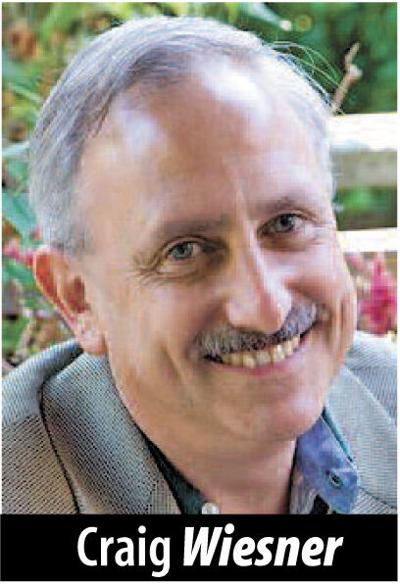
Craig Wiesner is the co-owner of Reach And Teach, a book, toy and cultural gift shop on 25th Avenue in San Mateo.
Thanks for retelling the "river of life" tale. When I first started reading the story about Ian and Inez, I thought of Emmett Till. The body in the water discovered by Ian and Inez had not received justice upstream and neither did Emmett. They received hate and violence. Compounding the evil upstream, none of the bodies in the story nor Emmett received justice from the people of the village. How many bodies must float downstream before we heed the words in Amos 5:24?
Keep the discussion civilized. Absolutely NO
personal attacks or insults directed toward writers, nor others who
make comments. Keep it clean. Please avoid obscene, vulgar, lewd,
racist or sexually-oriented language. Don't threaten. Threats of harming another
person will not be tolerated. Be truthful. Don't knowingly lie about anyone
or anything. Be proactive. Use the 'Report' link on
each comment to let us know of abusive posts. PLEASE TURN OFF YOUR CAPS LOCK. Anyone violating these rules will be issued a
warning. After the warning, comment privileges can be
revoked.
Please purchase a Premium Subscription to continue reading.
To continue, please log in, or sign up for a new account.
We offer one free story view per month. If you register for an account, you will get two additional story views. After those three total views, we ask that you support us with a subscription.
A subscription to our digital content is so much more than just access to our valuable content. It means you’re helping to support a local community institution that has, from its very start, supported the betterment of our society. Thank you very much!



(1) comment
Good morning , Craig
Thanks for retelling the "river of life" tale. When I first started reading the story about Ian and Inez, I thought of Emmett Till. The body in the water discovered by Ian and Inez had not received justice upstream and neither did Emmett. They received hate and violence. Compounding the evil upstream, none of the bodies in the story nor Emmett received justice from the people of the village. How many bodies must float downstream before we heed the words in Amos 5:24?
Welcome to the discussion.
Log In
Keep the discussion civilized. Absolutely NO personal attacks or insults directed toward writers, nor others who make comments.
Keep it clean. Please avoid obscene, vulgar, lewd, racist or sexually-oriented language.
Don't threaten. Threats of harming another person will not be tolerated.
Be truthful. Don't knowingly lie about anyone or anything.
Be proactive. Use the 'Report' link on each comment to let us know of abusive posts.
PLEASE TURN OFF YOUR CAPS LOCK.
Anyone violating these rules will be issued a warning. After the warning, comment privileges can be revoked.