Officials appear increasingly convinced that the Managed Lanes project, which seeks to construct tolled express lanes on Highway 101 in San Mateo County, will ease traffic congestion and bring additional benefits for low-income commuters.
A concern over equity was, until recently, preventing a handful of City/County Association of Governments board members from supporting the project, most notably San Mateo County Supervisor David Canepa, who has felt it was unfair to charge a toll to drive on a public highway.
But at a joint meeting with C/CAG and the San Mateo County Transportation Authority Nov. 16, Canepa said he could support the project if it includes a discount for those who can least afford express lane tolls to drive on those lanes.
He specifically recommended a program implemented in Los Angeles that offers $25 in credit to low-income drivers to travel on the express lanes but, for this project, he wants that number higher.
Another idea to offset the equity concern is to funnel toll revenue from the express lanes into bus service. Projections for toll revenue for express lanes in San Mateo County are between $10 million and $20 million annually.
C/CAG staff is also set to conduct an equity study to help guide policy decisions moving forward.
The $514 million Managed Lanes proposal entails the construction of an additional lane in each direction on the stretch of Highway 101 in San Mateo County between Interstate 380 to the southern end of San Mateo County. The far left lane in each direction would be converted to an express lane with signs and real-time surveillance equipment installed. Those lanes are intended to improve traffic by allowing buses, carpools of three people or more and motorcycles to travel free while charging an electronic toll for other drivers who choose to use them. Express lanes are monitored to ensure drivers maintain speeds of at least 45 mph during peak commute times. Construction is slated to begin in spring 2019 and be completed by mid-2022.
C/CAG boardmember Sam Hindi, also Foster City mayor, has also come around on the project.
“I have a better understanding of the project now and see the opportunities for those who are underserved,” he said at the meeting.
TA boardmember Emily Beach, also a Burlingame councilwoman, articulated a few of those opportunities.
“I started very skeptically about the environmental and equity impacts [of this project] but I’ve come to understand this is going to improve mobility for everyone,” Beach said. “The policy opportunities really excite me and it’s the opportunity, from an equity perspective, not just to do no harm to people who are lower income, but to actually advance equity if we make good policy decisions.
“We can take some of this revenue and then redirect it in ways that can subsidize express bus service, the toll lanes if needed, we can reinvest in communities of concern for last-mile connections,” she continued. “In L.A., they’re doing that and it’s working. We can take it a step further.”
Recommended for you
Those policy decisions, including toll rates and how toll revenue is spent, will be made by the owner of the express lanes. The operator of the express lanes will manage day-to-day operation of the facility on behalf of the owner. C/CAG will decide on the owner and operator of the express lanes in December. C/CAG is a joint powers authority comprised of board members representing each city and the county that works on quality of life issues such as air quality and transportation, among others.
There are a variety of potential owner/operator arrangements, but the Metropolitan Transportation Commission, Santa Clara Valley Transportation Authority, C/CAG itself or a new joint powers board comprised of local officials are the options. The decision, as many boardmembers described it, is between local or regional control of the express lanes.
Board members were more or less split on what owner/operator arrangement they think is best, and many are still undecided.
“I’m on the side of local control and I think with MTC we lose local control and we’d only have one seat on the board,” said county Supervisor Carole Groom, also a TA member. “I think we can figure out between the solid staffs we have in this county plus all the people on our various boards a way to do it.”
Supervisor Don Horsley, also TA chair, said he’s leaning toward handing control over to MTC in part because that agency would then take on the financial risk of the express lanes and would have increased bonding capacity for future projects. MTC also has experience managing express lanes whereas C/CAG or a yet-to-be-created JPA does not.
South San Francisco Mayor Pro Tem Karyl Matsumoto, also a TA and C/CAG board member, argued that deferring to MTC on the project wouldn’t deprive San Mateo County of control.
“I don’t think we’ll lose that much local control [with MTC]. My concern is the financial liability and the bonding capability,” she said. “MTC is the pass-through for all state, federal and local monies and we can’t lose sight of that.”
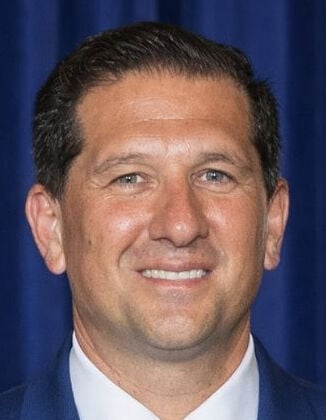
David Canepa
Doug Kim, C/CAG boardmember and Belmont mayor, said he’s still undecided on who he wants to own and operate the facility, but said he’s partial to an arrangement that has the best chance of ensuring the express lanes eventually extend into San Francisco.
“None of this matters if this toll facility is a bridge to nowhere and once we hit San Francisco it all falls apart,” he said. “The real answer will be what gets us the best chance to get that true connection to San Francisco.”
This does not go far enough. How about managed street parking in residential areas? I left the City of San Mateo 1992 and returned in 1999. The biggest change was difficulty finding street parking in residential areas. Demographics are changing with more vehicles per household. People are using garages to store stuff and parking on the street. Now accessory dwelling units are going up to exacerbate the problem. This may sound like a way out scheme now – but toll roads were unsellable a few years ago, under the code words “managed lanes” it is sellable now.
Do the other transit agencies - Samtrans, Caltrain, BART - offer subsidies for low income riders? If not, wouldn't it be smarter to use scarce $ to subsidize public transport options instead of solo driving???
Keep the discussion civilized. Absolutely NO
personal attacks or insults directed toward writers, nor others who
make comments. Keep it clean. Please avoid obscene, vulgar, lewd,
racist or sexually-oriented language. Don't threaten. Threats of harming another
person will not be tolerated. Be truthful. Don't knowingly lie about anyone
or anything. Be proactive. Use the 'Report' link on
each comment to let us know of abusive posts. PLEASE TURN OFF YOUR CAPS LOCK. Anyone violating these rules will be issued a
warning. After the warning, comment privileges can be
revoked.
Please purchase a Premium Subscription to continue reading.
To continue, please log in, or sign up for a new account.
We offer one free story view per month. If you register for an account, you will get two additional story views. After those three total views, we ask that you support us with a subscription.
A subscription to our digital content is so much more than just access to our valuable content. It means you’re helping to support a local community institution that has, from its very start, supported the betterment of our society. Thank you very much!













(4) comments
This does not go far enough. How about managed street parking in residential areas? I left the City of San Mateo 1992 and returned in 1999. The biggest change was difficulty finding street parking in residential areas. Demographics are changing with more vehicles per household. People are using garages to store stuff and parking on the street. Now accessory dwelling units are going up to exacerbate the problem. This may sound like a way out scheme now – but toll roads were unsellable a few years ago, under the code words “managed lanes” it is sellable now.
All lanes for all people, No on elite lanes.
I so totally agree! no exceptions for any "group".
Do the other transit agencies - Samtrans, Caltrain, BART - offer subsidies for low income riders? If not, wouldn't it be smarter to use scarce $ to subsidize public transport options instead of solo driving???
Welcome to the discussion.
Log In
Keep the discussion civilized. Absolutely NO personal attacks or insults directed toward writers, nor others who make comments.
Keep it clean. Please avoid obscene, vulgar, lewd, racist or sexually-oriented language.
Don't threaten. Threats of harming another person will not be tolerated.
Be truthful. Don't knowingly lie about anyone or anything.
Be proactive. Use the 'Report' link on each comment to let us know of abusive posts.
PLEASE TURN OFF YOUR CAPS LOCK.
Anyone violating these rules will be issued a warning. After the warning, comment privileges can be revoked.