Remember those quarter-sized turtles in plastic bowls, adorned with a 2-inch green plastic palm tree, available for a pittance from neighborhood five-and-dimes? Millions were sold for decades. For many kids, these were the first “pet” and the first experience with death (the bowls could not meet the animals’ needs, the feed a recipe for starvation). These animals were baby Red-Eared Sliders (for the bright red stripe running alongside their faces). A full grown Red-Ear is dinner-plate size.
Federal regulations passed in 1975 prohibit selling turtles less than 4 inches long, except for “scientific purposes.” As such, we must have thousands of scientists in elementary schools since so many thousands are still sold! Today’s generation of turtle-loving kids also purchase tanks, filters, heaters and full-spectrum artificial-sunlight bulbs to help these babies mature into very hardy adults. Good for the turtles, yes, but ... .
Today, adult Red-Ears are found lounging on fallen logs throughout Bay Area lakes. They should not be here. Native to the Southeastern United States, Red-Ears are dumped when they outgrow the tanks (or interests) of pet owners and “liberated” by well-meaning but misinformed rescuers (from food markets and pet shops). Red-Ears have now almost completely replaced our native Western Pond Turtle.
Exported en masse, the most commonly kept pet turtle in the United States is also now the most popular reptile pet worldwide: escaped and abandoned Red-Ears have invaded waterways in Australia, Austria, Bahamas, Bahrain, Belgium, Bermuda, Brazil, British Virgin Islands, Cambodia, Canada, Cayman Islands, Chile, China, Costa Rica, Czech Republic, Denmark, Dominican Republic, Finland, France, French Polynesia, Germany, Gibraltar, Guadeloupe, Guam, Guyana, Hong Kong, Hungary, Indonesia, Israel, Italy, Japan, both Koreas, Latvia, Lithuania, Malaysia, Martinique, Micronesia, New Caledonia, New Zealand, Northern Mariana Islands, Panama, Philippines, Poland, Puerto Rico, Saint Lucia, Singapore, South Africa, Spain, Sri Lanka, Sweden, Switzerland, Taiwan, Thailand, Trinidad and Tobago, United Kingdom and Vietnam.
PHS/SPCA always has Red-Ears for adoption. Contact us if you want to consider properly caring for a needy turtle.
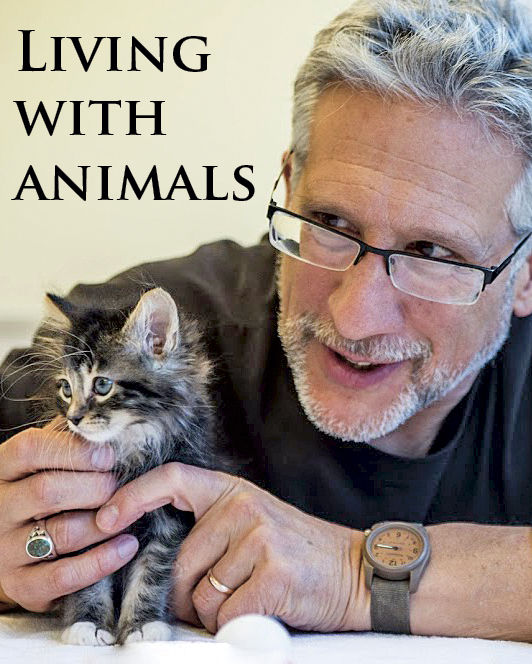
Ken White is the president of the Peninsula Humane Society & SPCA
Keep the discussion civilized. Absolutely NO
personal attacks or insults directed toward writers, nor others who
make comments. Keep it clean. Please avoid obscene, vulgar, lewd,
racist or sexually-oriented language. Don't threaten. Threats of harming another
person will not be tolerated. Be truthful. Don't knowingly lie about anyone
or anything. Be proactive. Use the 'Report' link on
each comment to let us know of abusive posts. PLEASE TURN OFF YOUR CAPS LOCK. Anyone violating these rules will be issued a
warning. After the warning, comment privileges can be
revoked.
Please purchase a Premium Subscription to continue reading.
To continue, please log in, or sign up for a new account.
We offer one free story view per month. If you register for an account, you will get two additional story views. After those three total views, we ask that you support us with a subscription.
A subscription to our digital content is so much more than just access to our valuable content. It means you’re helping to support a local community institution that has, from its very start, supported the betterment of our society. Thank you very much!









(0) comments
Welcome to the discussion.
Log In
Keep the discussion civilized. Absolutely NO personal attacks or insults directed toward writers, nor others who make comments.
Keep it clean. Please avoid obscene, vulgar, lewd, racist or sexually-oriented language.
Don't threaten. Threats of harming another person will not be tolerated.
Be truthful. Don't knowingly lie about anyone or anything.
Be proactive. Use the 'Report' link on each comment to let us know of abusive posts.
PLEASE TURN OFF YOUR CAPS LOCK.
Anyone violating these rules will be issued a warning. After the warning, comment privileges can be revoked.