“We have nothing to fear but fear itself” — Franklin Delano Roosevelt.
Today, the vast majority of us would reject that notion entirely. In the wake of the infamous coronavirus outbreak, the world has been brought to its knees. Stock markets are plunging. Schools and many businesses have shutdown nationwide. Hospitals are overburdened. The Bay Area is set to issue the nation’s first shelter-in-place order in history. Nevertheless, one thing has managed to spread faster than the coronavirus: fear.
In 1933, President Franklin Delano Roosevelt understood that fear posed a far greater threat than anything else. In his first inaugural address, it was quite provocative for anyone, let alone someone in his position of leadership, to suggest there was nothing to fear. After all, there was much to fear: a plunging stock market, endless breadlines, record unemployment and poverty, pervasive disease and the greatest recession the world had ever known.
As the president went on, it became increasingly clear that he was not dismissing the justifiable fears of his constituents. Neither was he suggesting there was no need to panic. His sentiments went far deeper than that.
Roosevelt reasoned that fear had the capacity to tear apart the nation faster than any impending doomsday. “Nameless, unreasoning, unjustified terror which paralyzes needed efforts to convert retreat into advance,” said Roosevelt. “In every dark hour of our national life a leadership of frankness and of vigor has met with that understanding and support of the people themselves which is essential to victory.” Roosevelt understood that a nation paralyzed with terror could do nothing. A nation united in the face of terror, however, could overcome any challenge.
One thing is certain: history shows us time and again that, no matter how great the challenge or terrifying the threat, human beings have the capacity to overcome. With that, I truly believe our greatest strength comes when we unite. Fear, in fact, has the capacity to bring us together when we confront it together.
Consider the previous threats we have withstood.
Recommended for you
Our transition to the new millennium in 2000 was marked by several visions and predictions of the end of the world. Those predictions were met with real events that generated panic among people in and beyond our nation, such as the internet bubble and the millennium computer virus Y2K. Grocery store proprietors, in some cases, extorted record profits from the fear of those panicked by the prospects of a life without crucial supplies in the event of a catastrophe. Similar fears emerged in 2012 as a result of similar ancient doomsday predictions that fortunately turned out to be false.
Beyond that, consider the anthrax scare in 2001; the West Nile virus in 2002; SARS in 2003; the bird flu in 2005; the e. coli scare in 2006; the Great Recession of 2008; the swine flu of 2009; North Korea’s threats of nuclear war in 2013; the Ebola virus in 2014; the ISIS threat of 2015; and the Zika virus in 2016, to name a few.
In the wake of such events, behind the thunderous storms of turbulent and pervasive fear lies an unwavering desire to preserve the human spirit. Preserving the human spirit has the means to motivate us to collectively rise above mass panic. Indeed, we have seen the power of that collective emergence in nearly every catastrophic event known to man.
The California residents devastated by the wildfires in San Joaquin County two years ago witnessed the same compassion from neighboring residents that sacrificed their time to lend a loving hand.
Such unity in the face of terror was most evident in the wake of the Sept. 11 terrorist attacks. 150 members of Congress — Republicans and Democrats — stood united on the Capitol steps that fateful day, chanting our patriotic hymn “God Bless America” in the face of grievance and terror. This unity was also manifested in the countless stories of first responders who ran toward the burning buildings to save lives. In many cases, it meant sacrificing their own for the greater good.
I do not suggest we should not take precautions. To overcome the pandemic we are faced with, we must take all measures necessary to safeguard our friends and loved ones. We should diligently follow the direction of our public officials and leaders to combat the coronavirus.
Nevertheless, the responses to such events remind us that we are inextricably bound to the same fate, and that we will overcome this threat as we did many, many others. We defeat doomsday theorists and forces that attempt to divide us when we cast aside the social norms that we are accustomed to and come together to help the strangers among us toward a better future. Beneath the vast illusive differences that drive us apart lies the root of our greatest strength — the intangible love that has the means to bind us together.
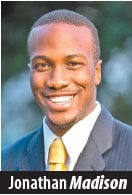
A native of Pacifica, Jonathan Madison worked as professional policy staff for the U.S. House of Representatives, Committee on Financial Services, from 2011-2013. Jonathan is an attorney be reached via email at jonathanemadison@gmail.com.
Keep the discussion civilized. Absolutely NO
personal attacks or insults directed toward writers, nor others who
make comments. Keep it clean. Please avoid obscene, vulgar, lewd,
racist or sexually-oriented language. Don't threaten. Threats of harming another
person will not be tolerated. Be truthful. Don't knowingly lie about anyone
or anything. Be proactive. Use the 'Report' link on
each comment to let us know of abusive posts. PLEASE TURN OFF YOUR CAPS LOCK. Anyone violating these rules will be issued a
warning. After the warning, comment privileges can be
revoked.
Please purchase a Premium Subscription to continue reading.
To continue, please log in, or sign up for a new account.
We offer one free story view per month. If you register for an account, you will get two additional story views. After those three total views, we ask that you support us with a subscription.
A subscription to our digital content is so much more than just access to our valuable content. It means you’re helping to support a local community institution that has, from its very start, supported the betterment of our society. Thank you very much!





(1) comment
Your column today as it appears in the e-Edition attributes
"Nothing to Fear but Fear Itself" to Winston Churchill
Please review the online e- Edition to view what I read.
(Of course it was spoken by FDR not Churchill.)
Welcome to the discussion.
Log In
Keep the discussion civilized. Absolutely NO personal attacks or insults directed toward writers, nor others who make comments.
Keep it clean. Please avoid obscene, vulgar, lewd, racist or sexually-oriented language.
Don't threaten. Threats of harming another person will not be tolerated.
Be truthful. Don't knowingly lie about anyone or anything.
Be proactive. Use the 'Report' link on each comment to let us know of abusive posts.
PLEASE TURN OFF YOUR CAPS LOCK.
Anyone violating these rules will be issued a warning. After the warning, comment privileges can be revoked.