As state laws pushing for affordable housing production continue to take shape, a new bill by state Sen. Josh Becker, D-San Mateo, looks to keep funding for below-market rate housing flowing in cities that could otherwise be cut off as a result of existing penalties for not meeting housing goals.
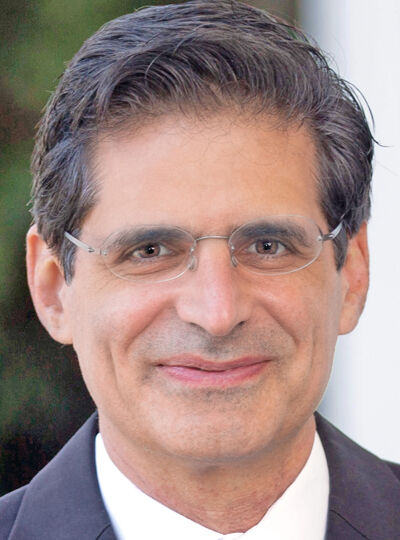
Josh Becker
Local jurisdictions can find themselves barred from receiving state funding to produce subsidized homes as a result of insufficient plans to build new housing, a penalty built into the Regional Housing Needs Allocation targets. Cities that do not submit sufficient plans to fulfill the allocations can forfeit their eligibility for various grants available to affordable housing developers.
“The penalty is counterproductive and makes absolutely no sense,” said Becker. “Cities and counties should be on the hook for compliance, but affordable homes should not be used as a bargaining chip.”
The legislation, Senate Bill 1094, is timely as Bay Area cities will need to submit their plans — called housing elements — by the beginning of next year. The plans will need to indicate where cities intend to permit housing over the next eight years. And this year’s allocations are not only much larger than they have ever been, but state officials will be scrutinizing the plans to ensure viability in ways they have not done in past cycles.
Becker’s office pointed to several cities that were required to submit plans earlier this year, ahead of Bay Area jurisdictions, in which housing elements have been determined to be out of compliance by the state Department of Housing and Community Development.
Notably, the housing element for the city of Los Angeles was rejected last month. Under current law, nonprofit affordable housing developers there could lose access to millions in funding. Becker’s office notes Bay Area cities “may face similar challenges coming into compliance.”
Becker’s bill also tackles other potentially problematic nuances within RHNA laws. Housing options unable to be counted as traditional units generally are not counted with allocations. That means cities do not receive credit for interim housing for people experiencing homelessness or partnerships with home sharing programs. The law addresses the issue by allowing cities to have their allocations reduced by 25% in exchange for funding such programs.
Recommended for you
“Rapid, cost-efficient and flexible interim solutions to bring people indoors sooner are important tools on the spectrum of housing,” said Joanne Price, a vice president at LifeMoves, a nonprofit that operates several facilities on the Peninsula for people transitioning from homelessness.
As an additional substitute to building more housing, Becker’s bill would also allow cities to receive credit for converting existing housing stock to below-market rate. City councilmembers in both Burlingame and South San Francisco have recently expressed frustration that RHNA obligations do not take into account the “preservation” of housing that has naturally fallen below median prices for the area.
In those situations, tenants can be at risk of displacement if landlords sell the property, conduct major renovations or for other reasons raise rents. Traditional deed-restricted affordable housing can also require preservation, as deed restrictions that keep units below-market rate and available only to people earning below certain thresholds typically expire after 55 years or less.
RHNA laws require certain amounts of below-market rate housing be built for various income brackets. Becker’s bill could allow not only newly constructed units but also those converted from market rate to count toward the obligations.
The bill will still need to pass the Senate and Assembly and receive the governor’s sign-off before becoming law.
Keep the discussion civilized. Absolutely NO
personal attacks or insults directed toward writers, nor others who
make comments. Keep it clean. Please avoid obscene, vulgar, lewd,
racist or sexually-oriented language. Don't threaten. Threats of harming another
person will not be tolerated. Be truthful. Don't knowingly lie about anyone
or anything. Be proactive. Use the 'Report' link on
each comment to let us know of abusive posts. PLEASE TURN OFF YOUR CAPS LOCK. Anyone violating these rules will be issued a
warning. After the warning, comment privileges can be
revoked.
Please purchase a Premium Subscription to continue reading.
To continue, please log in, or sign up for a new account.
We offer one free story view per month. If you register for an account, you will get two additional story views. After those three total views, we ask that you support us with a subscription.
A subscription to our digital content is so much more than just access to our valuable content. It means you’re helping to support a local community institution that has, from its very start, supported the betterment of our society. Thank you very much!









(3) comments
I presume this is SB 1094? https://leginfo.legislature.ca.gov/faces/billTextClient.xhtml?bill_id=202120220SB1094#98AMD
Correct
The law that needs to be passed is to repeal RHNA.
Welcome to the discussion.
Log In
Keep the discussion civilized. Absolutely NO personal attacks or insults directed toward writers, nor others who make comments.
Keep it clean. Please avoid obscene, vulgar, lewd, racist or sexually-oriented language.
Don't threaten. Threats of harming another person will not be tolerated.
Be truthful. Don't knowingly lie about anyone or anything.
Be proactive. Use the 'Report' link on each comment to let us know of abusive posts.
PLEASE TURN OFF YOUR CAPS LOCK.
Anyone violating these rules will be issued a warning. After the warning, comment privileges can be revoked.