

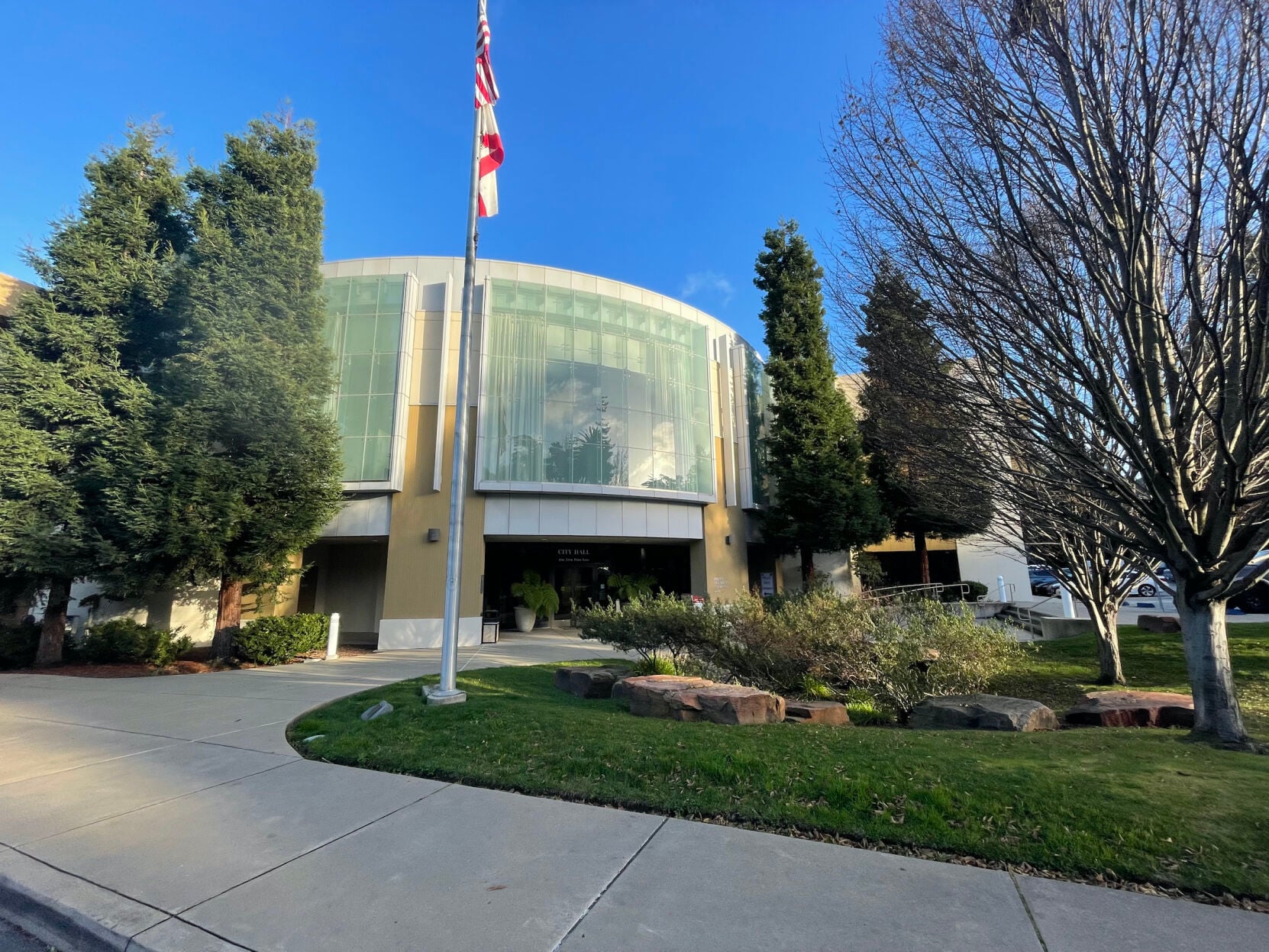
Belmont is staying cautiously optimistic over its current $1.2 million surplus due to plateauing sales tax, uncertain state reimbursements and declining hotel tax revenue.
The city’s general fund is currently at about $36 million, almost $3 million higher than anticipated.
Property tax is one of the city’s main revenue sources, which is currently $1.2 million higher than initial projections, though it’s still facing uncertainty over its property-tax-in-lieu-of-vehicle-license-fee funds, which has decreased due to the state delaying or reducing its reimbursement to the county each year. Belmont only received about two-thirds of the reimbursement it was supposed to receive from the state.
The complicated revenue stream is related to vehicle license fees paid by residents, which are directed to the state and then subsequently reimbursed to cities, typically by the following fiscal year. But the payback process is based on a complicated formula, and given the state’s widening shortfall, uncertainty over whether it will actually pay back cities has become an annual battle.
All jurisdictions have joined a countywide lawsuit against the state to ensure the funds are adequately reimbursed every year, and some cities have decided not to even include the funds in their budget projections just in case it doesn’t come through.
Without receiving the reimbursement, the city could lose about $2.5 million this fiscal year, which equates to over 50% of the city's sales tax revenue, Finance Director Grace Castaneda said.
“It’s a major revenue source,” Castaneda said during the meeting Feb. 24.
Recommended for you
Sales tax is also trending higher than expected by about $150,000, mainly due to stronger performance within the auto industry, which saw a spending surge due to electric vehicle tax credit expiration in September, she added. However, the revenue stream may start to dip again in the near future.
“If you expand that view over the last several years, sales tax has pretty much been flat,” Castaneda said. “Sales tax seems to be slowing down across sectors.”
Despite increasing its transient occupancy, or hotel, tax rate to 14% in 2023, it’s still bringing in less revenue than previous years, which could be a result of slowed commercial development, leasing and even the relocation of Oracle’s headquarters out of Redwood Shores.
“A lot of that is driven by not just Oracle but the whole Redwood Shores ecosystem and what's happening there, so although we've made some recovery since COVID, a lot of this is business driven, like conventions, what happens in San Francisco and overflow that we would've gotten,” City Manager Afshin Oskoui said during the meeting.
Over the last several years, the city has also lost two hotels, now being converted to residential units, which may affect the revenue stream as well.
Despite a downtrodden market, the city has also been looking to increase its life science presence in the area, recently approving a seven- and eight-story development at 1301 Shoreway Road. It’s also in the midst of annexing the Harbor Industrial Area, which would likely see more commercial developments including biotechnology firms.
“We are looking at all our levers trying to identify those areas and expand the commercial base,“ Oskoui said.







(0) comments
Welcome to the discussion.
Log In
Keep the discussion civilized. Absolutely NO personal attacks or insults directed toward writers, nor others who make comments.
Keep it clean. Please avoid obscene, vulgar, lewd, racist or sexually-oriented language.
Don't threaten. Threats of harming another person will not be tolerated.
Be truthful. Don't knowingly lie about anyone or anything.
Be proactive. Use the 'Report' link on each comment to let us know of abusive posts.
PLEASE TURN OFF YOUR CAPS LOCK.
Anyone violating these rules will be issued a warning. After the warning, comment privileges can be revoked.