
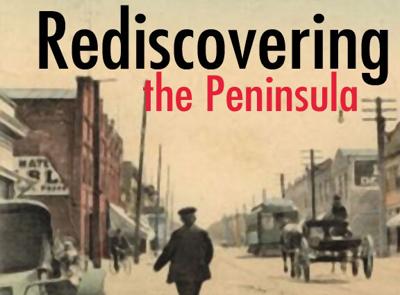


There are times when the world passes you by unnoticed. This has been the case of a piece of territory that once was well known to most of the citizens of the Peninsula.
El Camino Real (Mission Road) was blazed in the late 1700s as a means of traveling from the Mission Santa Clara (San Jose) and Mission Dolores (San Francisco). A section of this well traveled road presented a problem due to the Colma Creek yearly fluctuations — little water in the summer and too much water in the winter.
Nevertheless, it had an attraction that was exploited by the early soldiers and church officials — it was a good place to raise cattle and horses they dearly needed. For more than 60 years this was its designated use — raising cattle and horses. In 1836, Jose Antonio Sanchez was awarded this land for his service to the Spanish and Mexican governments and the land continued as a cattle ranch. His son, Isidro, inherited the property when his father died in 1843 and he lived on the land for a while. But the lure of the good life in San Francisco (Yerba Buena) was too appealing so he moved to the big city to live. A piece of the land along Mission Road was sold around 1850 and the 12-Mile House was built to service the increased travel along this section of the road. The ranch was sold to Mr. Edmonson just after the 49er Gold Rush hit California. Three years later, Charles Lux bought it and the Miller-Lux Ranch was formed. Mr. Lux built a palatial home along the road and a small community called Baden developed to furnish help for the cattle ranch. Cattle was still king. In the late 1880s, Henry Miller (Lux had died already), formed a partnership with Swift and Company for a meat packing and land speculation faction. The South San Francisco Land and Improvement Company split up most of the land for house lots and sold them to the workers of the area. At this same time, Holy Cross Cemetery was being developed to the northeast of the future South San Francisco. Due to the increased traffic and lack of facilities for the bereaved that attended the burial service at Holy Cross Cemetery, Brooks constructed an inn, called Brooksville, across from the cemetery. It became an immediate success and has served countless thousands of travelers and cemetery visitors since its development in 1894. It still operates on Mission Road as Molloy’s.
When South San Francisco incorporated in 1908, the western border of the city became Chestnut Avenue. Hillside Boulevard to the north defined the boundary along San Bruno Mountain. This left an unincorporated, no-man’s-land of sorts between Chestnut and Holy Cross Cemetery from Hillside Boulevard, past Colma Creek and to the west.
In 1861, the San Francisco and San Jose Railroad was built along the Mission Road. The ordeal of getting to San Francisco was no longer so difficult. The Mission Road was almost impassable in the winter due to the gumbo-texture of the road bed. The train became a more dependent means of getting the farm products of the area to the San Francisco market.
In 1894, Joseph Uccelli emigrated from Italy and settled on former Lux-Miller Ranch property along Grand Avenue and Oak. At first, he leased the property from the Lux heirs but due to his thrift and hard work growing violets, he was able to save enough money to purchase a plot of land.
Recommended for you
In 1903, the No. 40 Trolley Line was built along Mission Road. A stop, Liepsic Junction, was built close to the 12-Mile House. This increased options for transporting the violets to the downtown market to sell. In 1907, Uccelli was able to convince his nephew Peter to come to the United States and farm some land by his plot. Later two other nephews, Guissepi, and then Giovini, immigrated to the area and began growing vegetables — zucchini, beans and potatoes. Lettuce was tried later and proved successful.
Numerous other, mainly Italian, farmers settle in this “No-Man’s-Land” between Colma and South City. Included are: Armanino family (Grand and Willow avenues); Giannini family (owned land around Holly, Heather Way in Sunshine Gardens); Tiny Vago grew violets where Kaiser Hospital is today); Rusticci and Brusco grew vegetables at the “point” in Baden In addition; the Spinelli family raised violets next to Holy Cross (El Camino High School area). There are many, many more vegetables and flower growers that occupied the vacant lands north of Grand Avenue and to the west of El Camino Real.
In 1953, the land had become too valuable for farming and the land between Chestnut, Holy Cross, Hillside Boulevard and Mission Road became annexed to South San Francisco. The last farming activity in this area was to the west of the home of the Uccelli family who lived on Grand Avenue. The Old Red Barn that had been a part of the Charles Lux home at Chestnut and Mission Road was torn down in the early 2000s and houses, apartments and condos were built on this property.
The 12-Mile House has been torn down, the trolley line torn up, the Lux mansion was razed and the Colma Creek (San Bruno Creek) has been tamed allowing for better roads throughout the year. BART was constructed on the old No. 40 trolley line alignment.
Rediscovering the Peninsula runs every weekend. It is compiled through our archives created by Jim Clifford and the late Darold Fredricks.











(0) comments
Welcome to the discussion.
Log In
Keep the discussion civilized. Absolutely NO personal attacks or insults directed toward writers, nor others who make comments.
Keep it clean. Please avoid obscene, vulgar, lewd, racist or sexually-oriented language.
Don't threaten. Threats of harming another person will not be tolerated.
Be truthful. Don't knowingly lie about anyone or anything.
Be proactive. Use the 'Report' link on each comment to let us know of abusive posts.
PLEASE TURN OFF YOUR CAPS LOCK.
Anyone violating these rules will be issued a warning. After the warning, comment privileges can be revoked.