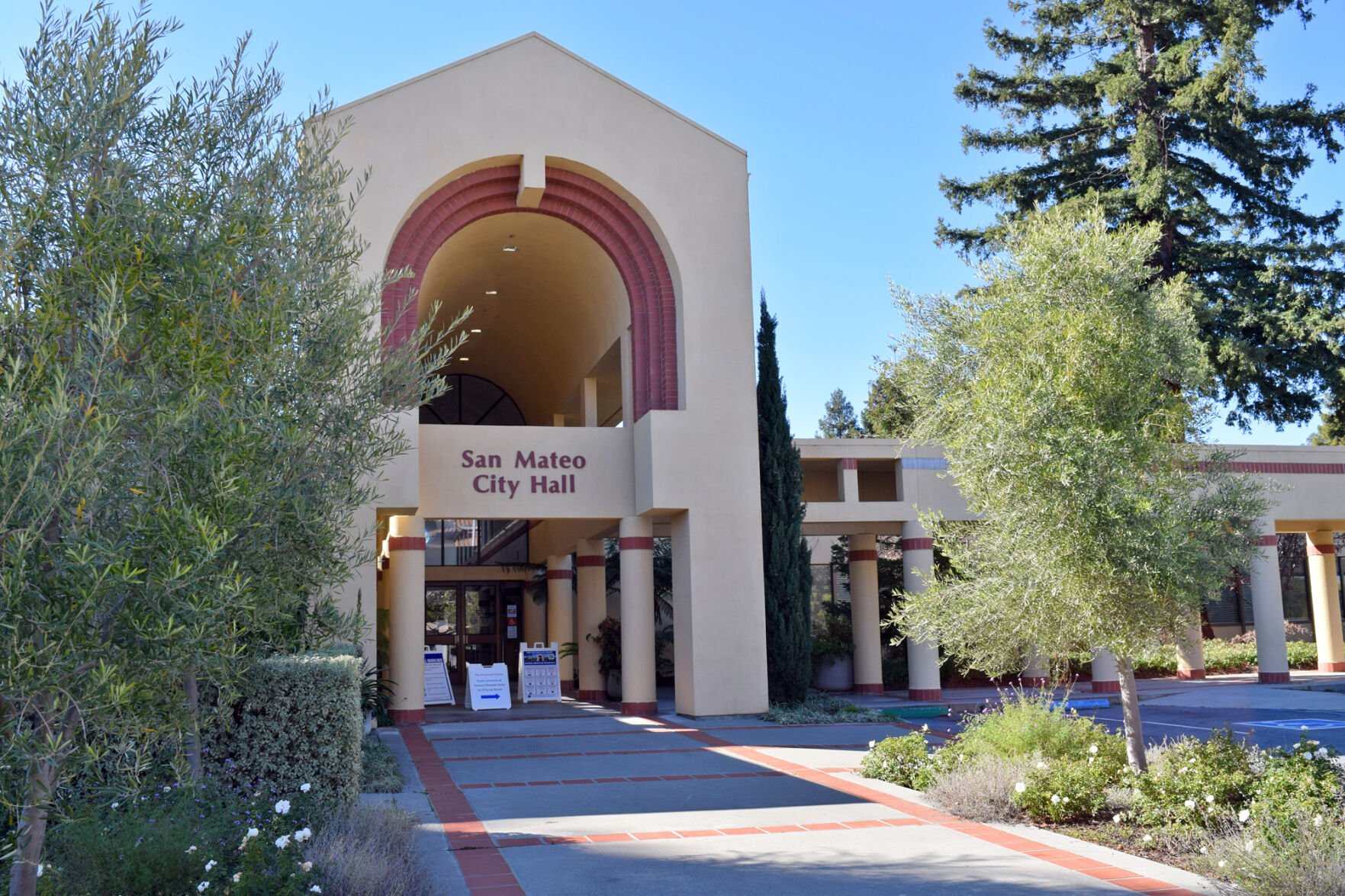
The San Mateo City Council is trying to remain bullish on its decarbonization plans, while also staying sensitive to cost implications for residents, as it weighed various policy options during a council meeting Monday, Jan. 16.
A 2022 city ordinance requires all new buildings to be fully electric, and the council has also listed as one of its priorities the elimination of natural gas use for existing developments by 2030 as well. As part of the Monday meeting, staff offered to the council several potential policies to reach such goals, including the explicit requirement to electrify homes as part of renovation and to use electric-powered heaters when undergoing replacements. Other policy options focused less on mandates and more on the development of incentives and programs to move the needle.
According to the staff’s presentation, the upfront costs — which include the price of buying, installing and permitting — for an electric-powered furnace without air conditioning costs on average between $14,000 to $18,000 without rebates or incentives, whereas the gas equivalent ranges around $6,000. Electric water heaters see over twice the upfront cost than gas-powered heaters, according to the data. However, when rebates and incentives from federal, state and local funds are taken into account, the gap between electric and gas costs can narrow significantly, especially for water heaters, which can see a cheaper price tag than the gas alternative in many cases, according to the staff report.
But Mayor Lisa Diaz Nash and Councilmember Rich Hedges were not convinced by the data points, referencing a multitude of conversations with constituents who claim the costs for electric-powered appliances, including heaters and furnaces, were much higher than what was shown to councilmembers Monday.
“There is just a major disconnect,” Nash said. “We have to figure out how to reconcile that disconnect, and it can’t just be saying, ‘We have all this data, and it shows this and that.’ Because people are having these real life experiences, so there is something that has to be done.”
Recommended for you
Such skepticism led some councilmembers to take an apprehensive stance on the policy options that would require the switch to electric upon replacement or renovation.
“I would say that there are a large majority of people in this city that may not even be aware that this is coming, and we need to have buy-in and not shoving it in faster,” Hedges said.
Councilmember Amourence Lee was more supportive of all the proposals, including water heater replacement requirements, citing the cost-neutral impacts when rebates and incentives are accounted for. The council also directed staff to explore permit streamlining and potential funding mechanisms which could boost incentives and programs.
The conversation is part of a broader initiative to reduce greenhouse gas emissions via electrification, which many jurisdictions have taken on by adopting reach codes, or energy codes going above and beyond state mandates. However, a recently solidified decision by the 9th U.S. Circuit Court of Appeals rendered Berkeley’s natural gas ban illegal, forcing other Peninsula cities to evaluate their own reach codes. City Attorney Prasanna Rasiah confirmed he and his team are further analyzing the case and its potential impacts within San Mateo.
Frustrating to hear a comprehensive staff presentation diminished by some anecdotes from councilmembers. Good to be thoughtful, yes, but decisions based on personal vibes is not a great look for council.
As nice as it feels to decarbonize, such a policy represents another tax on the population of San Mateo and a reduction in the reliability of our energy systems. Natural gas is a cheap and reliable source of energy that will be in use for many decades to come. The right way to reduce its use is by making electricity cheaper so that each individual decides with their pocketbook to turn on an electric heater rather than a gas one. We pay ridiculous prices for electricity here to the extent that it seems we're all supposed to live in the dark. Where does all the money go?
Ah yes, the continued push to take money from the poor and give to the rich in the form of taxpayer-funded rebates. And the continued virtue signaling of supposedly cleaning up carbon emissions while giving no thought to where “magic” electricity is generated from.
Meanwhile, in other climate developments, Hertz is selling 20,000 EVs because nobody wants to rent them, Ford is slashing production of EV trucks because nobody wants to buy them, wind turbines are freezing in the cold, it’s too cold for EV buses and cars, Germany is relying on coal for their power, India’s Ministry of Coal says it won’t transition to any alternative form of energy in the foreseeable, and of course, who can forget the COP climate conference attendees taking over 400+ private jets. But San Mateo thinks they can make a difference by forcing folks to go all-electric? Let’s hope enterprising new lawyers file suit against San Mateo for their overreaching reach codes. I hear San Mateo has plenty of money.
+1. This is just another overreach to drive cost up for home owners, with little to no impact on climate goals. Residential contribution to greenhouse case is less than 15%, and then across millions of household across the US. It makes more sense to solve for bigger issues like oil refineries. Also electric cars don't help, it's essentially helping the Tesla with rebates. only 34% of electricity in CA is renewable, so the car may be green but electricity is not by a long shot.
Keep the discussion civilized. Absolutely NO
personal attacks or insults directed toward writers, nor others who
make comments. Keep it clean. Please avoid obscene, vulgar, lewd,
racist or sexually-oriented language. Don't threaten. Threats of harming another
person will not be tolerated. Be truthful. Don't knowingly lie about anyone
or anything. Be proactive. Use the 'Report' link on
each comment to let us know of abusive posts. PLEASE TURN OFF YOUR CAPS LOCK. Anyone violating these rules will be issued a
warning. After the warning, comment privileges can be
revoked.
Please purchase a Premium Subscription to continue reading.
To continue, please log in, or sign up for a new account.
We offer one free story view per month. If you register for an account, you will get two additional story views. After those three total views, we ask that you support us with a subscription.
A subscription to our digital content is so much more than just access to our valuable content. It means you’re helping to support a local community institution that has, from its very start, supported the betterment of our society. Thank you very much!








(4) comments
Frustrating to hear a comprehensive staff presentation diminished by some anecdotes from councilmembers. Good to be thoughtful, yes, but decisions based on personal vibes is not a great look for council.
As nice as it feels to decarbonize, such a policy represents another tax on the population of San Mateo and a reduction in the reliability of our energy systems. Natural gas is a cheap and reliable source of energy that will be in use for many decades to come. The right way to reduce its use is by making electricity cheaper so that each individual decides with their pocketbook to turn on an electric heater rather than a gas one. We pay ridiculous prices for electricity here to the extent that it seems we're all supposed to live in the dark. Where does all the money go?
Ah yes, the continued push to take money from the poor and give to the rich in the form of taxpayer-funded rebates. And the continued virtue signaling of supposedly cleaning up carbon emissions while giving no thought to where “magic” electricity is generated from.
Meanwhile, in other climate developments, Hertz is selling 20,000 EVs because nobody wants to rent them, Ford is slashing production of EV trucks because nobody wants to buy them, wind turbines are freezing in the cold, it’s too cold for EV buses and cars, Germany is relying on coal for their power, India’s Ministry of Coal says it won’t transition to any alternative form of energy in the foreseeable, and of course, who can forget the COP climate conference attendees taking over 400+ private jets. But San Mateo thinks they can make a difference by forcing folks to go all-electric? Let’s hope enterprising new lawyers file suit against San Mateo for their overreaching reach codes. I hear San Mateo has plenty of money.
+1. This is just another overreach to drive cost up for home owners, with little to no impact on climate goals. Residential contribution to greenhouse case is less than 15%, and then across millions of household across the US. It makes more sense to solve for bigger issues like oil refineries. Also electric cars don't help, it's essentially helping the Tesla with rebates. only 34% of electricity in CA is renewable, so the car may be green but electricity is not by a long shot.
Welcome to the discussion.
Log In
Keep the discussion civilized. Absolutely NO personal attacks or insults directed toward writers, nor others who make comments.
Keep it clean. Please avoid obscene, vulgar, lewd, racist or sexually-oriented language.
Don't threaten. Threats of harming another person will not be tolerated.
Be truthful. Don't knowingly lie about anyone or anything.
Be proactive. Use the 'Report' link on each comment to let us know of abusive posts.
PLEASE TURN OFF YOUR CAPS LOCK.
Anyone violating these rules will be issued a warning. After the warning, comment privileges can be revoked.