

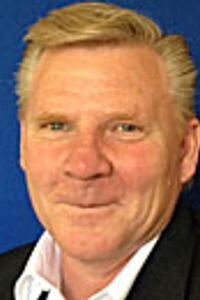


Incumbent Assemblymember Diane Papan, D-San Mateo, is defending her 21st district state Assembly seat against Republican Mark Gilham in the upcoming November election.
Gilham was unavailable for an interview regarding his top priorities for the district — which represents much of San Mateo County — due to health issues, San Mateo County Republican Party Chairperson Anna Kramer said.
He supports “America First 2024” positions, according to his website, which includes greater parental control over children’s education — “you the parent should have the final say on what is actually being instructed or taught to the children, not the school boards, city, county or state” — and being able to opt children out of vaccinations and gender identity education.
“Anything the Democratic Party and [Republicans In Name Only] Republicans support I am against,” his website states, citing opposition to a variety of state bills designed to allow youth autonomy over their gender and sexuality and protect gender-affirming care.
Another priority of Gilham’s is closing the border, “completing the fence President Trump started” and enforcing harsher immigration policies by ensuring immigrants remain in their countries of origin “until information is verified,” per his website.
His website also claims that Democrats rigged the 2020 election and states that if elected, he would be supportive of ending ballot harvesting and shortening voting cycles to prevent fraudulent votes.
Papan’s top issues focus on climate resilience and retaining vehicle license fees for San Mateo County — a historically contentious issue for the jurisdiction, which is one of three in the state to suffer financial losses from the convoluted financial reimbursement system.
Papan, as chair of the Water, Parks and Wildlife Committee, was a leader on a $10 billion climate bond that California voters will see on their November ballots, she said. If passed, the bond will offer significant funding to deal with wildfire mitigation, clean water and flood and drought prevention.
“Climate change is here. Even if we stop polluting in the morning, climate change is here,” Papan said. “The projects are big, and the infrastructure projects cost a lot, but I just felt with the budget deficit that we had and the urgency of this work, it was very important to go to the voters to see if we can’t raise money to do some of this work.”
She was also part of a successful effort to reimburse San Mateo County’s in-lieu VLF funds, she said. The county and respective cities will receive $72 million owed to it from the 2022-23 fiscal year after originally denied the funding because a dearth of nonbasic aid districts in the county meant the state has less of a legally binding obligation to pay it back.
“It will be a perennial challenge, because we don’t have any sort of permanent agreement with the state, but they have to continue to pay this money,” she said.
Papan isn’t optimistic the funding formula will be reconfigured because it works well for a majority of California counties, although she’s committed to advocating for the county to receive its due. Ideally, the state would tangibly commit to reimbursing counties that don’t receive accurate funding allotments, she said.
“I don’t know that we’re going to be able to impact a formula that works for the vast majority of the state,” she said. “What we really need is a commitment that this is money that we are paying, and we need to be made whole.”
Recommended for you
She’s also invested in committing funding to children’s mental health, citing increased funding to schools and intentional training for clinicians as possible solutions to rising rates of mental health challenges in young people.
Papan acknowledged the state’s continuing housing and cost of living crisis as an ongoing and ever-present challenge for California residents, and said that the state needed to help local governments work to increase housing supply. She cited both Senate Bill 2 — expected to generate $250 million annually for affordable housing — and Proposition 1, which offers funding for social services and homelessness, as productive examples of statewide solutions.
“A lot has been done as it relates to housing, but it’s a constant issue for us,” she said.
Cities are working diligently to fulfill housing requirements and build their housing elements, she said, although interest rates and other market forces can make it challenging to bring projects to fruition.
“The state has been at the forefront. I’m going to continue my time there to make sure that they’re at the forefront, to see what we can do,” she said. “I’m also going to look into some way of maybe exploring some local financing for affordable housing.”
Legislators also struggled this year to manage a challenging fiscal landscape and a $45 billion budget deficit this year, which Papan said was handled by prioritizing efficiency, being realistic and a creative approach to funding sources that allows for protections of health and human services.
“We try to be as creative as possible. We can partner, maybe sometimes we leverage federal money, we try to see if we can get the public sector involved,” Papan said. “We’re doing everything we can to be creative with restricted resources.”
Gilham’s website doesn’t directly address the housing crisis or state budget deficit, but does state that he supports “reducing government by 20 to 30 percent, not the budget but government itself.”
“Have Part-time State Assembly and Senate and cutting salaries up to 90 percent similar to what Florida and Texas has this in their states, where the State Assembly and Senate meet 2 weeks a year and the rest of their time is in the district they represent and they will have to have a job just like the rest of us,” his website states. “In other words, we are taking the power they believe they have and taking it back as ours.”
If elected, his ultimate priority would be to protect the freedoms and liberties of his constituents, his website says.
Papan believes her most important job as an elected official is as a listener and consensus-builder, balancing the needs of the state with those of her district.
“The job entails a lot of listening, because if you don’t listen, you’re never going to be able to advocate,” she said. “You’re never going to know what’s important to somebody else and how you can know where their Achilles heel is, how you bring them on board with what might work for your district, the rest of the state, or the state as a whole.”


(0) comments
Welcome to the discussion.
Log In
Keep the discussion civilized. Absolutely NO personal attacks or insults directed toward writers, nor others who make comments.
Keep it clean. Please avoid obscene, vulgar, lewd, racist or sexually-oriented language.
Don't threaten. Threats of harming another person will not be tolerated.
Be truthful. Don't knowingly lie about anyone or anything.
Be proactive. Use the 'Report' link on each comment to let us know of abusive posts.
PLEASE TURN OFF YOUR CAPS LOCK.
Anyone violating these rules will be issued a warning. After the warning, comment privileges can be revoked.