



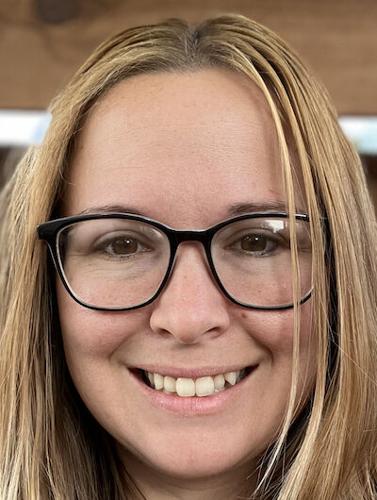
When a little girl came up at a park to Jessica Puccinelli’s son and showed a curiosity in learning more about how he communicates, the San Mateo-raised mom instantly recognized the importance of sharing her son’s story and experience with autism with the world.
That park encounter was just over a month ago and, after returning home that day, Puccinelli quickly sat down with her computer and began recounting the empathetic experience.
The story turned into a newly published children’s book named after her son, “Maverick Speaks in Songs.”
“I came home that day, and my kids were napping, and I was thinking about that little girl and how I wish I had something that could help other kids understand my son, and my son to understand himself,” Puccinelli said. “And I sat down and wrote the words.”
Maverick is 2 1/2 years old and nonverbal — but he communicates in his own unique way.
He sings songs — he loves Old McDonald, knows sign language and uses an augmentative and alternative communication tablet to select words to share how he’s feeling, ask friends to play and make requests of his parents.
“That little girl, that was the first time anyone showed interest in playing with my son,” Puccinelli said. “She questioned why he didn’t talk and what autism was and that interest sparked the idea in sharing this with the world about kids like my son.”
Before having children, Puccinelli taught preschool for more than a decade and “knows how powerful a story can be.”
“I thought it would be a great way to reach a younger audience,” Puccinelli said. “Understanding and empathy starts at that age.”
Puccinelli’s older daughter, who is 4- 1/2 years old, also is diagnosed with autism, but is verbal like most neurotypicals. The difference in communication styles in her two children acutely showed Puccinelli the vastness of how the diagnosis presents itself.
After writing the book, Puccinelli read it to both of her children — to her son, so he understands his way of communicating is valid, and to her daughter who has had a hard time understanding why her brother doesn’t speak like she does.
“I just really wish people would understand autism can look different in different people and they have different needs and different support required,” Puccinelli said.
The lesson even applies to kids or adults on the spectrum, showing the immense diversity even within their own community.
Recommended for you
“Their struggles are valid no matter what and it’s beautiful that everyone thinks differently, and it doesn’t make it any less valid,” Puccinelli said.
The story is universal, Puccinelli said, and can be related to any difference in communication styles, from language barriers to age gaps. The key is just to listen carefully, she said.
Maverick’s diagnosis of autism spectrum disorder is mentioned in the story, and his use of his AAC table and how it functions is included as well.
When doing her own research for stories that represented her children, it was far easier to find books geared to adults. While the story is geared to kids to celebrate neurodiversity at a young level, there’s also a message to parents to remind them they know their children’s needs best.
“I just think it’s so important for parents to be aware that there’s help out there and they can advocate for a child,” Puccinelli said.
It’s not common for a child to get an autism diagnosis by the age of 2, but Puccinelli went the extra mile to find the right specialist, understanding that early intervention would best equip her child.
The AAC device is a medically-issued iPad mini that only serves as a communication tool for Maverick. He presses buttons on it when he wants to make requests, ask for his parents to sing a song for him, or functional words like “open,” “close,” “stop” and “go.”
He also uses sign language, and learns a lot from other children’s book and videos from viral educator Ms. Rachel. Maverick’s favorite way to speak is still to sing songs.
Kids are prone to be curious, to quickly adapt to new things, making the need for representation of all kinds of people, behaviors and communication styles early on in a child’s life all the more important, Puccinelli said.
“Once they understand something, they’re very accepting, it’s the lack of understanding that’s a challenge,” Puccinelli said.
The same goes for adults. The book is easily digestible for all ages, but there’s no harm in reminding adults to have a little more empathy for others, Puccinelli said.
“I just want everyone to know everyone plays a part in this world, everyone can make a difference by just listening and learning and understanding,” Puccinelli said. “I hope it plants the seed for a lifetime of empathy and acceptance.”
The book is available for purchase on Amazon.







(0) comments
Welcome to the discussion.
Log In
Keep the discussion civilized. Absolutely NO personal attacks or insults directed toward writers, nor others who make comments.
Keep it clean. Please avoid obscene, vulgar, lewd, racist or sexually-oriented language.
Don't threaten. Threats of harming another person will not be tolerated.
Be truthful. Don't knowingly lie about anyone or anything.
Be proactive. Use the 'Report' link on each comment to let us know of abusive posts.
PLEASE TURN OFF YOUR CAPS LOCK.
Anyone violating these rules will be issued a warning. After the warning, comment privileges can be revoked.