
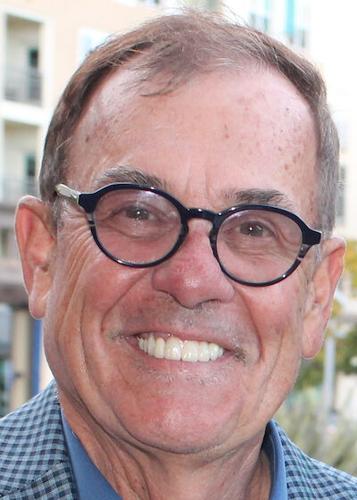
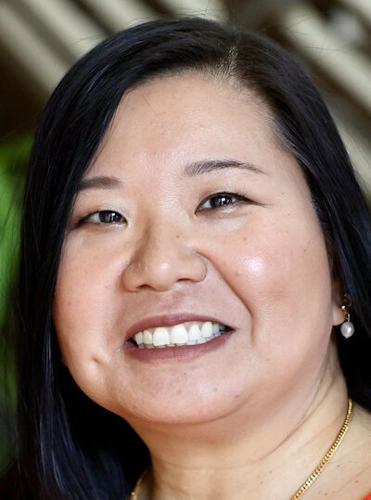
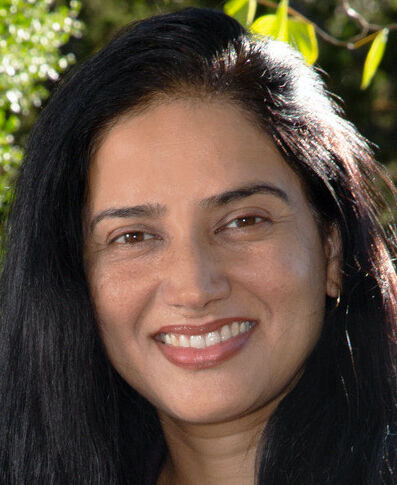
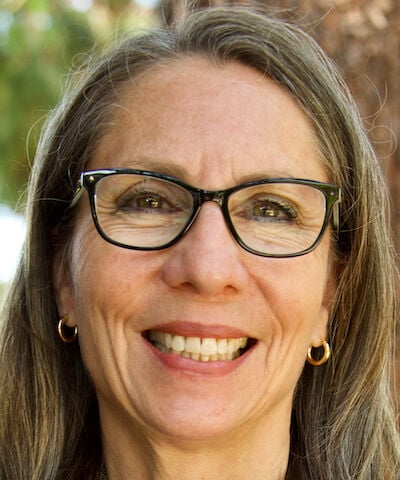

Foster City is one of the smaller cities on the Peninsula, but between a budget deficit, housing clashes, a new, albeit pricey, recreation center and most infamously, an overactive geese population, the city’s leaders have had their hands full — and a race to see who will absorb those duties in the next few months is underway.
Three of the five council seats are up for election this November and, unlike most Peninsula cities, the city holds at-large elections, meaning councilmembers don’t represent one particular district. Incumbent and current Mayor Patrick Sullivan will run again, but Councilmember Sam Hindi will finish his second and last term this November, per regulation limits.
The third open seat, held by Councilmember Jon Froomin, is vacant for a different, more personal reason. Froomin said frequent sidelining and politicking hamstrung his efforts to serve the community.
“In my first two years in office, I never, ever brought something forward that actually got put on an agenda,” he said. “When I was running, my main interests were to try my best to lead by example and bring some decorum and community-first energy back to the council. In some cases I was successful, and I think in other cases I wasn’t.”
Froomin acknowledged the dialogue over the last year or two has been more civil, even when he doesn’t agree with his colleagues. But not knowing how that could change come November is unnerving. Froomin replaced Councilmember Herb Perez after a successful recall in 2020, and the first two years of his first term were rife with hostility and, thus, made a lack of meaningful progress, he said. Even suggestions to expand participation in cultural events or discuss regulations related to campaign signs in right-of-ways were quickly shot down, he said.
“I was elected by the people to represent them, and I feel as though I was put in a position where I wasn’t able to represent the people based on the actions of colleagues,” he said. “It was very frustrating. I was there for a reason, and I wasn’t able to fulfill that obligation.”
Tense disagreements are not uncommon in any level of government, but current planning commissioner and council candidate Phoebe Venkat said such an atmosphere discourages candidates to run for local office, especially those who are qualified and do so for the right reasons.
“I was trying to look for different people that may be interested in running, but I was having challenges. A lot of people do not want to run because, to be frank, the state of politics in Foster City is very combative, especially to anyone that is not part of what is considered the old guard, or how things ‘should be’ in Foster City,” Venkat said. “Even if they’re smart and they could do the job, too many people were saying the same things — that they don’t want to be attacked.”
Venkat has spent the last few years on the Planning Commission, and while running for council wasn’t always in the plan, she said her experience navigating difficult conversations is something she’s well-equipped to do on account of her career in marketing and community building.
Housing
Housing stays high on the list of divisive topics, not just in Foster City but throughout the Bay Area. The city has unique geographical constraints, with water comprising a majority of its square mileage. That has raised concern particularly due to the state’s more aggressive approach to housing production. Some residents and leaders say the compulsory changes will require building at an unsustainable pace, especially as its state-mandated housing goals, or Regional Housing Needs Allocation, increased by 340% from the previous cycle. Richa Awasthi, a former councilmember and mayor who is running again in November, said having a confrontational approach with the state — as evidenced by its delay in adopting a compliant housing element — will only hurt the community in the long run.
“Councilmembers don’t have much of a say with the state laws leading and governing many of those decisions,” she said. “We have to be proactive and plan where the entire community is OK with having more development, versus losing that control. Not having a compliant housing element, for example, is exactly sowing the seeds for losing more control.”
Mayor Patrick Sullivan, the only incumbent in the race, said the need for more residential development is a given, but prioritizing workforce housing is a win-win for everyone, as it allows teachers, firefighters, police officers and other essential employees to live in the city where they work.
“When you’re building one-bedroom and studio apartments, you’re not building more workforce housing, and you’re not building what I would call social equity,” he said. “We’re not approaching it the right way, and it’s not Foster City’s fault … if any units are going to be built they’re going to be one-bedroom and studio apartments because the profit margin is very close, so we as a city or we as a state have to look at it totally differently.”
Venkat agreed that investing in workforce housing is important, but said that, instead of resisting state laws and stoking division, councilmembers should be able to engender a sense of unity and cooperation, especially over something so important.
“If it’s not something people can relate to personally, it’s very hard for most people to empathize. It doesn’t mean that they’re bad people, but it’s about making things a little bit more real, a little bit more relational,” she said. “Judgment and putting people into buckets is never going to help.”
Seniors and youth
Recommended for you
A certain level of skepticism over new development may be inevitable, but not all important issues are as controversial. With a high senior population, Venkat said creating more opportunities to connect different groups also needs to be a bigger focus for the council.
“A lot of seniors are lonely, and that is something we are facing as a country … but many seniors I talk to want to be around younger people, so how can we make more of these connections between seniors and youth intergenerationally?” she said. “Many youth I know and many seniors I know love arts and culture. How can we bring those together?”
Budget and fiscal health
The foundation for all city services, from law enforcement to infrastructure and senior services, hinges on fiscal health, a topic of frequent concern, especially in light of an estimated $4 million deficit last fiscal year — which ended in June — and a longer-term structural deficit. The issue is not unique to Foster City, with many Peninsula cities facing similar shortfalls, as the state initially planned to withhold key funds to balance its own budget. Healthcare premiums and insurance costs and have ballooned expenses as well.
That’s why Suzy Niederhofer, a Foster City native who spent decades as a financial leader for the city of Mountain View, said she is running for council, a decision she solidified less than two months ago.
“It was a little bit shocking to me that the city adopted a structurally unbalanced budget,” she said. “When they did that, I thought to myself, ‘I think I can help.’ That was really the crux of me wanting to join and wanting to help. I’d like to see the city get back into fiscally good shape.”
How to finance the city’s proposed new and improved recreation center has become a litmus test for some residents over how leaders are prioritizing a balanced budget. Plans to rebuild the center, located in Leo J. Ryan Park, have been in the works since 2016, with the process punctuated by budgetary and pandemic-related delays. The most recent estimates put the total project cost around $65 million, up from the $56 million outlined last year, mostly a result of higher construction costs.
“It’s unfortunate that the project has been going on for a long time now,” she said. “But now we’re in a situation where the budget’s not structurally balanced, and they’re using some reserves. It’s important to generate increased revenue from the recreation center when it’s complete, not the revenue that it is [generating] today.”
Economic development
In light of the deficit, some councilmembers have backpedaled on the recreation center’s original financing plan, instead surfacing other funding possibilities, though it would further delay construction. Sullivan has lamented the circuitous process but he said that shouldn’t preclude the city from reassessing areas for improvement, such as securing more private partnerships or digging deeper on how it can generate more income.
“You have to look at other avenues, whether it’s working with Gilead or Bank of America or Zoox, so we are trying to develop new partnerships” he said. “And since the beginning of the year, we have a federal lobbyist who should be working in the direction of getting us funding for certain projects.”
Awasthi, who is also a senior vice president at U.S. Bank, said her decision to run again is partially based on her business acumen, a byproduct of her career in operations, strategy and product management.
“My corporate experience coupled with my council experience is very relevant, given the challenges cities are facing at this time, mainly the fiscal deficit and revenue not growing,” she said. “To preserve all that we are so fortunate to have is going to require an action-oriented approach and strategic thinking and merit and credentials. I strongly believe that who we send to take a seat really makes a difference.”
Similar sentiments on economic development and a sound budget are shared by most candidates. But whether they can translate into action will require a collaborative spirit, Froomin said.
“When I have been looking at candidates, I have not asked a single one what their position is on X, Y or Z. I’m more interested in the environment on the council,” he said. “ I want to know that there are people that know how to respect others, who are good listeners, and people who are willing to work together cooperatively.”
As of Aug. 6, four candidates filed their intention to run for office. Shankar Kenkre filed the intention to run on Aug. 7, and two others are expected to file soon but have yet to do so. The deadline to file for office is Aug. 9, but will be extended to Aug. 14 if an incumbent does not file.





(1) comment
Richa needs to tone down her attitude toward citizens of FC that might not agree with her position on certain policies. Bringing people together not dividing them is key to winning over the potential voters.
Welcome to the discussion.
Log In
Keep the discussion civilized. Absolutely NO personal attacks or insults directed toward writers, nor others who make comments.
Keep it clean. Please avoid obscene, vulgar, lewd, racist or sexually-oriented language.
Don't threaten. Threats of harming another person will not be tolerated.
Be truthful. Don't knowingly lie about anyone or anything.
Be proactive. Use the 'Report' link on each comment to let us know of abusive posts.
PLEASE TURN OFF YOUR CAPS LOCK.
Anyone violating these rules will be issued a warning. After the warning, comment privileges can be revoked.