San Mateo County has a wide variety of homes and commercial buildings, ranging from structures constructed in the 1800s to ones that are brand new. I love the look of most old buildings, and am thankful when their owners are able to preserve them. Building standards and technologies have improved greatly over the last couple of centuries, though, and I cannot fault anyone for wanting to upgrade their buildings to make them more efficient, safe and functional. When they can do that while preserving the look and feel of the original structure, they deserve praise.
Many of our historic buildings are no longer usable as originally intended; significant changes are often needed to repurpose them. For instance, some years ago there were efforts made to revive San Mateo’s empty Benjamin Franklin Hotel building and reopen it as a hotel. Those efforts fell through, however, and it ended up being turned into the downtown campus of Draper University. Now, the university wants to convert the building’s top three floors — which currently are student housing — into office space. While the office conversion can possibly be made without significantly altering the look of the 1920s-era Spanish-style building, the university also wants to add an additional elevator to the rear of the former hotel: a glass elevator that would be visible from the outside and that would clash with the building’s design. Although the Benjamin Franklin building is not considered a historic resource, the Planning Commission seems intent on preserving the look of the original building, and apparently is opposing the university’s request. As a result, Tim Draper, the university’s founder, is threatening to relocate to Redwood City or to Austin, Texas.
Although Redwood City has its share of historic homes and buildings, that city’s leadership seems far more willing to allow significant changes to them as long as key elements of the original are preserved. For instance, consider the single-story commercial building located at 847 Main St. Sporting three identical shop fronts, this building was constructed in 1922 to serve as a showroom for the Clifton Motor Company, a Chevrolet dealer. Over time, the building took on a variety of uses, most recently as a restaurant. Just over two years ago, though, construction began on a new, roughly 100,000-square-foot mixed-use building that will occupy the Clifton Motors building’s parcel along with three others (one next door, and two behind, on Walnut Street). The preserved façade of the historic Clifton Motors building will serve as the face of the retail portion of what otherwise will be a four-story office building. Only that façade, along with two other exterior walls, are being preserved. The rest of the old building is gone.
Just down the street, at 929 Main St., a similar, albeit smaller, project is also underway. Formerly known as the Young’s Auto Parts building (Young’s was the building’s longest-lasting tenant), the single-story brick structure also was built in 1922, for a small Bay Area chain called Sunshine Grocery Stores. Today, the building is not only a contributor to the historic district in which it is located, it has been determined to be eligible for listing as a historic resource. So, when a plan was devised to expand the existing 4,800-square-foot retail building into an 8,000-square-foot, two-story one, the designer was careful to preserve the look of the original building, and much of the original façade, while adding additional square footage and transforming part of the original building’s rooftop into an elevated outdoor terrace. As viewed from Main Street, this building, like the Clifton Motors building, will retain much of its historic character. But from every other angle, both will be unrecognizable as historic structures. Then again, both will be far more functional, will sport more usable space and will be up to code.
Not all of Redwood City’s historic buildings have been so drastically altered. Two of the city’s finest are the historic courthouse that fronts onto Courthouse Square (today’s San Mateo County History Museum), and the rather ornate Fox Theatre, which looks very much as it did when it opened in 1929 as the New Sequoia Theater. Each found a new life that is compatible with its original intent.
Most buildings go through different phases of life, in the process often needing to be altered. Ideally, those alterations can be hidden, at least from the outside. If they cannot, however, the future of the building without those changes must be considered. Hopefully, an alternate use for the building can be found that can preserve the building’s historic look. But if a historic building can no longer serve any practical purpose without significant alterations to its looks, one has to wonder whether the building should continue to exist. The answer to that may shine a whole new light on the proposed changes.
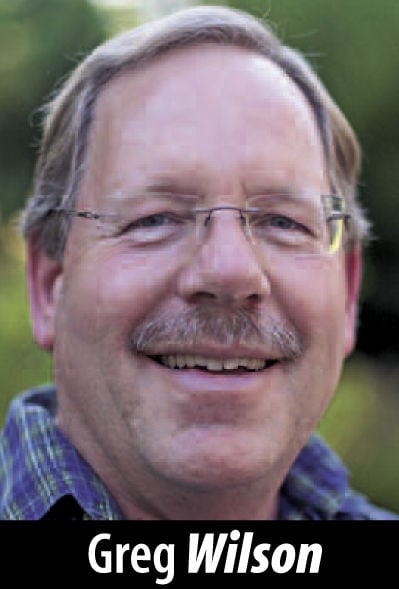
Greg Wilson is the creator of Walking Redwood City, a blog inspired by his walks throughout Redwood City and adjacent communities. He can be reached at greg@walkingRedwoodCity.com. Follow Greg on Twitter @walkingRWC.
Great piece, Greg. I share your love for the historic while acknowledging creative modifications may be necessary for modern use. A well-designed modern rear elevator on the Benjamin Franklin Hotel would juxtapose in an interesting way with the building’s character; a small town version of the functional and gorgeous I.M. Pei entry pyramid at the Louvre. We are not, after all, Disneyland’s never-changing version of Main Street.
Keep the discussion civilized. Absolutely NO
personal attacks or insults directed toward writers, nor others who
make comments. Keep it clean. Please avoid obscene, vulgar, lewd,
racist or sexually-oriented language. Don't threaten. Threats of harming another
person will not be tolerated. Be truthful. Don't knowingly lie about anyone
or anything. Be proactive. Use the 'Report' link on
each comment to let us know of abusive posts. PLEASE TURN OFF YOUR CAPS LOCK. Anyone violating these rules will be issued a
warning. After the warning, comment privileges can be
revoked.
Please purchase a Premium Subscription to continue reading.
To continue, please log in, or sign up for a new account.
We offer one free story view per month. If you register for an account, you will get two additional story views. After those three total views, we ask that you support us with a subscription.
A subscription to our digital content is so much more than just access to our valuable content. It means you’re helping to support a local community institution that has, from its very start, supported the betterment of our society. Thank you very much!





(1) comment
Great piece, Greg. I share your love for the historic while acknowledging creative modifications may be necessary for modern use. A well-designed modern rear elevator on the Benjamin Franklin Hotel would juxtapose in an interesting way with the building’s character; a small town version of the functional and gorgeous I.M. Pei entry pyramid at the Louvre. We are not, after all, Disneyland’s never-changing version of Main Street.
Welcome to the discussion.
Log In
Keep the discussion civilized. Absolutely NO personal attacks or insults directed toward writers, nor others who make comments.
Keep it clean. Please avoid obscene, vulgar, lewd, racist or sexually-oriented language.
Don't threaten. Threats of harming another person will not be tolerated.
Be truthful. Don't knowingly lie about anyone or anything.
Be proactive. Use the 'Report' link on each comment to let us know of abusive posts.
PLEASE TURN OFF YOUR CAPS LOCK.
Anyone violating these rules will be issued a warning. After the warning, comment privileges can be revoked.