Partly cloudy skies this evening. Increasing clouds with periods of showers late. Low 49F. W winds at 10 to 20 mph, decreasing to less than 5 mph. Chance of rain 40%..
Tonight
Partly cloudy skies this evening. Increasing clouds with periods of showers late. Low 49F. W winds at 10 to 20 mph, decreasing to less than 5 mph. Chance of rain 40%.
By KIMBERLEE KRUESI, LEAH WILLINGHAM and JAKE OFFENHARTZ Associated Press
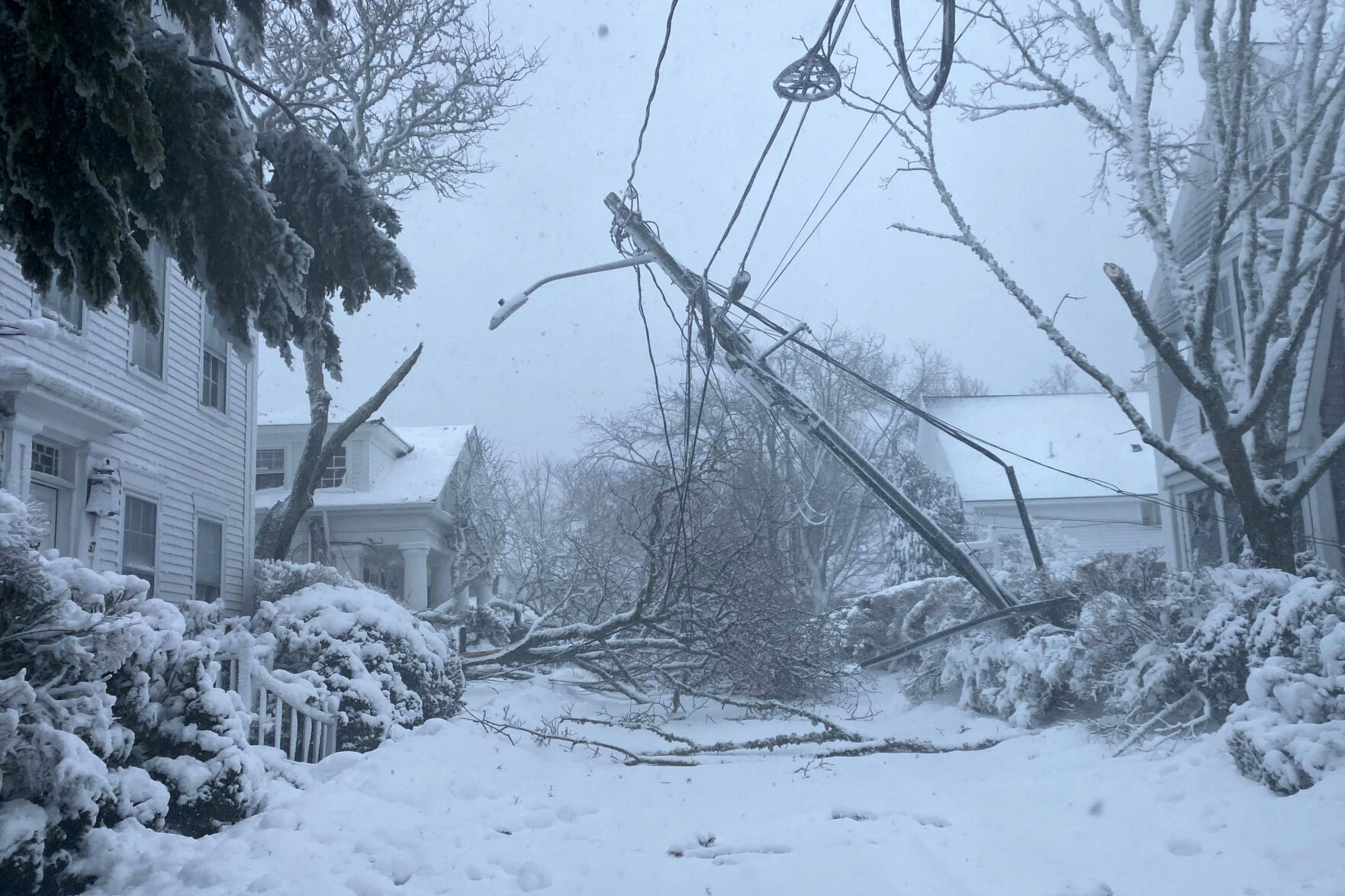
\Power failures and waist-high canyons of snow bedeviled parts of the Northeast in the aftermath of a massive storm that dumped piles on streets and sidewalks from Maryland Maine, even as fresh snowfall coated the region. Across the Northeast, the fallout from the storm persisted: In Rhode Island, where 3 feet (0.9 meters) of snow surpassed the record set in the Blizzard of 1978, people confronted a third straight day stuck at home as residential streets remained unplowed, trash pickup got postponed in some places and some schools went virtual. In Massachusetts, particularly in Cape Cod where nearly 145,000 were without power, utility crews worked 18-hour shifts to restore electricity.
By JAKE OFFENHARTZ and MIKE CATALINI Associated Press
Millions across the northeastern United States contended with treks to school and work as they dug out from a major storm that blanketed the region with snow, canceled flights, disrupted transit and downed power lines. Snow moved north Tuesday giving way to sunshine in parts of the region, but National Weather Service forecasters warned another storm originating in the Great Lakes is right around the corner. In New York City, Mayor Zohran Mamdani declared that more 900,000 students in the nation's largest public school system had a regular day. Mamdani invited kids to pelt him with snowballs over his decision.
By CHARLOTTE KRAMON and RUSS BYNUM Associated Press
Many U.S. residents are facing another night of below-freezing temperatures and no electricity after a massive winter storm dumped more snow in Northeast and left parts of the South coated in ice. The colossal storm halted air and road traffic in many areas and sent temperatures plunging. At least 26 deaths were reported in states hit by the winter weather. As the work week began, the heaviest snow fell from New York northward into New England. That's after heavy ice snapped branches and power lines in the South, leaving hundreds of thousands of homes and businesses without electricity. Arctic air was spreading in behind the storm and some communities in New York saw record-breaking subzero temperatures.
By BEN FINLEY, MAKIYA SEMINERA and SARAH BRUMFIELD Associated Press
Snowy roads led to hundreds of crashes throughout Virginia and North Carolina, including a series of crashes on an interstate highway involving more than 50 vehicles. Officials continued to ask people to avoid travel on Thursday to allow crews to work on the roads. The North Carolina State Highway Patrol says it responded to nearly 1,200 collisions statewide on Wednesday. Virginia State Police reported early Thursday that there had been nearly 500 crashes statewide since the storm began, including at least 45 involving injuries. An Arctic air mass is bringing widespread, record-breaking cold to the central United States and forecasters expected some locations to experience their coldest temperatures on record this late in the season.
Some residents stranded in Southern California mountain communities by a huge snowfall could be stuck for another week. San Bernardino County Sheriff Shannon Dicus' Friday estimate is an improvement in the outlook. The estimate has ranged up to two weeks. The sheriff attributes the change to the arrival of state assistance. A late-February blast of arctic air produced a rare blizzard east of Los Angeles in the San Bernardino Mountains. Thousands of people live at high elevations there in forest communities or visit for year-round recreation. Extraordinary snowfall buried homes and businesses. It overwhelmed the capability of snowplowing equipment geared toward ordinary storms.