Renting a storage unit always seems straightforward at first: a monthly rate, a lock, and some square footage. But small business owners who rely on storage for inventory, equipment, or imported goods often find that the sticker price is just the beginning.
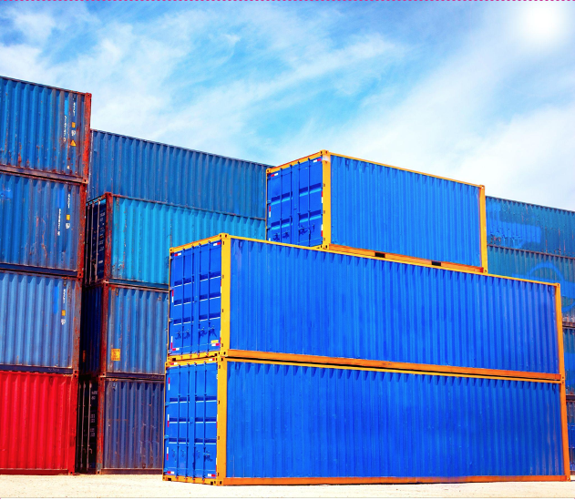
For businesses sourcing or selling goods internationally, leasing a 40ft container changes the equation in ways that go beyond simple square footage comparisons. Monthly container rental rates in the U.S. range from $75 to $200, depending on condition and location, often below what a commercial storage unit charges for considerably less space.
What Commercial Storage Units Actually Cost
Self-storage facilities advertise rates that rarely reflect what businesses end up paying. The national average for a 10x20 ft climate-controlled unit runs between $150 and $300 per month, but that figure shifts fast once the extras stack up.
The Fees That Add Up
Common charges that catch renters off guard include:
● Administrative and setup fees
● Insurance requirements
● Access fees
● Annual rate increases
A business storing $50,000 worth of inventory can easily pay $3,500 to $5,000 annually, once these costs are factored in, not including transportation every time stock needs to move.
How Shipping Containers Compare
Containers are weatherproof, secure, and can serve as both transit and on-site storage without breaking the chain of custody on goods. A standard 40ft unit offers roughly 2,390 cubic feet of usable space, compared to 1,600 cubic feet in a typical 10x20x8 storage unit.
Ownership as an Option
Buying a used container outright typically costs between $2,000 and $4,500. That one-time cost, spread over three to five years, represents a fraction of what cumulative storage unit rent would total over the same period. Containers placed on business property also eliminate the transportation friction of off-site facilities.
Container Freight 101 for New Importers
Recommended for you
For small businesses entering international trade, container freight comes with its own terminology. Two terms come up immediately: LCL and FCL.
LCL vs. FCL: The Core Difference
LCL (Less than Container Load) means sharing container space with other shippers. Costs are calculated per cubic meter, typically $30 to $80 per CBM on common trade lanes. It suits smaller shipments but adds time due to consolidation at freight stations.
FCL (Full Container Load) means booking an entire container. A 40ft FCL on a major Asia-to-U.S. lane currently runs between $1,500 and $4,000, depending on route and season. It is faster, carries less damage risk, and becomes cost-competitive once shipments exceed roughly 15 CBM.
For most growing small businesses, starting with LCL makes sense, then moving to FCL once import volumes justify it.
Incoterms, Customs, and Timelines
Incoterms define who pays for what and when liability transfers between buyer and seller. The three most relevant for small importers are:
● EXW (Ex Works): The buyer handles all freight and import duties from the seller's door. Maximum control, maximum responsibility.
● FOB (Free on Board): The seller covers costs to the port of origin; the buyer takes over once goods are loaded on the vessel.
● DDP (Delivered Duty Paid): The seller handles everything, including import duties. Simpler for buyers but often priced with a markup built in.
Choosing the wrong Incoterm can mean unexpected duty bills or freight charges that blow a budget entirely.
Customs and Timelines
U.S. Customs requires a formal entry for any commercial shipment valued above $2,500. Import duties vary widely, from near zero on some components to 25 percent or more on certain goods under the current trade policy. A licensed customs broker typically charges $100 to $300 per shipment and can prevent costly delays.
Transit times on major lanes run 14 to 21 days from China to the U.S. West Coast, 10 to 14 days from Europe to the U.S. East Coast, and 18 to 28 days from Southeast Asia. Building a buffer of at least two to three weeks into procurement schedules is standard practice.
So, the real cost of storage goes beyond the monthly rate. It includes access limitations, transit friction, and the gap between where goods land and where they need to go. Businesses sourcing internationally benefit from treating storage and freight as one system, and a carefully chosen container often resolves both at once.
Keep the discussion civilized. Absolutely NO
personal attacks or insults directed toward writers, nor others who
make comments. Keep it clean. Please avoid obscene, vulgar, lewd,
racist or sexually-oriented language. Don't threaten. Threats of harming another
person will not be tolerated. Be truthful. Don't knowingly lie about anyone
or anything. Be proactive. Use the 'Report' link on
each comment to let us know of abusive posts. PLEASE TURN OFF YOUR CAPS LOCK. Anyone violating these rules will be issued a
warning. After the warning, comment privileges can be
revoked.
Please purchase a Premium Subscription to continue reading.
To continue, please log in, or sign up for a new account.
We offer one free story view per month. If you register for an account, you will get two additional story views. After those three total views, we ask that you support us with a subscription.
A subscription to our digital content is so much more than just access to our valuable content. It means you’re helping to support a local community institution that has, from its very start, supported the betterment of our society. Thank you very much!




(0) comments
Welcome to the discussion.
Log In
Keep the discussion civilized. Absolutely NO personal attacks or insults directed toward writers, nor others who make comments.
Keep it clean. Please avoid obscene, vulgar, lewd, racist or sexually-oriented language.
Don't threaten. Threats of harming another person will not be tolerated.
Be truthful. Don't knowingly lie about anyone or anything.
Be proactive. Use the 'Report' link on each comment to let us know of abusive posts.
PLEASE TURN OFF YOUR CAPS LOCK.
Anyone violating these rules will be issued a warning. After the warning, comment privileges can be revoked.