By EDITH M. LEDERER and FARNOUSH AMIRI Associated Press
Russia and China have vetoed a U.N. Security Council resolution aimed at reopening the Strait of Hormuz. The resolution, sponsored by Bahrain, had been repeatedly watered down because of opposition from Russia and China. The vote took place just hours before an 8 p.m. Eastern time deadline set by U.S. President Donald Trump for Iran to open the strategic waterway or face attacks on its power plants and bridges. One-fifth of the world's oil typically passes through the strait, and Iran's stranglehold during the war has sent energy prices soaring.
By DAVID RISING and NINIEK KARMINI Associated Press
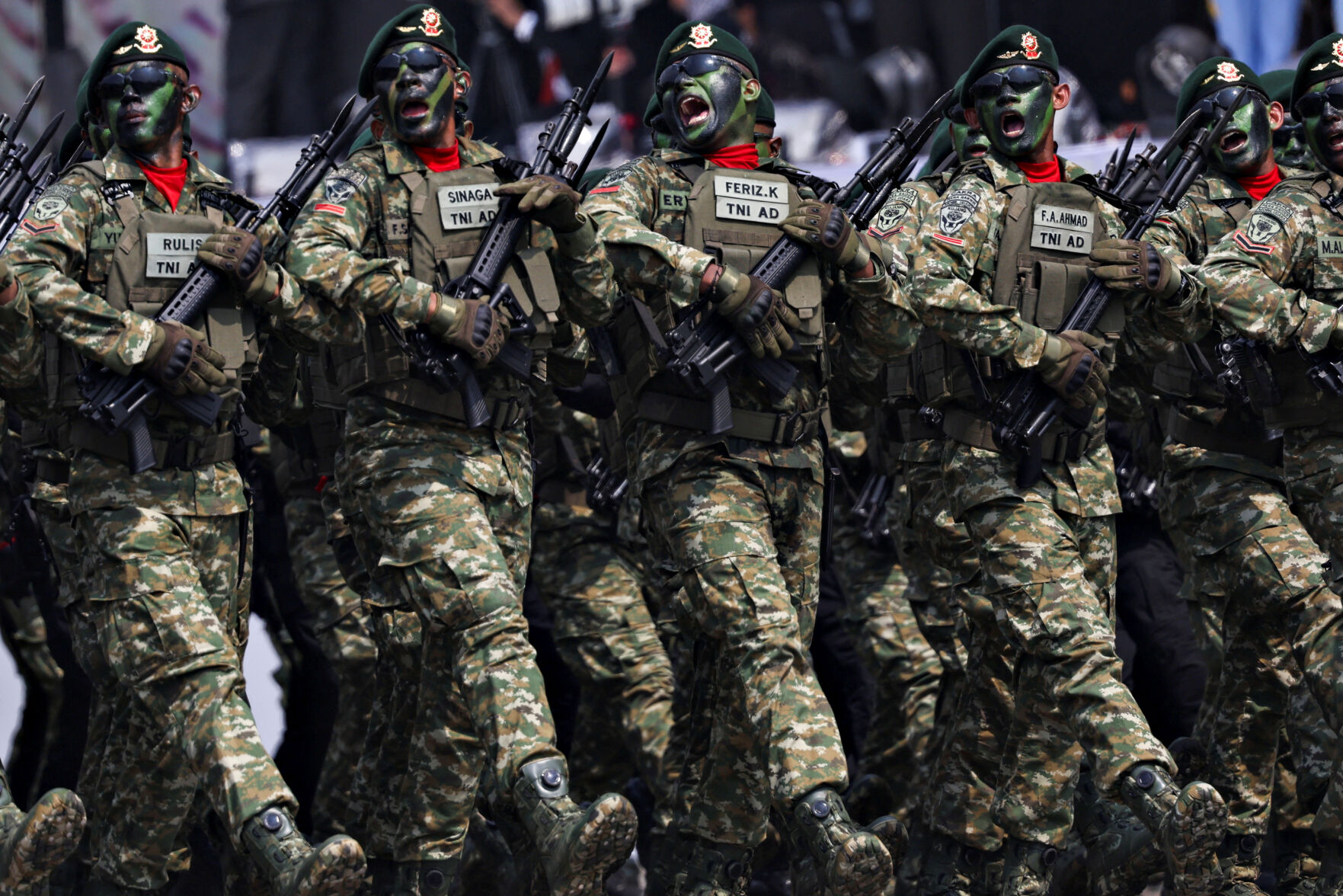
Indonesia is training troops for a new peacekeeping force in Gaza, backing a key part of President Donald Trump's postwar plan. Earlier this week, the army chief said training has started even though Indonesia has no clear guidance yet. Officials now talk about sending 5,000 to 8,000 troops, focusing on engineering and medical units. Indonesia has long U.N. peacekeeping experience and has backed Gaza aid. But many at home doubt the plan, wondering who will pay the troops and how they will be used. An online petition also calls for Indonesia to reverse its decision to join Trump's Board of Peace, questioning its legitimacy.
The United States has announced a $2 billion pledge for U.N. humanitarian aid as President Donald Trump continues to slash U.S. foreign assistance funding. The money is a tiny fraction of what the U.S. has contributed in the past but reflects what the administration believes is a generous amount that will maintain the United States' status as the world's largest humanitarian donor. The pledge creates an umbrella fund from which money will be doled out to individual agencies and priorities. The announcement caps a crisis year for many U.N. organizations as the U.S. and other Western donors have cut billions in funding, prompting massive cuts in spending and jobs.
The U.N. Security Council has backed the United States' plan for the future of the Gaza Strip. How and when it will be carried out remains largely unknown. In a twist unimaginable across the tumultuous history of the Israeli-Palestinian conflict, the plan would mean U.S. President Donald Trump becomes the de facto ruler of Gaza. The territory remains devastated by Israel's campaign to eliminate Hamas after its Oct. 7, 2023, attack that sparked the war. An international body chaired by Trump is to govern Gaza and oversee reconstruction under a 2-year, renewable U.N. mandate. An armed International Stabilization Force is to keep security and ensure the disarming of Hamas. Major questions hang over nearly every part of the plan.
The U.N. Security Council is set to vote on a U.S. plan for Gaza, but a big question remains: Will Russia veto it? The U.S. resolution would provide international backing for a stabilization force and envisions a possible future pathway to an independent Palestinian state. After nearly two weeks of negotiations on the U.S. resolution, Russia suddenly circulated a rival proposal late Thursday that would strip out reference to a transitional authority meant to be headed by President Donald Trump. The vote is a crucial next step for the fragile ceasefire and efforts to outline Gaza's future following two years of war between Israel and Hamas.
World leaders have spent the past week at the United Nations often criticizing the U.N. itself. They told each other and those who administer the planet's most prominent global institution that most parts of the metaphorical house of nations are outdated and not in good working order. Some version of this happens every year. Leaders point out the U.N.'s flaws and tell it to buckle down and get things done. But at the end of speeches they congratulate themselves for doing important work, This year, the critiques from dozens of nations feel even more prominent and pointed than usual.
By EDITH M. LEDERER and JENNIFER PELTZ Associated Press
A senior North Korean diplomat is reiterating that his country won't give up its nuclear weapons despite numerous international demands to do so. Speaking at the U.N. General Assembly meeting of world leaders, Vice Foreign Minister Kim Son Gyong characterized his country's nuclear weapons as crucial to keeping a "balance of power" with South Korea. Kim amplified his country's longstanding complaints about U.S.-led military exercises with South Korea and Japan. He complained about "growing threat of aggression" from Washington and its allies. South Korea has said the exercises were necessary to counter North Korea's growing nuclear and missile threats. Numerous U.N. Security Council resolutions have demanded that the North stop building nuclear weapons and ballistic missiles.
By JENNIFER PELTZ, ADAM GELLER and FARNOUSH AMIRI Associated Press
Updated
Encircled by critics and protesters at the United Nations, Israeli Prime Minister Benjamin Netanyahu told fellow world leaders that Israel "must finish the job" against Hamas in Gaza. He gave a defiant speech despite growing international isolation over his refusal to end the devastating war in Gaza and said Israel wouldn't buckle under the pressure. He spoke after dozens of delegates from multiple nations walked out of the U.N. General Assembly hall en masse as he began speaking. Responding to countries' recent decisions to recognize Palestinian statehood, Netanyahu said it would encourage terrorism against Jews and others.
The U.N. humanitarian office says a record 383 aid workers were killed in global hot spots in 2024, nearly half of them in Gaza during the war between Israel and Hamas. U.N. humanitarian chief Tom Fletcher says, "Attacks on this scale, with zero accountability, are a shameful indictment of international inaction and apathy." The Aid Worker Security Database says the number of killings rose from 293 in 2023 to 383 in 2024, including more than 180 in Gaza. Sudan was second to Gaza and the West Bank, with 60 aid workers losing their lives in 2024 during civil war. The United Nations is marking World Humanitarian Day on Tuesday.