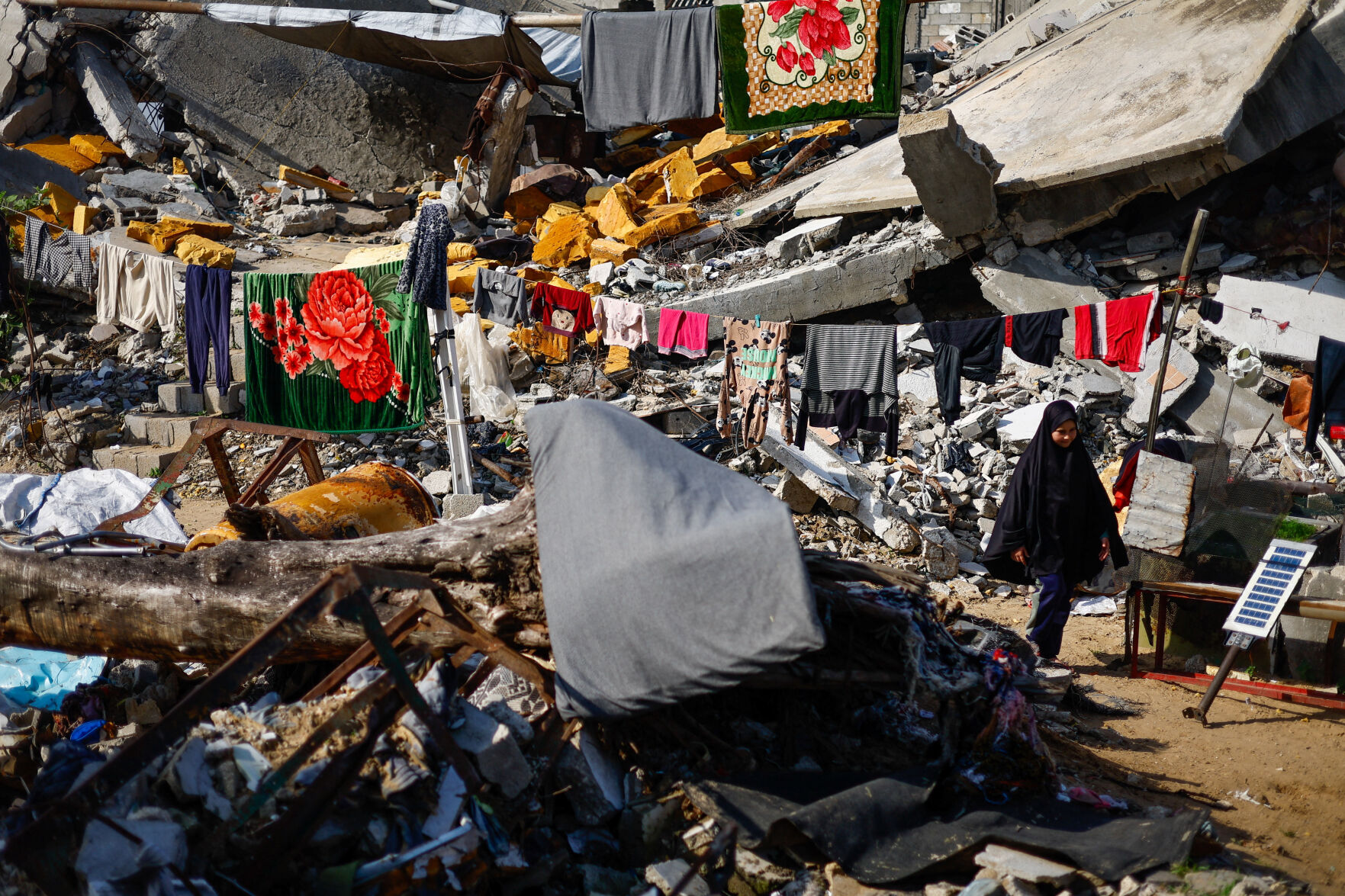
Israel has cleared the final hurdle before starting construction on a controversial settlement project near Jerusalem that would effectively cut the West Bank in two. A tender, which is seeking bids from developers, would clear the way to begin construction of the E1 project. The anti-settlement monitoring group Peace Now first reported the tender. Yoni Mizrahi, who runs the group's settlement watch division, said initial work could begin within the month. The international community overwhelmingly considers Israeli settlement construction in the West Bank to be illegal and an obstacle to peace.
By GHAITH ALSAYED and ABBY SEWELL Associated Press
Mohammad Marwan has been struggling to rebuild his life after being released from Syria's Saydnaya prison a year ago. Arrested in 2018 for fleeing military service, he endured beatings, electric shocks, and severe hunger. Since his release, he has received treatment for tuberculosis and attended therapy sessions to overcome the effects of his ordeal. His story reflects Syria's broader struggle to heal after the fall of the Assad regime. The country faces ongoing challenges, including sectarian violence, economic instability and tensions with Kurdish-led forces. On Monday, thousands of Syrians took to the streets to celebrate the anniversary of the regime's fall.
On Nov. 30, 1999, an estimated 40,000 demonstrators clashed with police as they protested against the World Trade Organization as the WTO convened in Seattle.
A U.S. envoy is reaffirming Washington's support for Syria's new government and telling The Associated Press in an exclusive interview that there is "no Plan B" for uniting the country. Tom Barrack also criticized Israel's recent intervention in Syria, calling it poorly timed and complicating efforts to stabilize the region. Israel last week struck Syrian government targets during clashes in Sweida between Druze militias and Sunni Bedouin tribes that left hundreds dead. A ceasefire was announced Saturday. The violence deepened the distrust of Syria's minority religious and ethnic groups toward the new government, which is led by Sunni Muslim former insurgents
By KAREEM CHEHAYEB and GHAITH ALSAYED Associated Press
Syrian government forces have started withdrawing from the southern province of Sweida following days of vicious clashes with militias from the Druze minority. Druze leaders and Syrian government officials announced a renewed ceasefire late on Wednesday that was mediated by the United States, Turkey and Arab countries. Syria's interim President Ahmad al-Sharaa said in an address early on Thursday that some Druze factions and clerics were appointed to maintain internal security in Sweida. However, Israeli strikes targeting government troops in defense of the Druze did not immediately stop. The dayslong fighting has threatened to unravel Syria's postwar political transition and brought in further military intervention by Israel.
By GHAITH ALSAYED and ABBY SEWELL Associated Press
Syria's defense minister has announced a ceasefire just hours after government forces entered a key city in the volatile Sweida province. Tuesday's announcement follows deadly sectarian clashes between Druze factions and Sunni Bedouin tribes that killed over 30 people. That's according to Syria's Interior Ministry. However, fighting and allegations of civilian abuses by security forces continue. Meanwhile, Israel launched airstrikes on Syrian military convoys, claiming to protect the Druze minority near its border. Syria condemned the strikes, accusing Israel of aggression. The United Nations has urged all parties to stop the violence and engage in dialogue as ser escalation. Sectarian tensions remain high.
Israel has struck military tanks in southern Syria, where government forces and Bedouin tribes clash with Druze militias. Dozens of people have been killed in the fighting between local militias and clans in Syria's Sweida province. Government security forces that were sent to restore order on Monday also clashed with local armed groups. The Interior Ministry has said more than 30 people died and nearly 100 others have been injured in that fighting. U.N. Deputy Special Envoy for Syria Najat Rochdi has expressed "deep concern" over the violence in the country struggling for stability after a 13-year civil war.
President Donald Trump has used the first major foreign trip of his second term to outline a vision for restoring global stability that is grounded in pragmatism and self-interest rather than values. His four-day swing through Saudi Arabia, Qatar and the United Arab Emirates puts a spotlight on Trump's transactional approach to foreign affairs as he was feted by autocratic rulers. His trip played out against the backdrop of stubborn global conflicts that showed the limits of his influence. But Trump insisted he was turning the page on American "interventionalism" as he moved to recognize the new government in Syria for the first time and prodded Iran to engage on nuclear talks.
By ZEKE MILLER, AAMER MADHANI and JON GAMBRELL Associated Press
Updated
President Donald Trump is holding out Saudi Arabia as a model for a reimagined Middle East. He's using his first major foreign trip of his term to emphasize the promise of economic prosperity over instability in a region that is reeling from multiple wars. The president says he will move to lift sanctions on Syria and normalize relations with the new government led by a former insurgent,. And he's touting the U.S. role in bringing about a fragile ceasefire with Yemen's Houthis. But Trump also is indicating his patience is not endless. He urged Iran to make a new nuclear deal with the U.S. or risk severe economic and military consequences.