

Featured
A surfer who lost his life after being rescued from choppy waters off San Francisco's Ocean Beach last week has been identified.
A surfer who lost his life after being rescued from choppy waters off San Francisco's Ocean Beach last week has been identified.
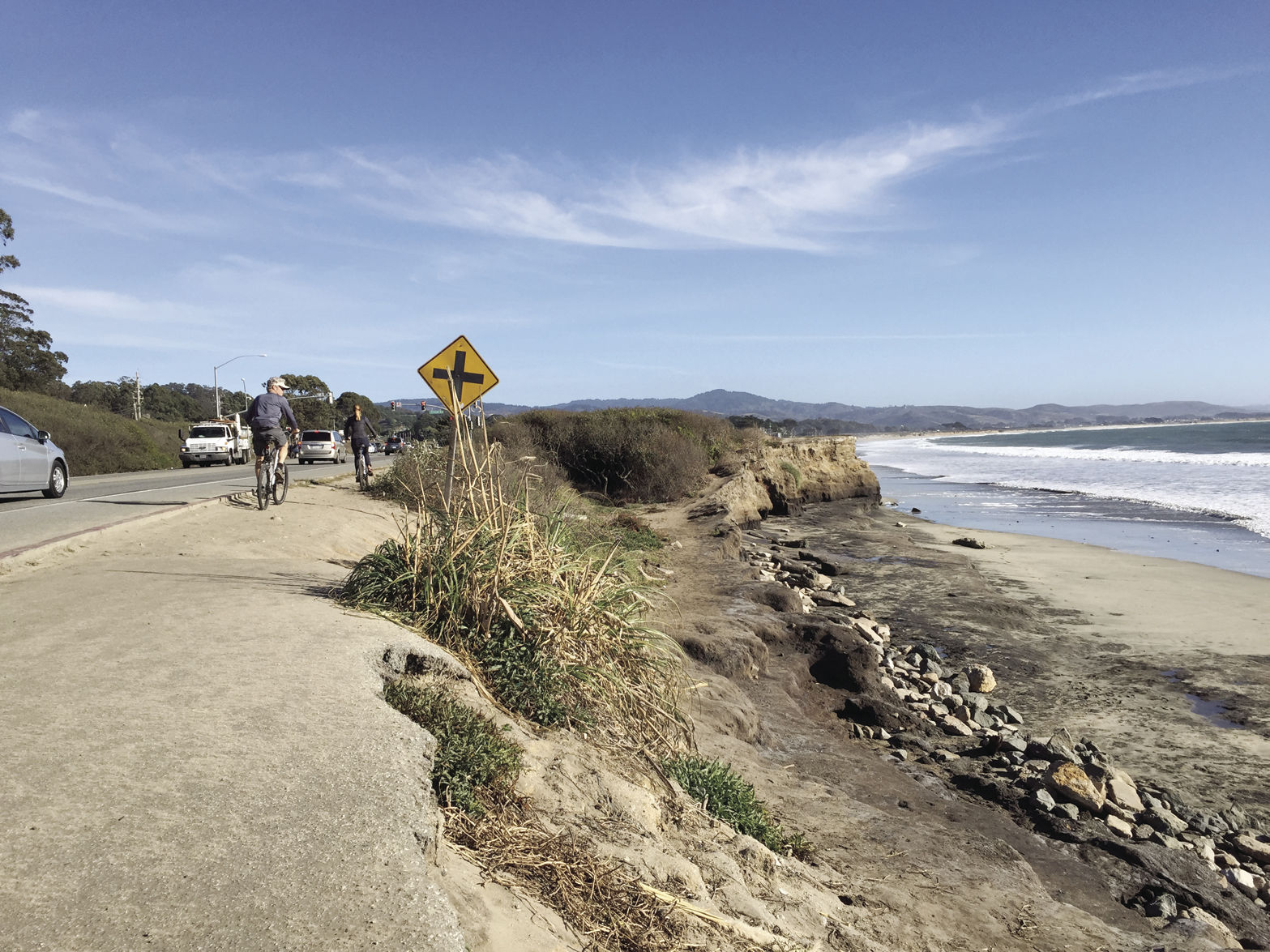
A potential long-term suggestion to address erosion along Highway 1 in the Surfers Beach area by elevating the road and moving it inward to th…


At Half Moon Bay’s Pillar Point Harbor, a long-awaited dredging project — moving sand from inside the harbor to the adjacent, eroding Surfers …

Strong winds and waves from Hurricane Erin have battered Nantucket and Martha's Vineyard as dangerous rip currents continue to threaten from the Carolinas to New England. But the storm is heading farther out to sea and forecasters say the unusually large hurricane will slowly weaken into the weekend. It has already dropped to Category 1 status. The menacing waves closed beaches from the Carolinas to New York City on Thursday. On North Carolina's Outer Banks, waves breached dunes in the town of Kill Devil Hills, and water and sand pooled on Highway 12. But the low-lying islands appear to have dodged widespread destruction.

Hurricane Erin is strengthening again and forecasters say it could re-intensify into a major hurricane. The storm is creeping toward the mid-Atlantic coast and churning up menacing waves that have closed beaches from the Carolinas to New York City. It's expected to peak over the next 48 hours. Erin is unlikely to make landfall along the East Coast before turning farther out to sea. But authorities are warning that its large swells will cut off roads on North Carolina's Outer Banks and whip up life-threatening rip currents from Florida to New England. The National Hurricane Center is watching two more tropical waves to the east of Erin.

At Pillar Point Harbor, a dredging project designed to stem erosion at Surfers Beach is finally underway.

Krystle Cansino from South San Francisco conquers the world as a monarch of many motions, all rooted toward compassion.

The Harbor District will likely decide on a contractor for the long-awaited project to stem erosion at Surfer’s Beach May 8, with work to begi…
A long-awaited project to stem erosion at Surfers Beach at Pillar Point Harbor received approval for $110,000 more in funding from the San Mat…


