By STEVEN SLOAN and STEVE PEOPLES Associated Press
President Donald Trump will use his State of the Union speech to defend his agenda. On Tuesday, he returns to the House chamber days after the Supreme Court struck down his sweeping tariff policy. Trump has blasted the justices who ruled against him. Some justices may skip the speech to avoid a confrontation. Democrats also plan a quieter approach after last year's signs and heckling. Some Democrats say they will not attend. Trump also faces voter anxiety about consumer prices and immigration enforcement.
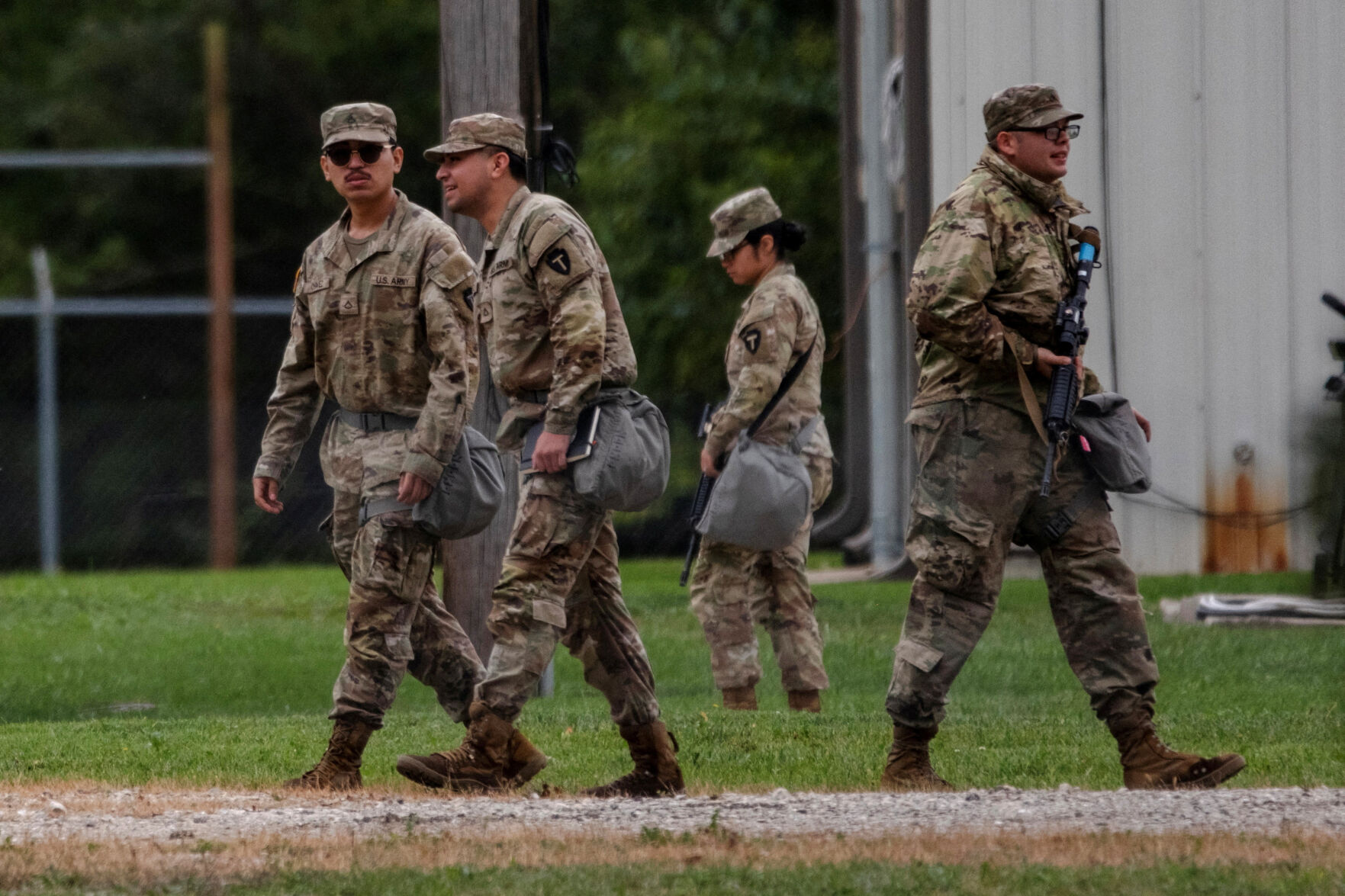
The Supreme Court has refused to allow the Trump administration to deploy National Guard troops in the Chicago area to support its immigration crackdown. The justices Tuesday declined the Republican administration's emergency request to overturn a ruling by a U.S. district judge that had blocked the deployment of troops. Three justices publicly dissented. The high court order is not a final ruling but could affect other lawsuits challenging President Donald Trump's attempts to deploy the military in other Democratic-led cities. The outcome is a rare Supreme Court setback for Trump, who'd won repeated victories in emergency appeals since taking office in January.
A call to overturn the landmark Supreme Court decision legalizing same-sex marriage nationwide is on the agenda Friday for the justices' closed-door conference. Among the new cases the justices are expected to consider is a longshot appeal from Kim Davis, the former Kentucky court clerk who refused to issue marriage licenses to same-sex couples following the court's 2015 ruling in Obergefell v. Hodges. Davis had been trying to get the court to overturn a lower court order for her to pay $360,000 in damages and attorney's fees to a couple whom she denied a marriage license. Clarence Thomas is the only justice to call for erasing the same-sex marriage ruling.
On July 19, 1848, the first "Convention to discuss the social, civil and religious condition and rights of Woman" convened at the Wesleyan Chapel in Seneca Falls, New York.
A split Supreme Court has rejected a pair of gun rights cases, though one conservative justice predicts the court will soon consider whether assault weapons bans are constitutional. The majority did not explain its reasoning in turning down the cases over high-capacity magazines and guns like the AR-15, which are popular weapons that have also been used in mass shootings. Justice Brett Kavanaugh indicated Monday he's skeptical that the bans are constitutional and said he expects the court to return to the issue soon. The decisions in cases from Maryland and Rhode Island come three years after the high court handed down a landmark ruling that expanded Second Amendment rights.
Today's Highlight in History: On July 19, 1848, the first "Convention to discuss the social, civil and religious condition and rights of Woman" convened at the Wesleyan Chapel in Seneca Falls, New York.
The U.S. Supreme Court justices have sent Donald Trump's immunity case back to a lower court in Washington, dimming the prospect of a preelection trial. In a historic ruling, the justices said for the first time Monday that former presidents can be shielded from prosecution for at least some of what they do in the Oval Office. But rather than do it themselves, the justices ordered lower courts to figure out precisely how to apply the decision to Trump's case. The court also decided to keep a hold on efforts in Texas and Florida to limit how social media platforms regulate content posted by their users, returning to cases to lower courts.
The Supreme Court has upheld a tax on foreign income over a challenge backed by business and anti-regulatory interests. The court on Thursday declined their invitation to weigh in on a broader, never-enacted tax on wealth. The justices left in place a provision of a 2017 tax law expected to generate $340 billion, mainly from foreign subsidiaries of domestic corporations that parked money abroad to shield it from U.S. taxes. The law was passed by a Republican Congress and signed by then-President Donald Trump. The case attracted outsize attention because it might have led to a decision dooming a wealth tax.
The Supreme Court is allowing New York to continue to enforce for now a sweeping new law banning guns from "sensitive places" such as schools, playgrounds and Times Square and increasing training requirements. The high court is letting the law be in force while a lawsuit over it plays out. The justices on Wednesday turned away a plea by the law's challengers. The gun owners wanted the high court to lift a federal appeals court order that had permitted the law to be in effect. The appeals court hasn't finished its review of the case. The Supreme Court justices could still consider the case and the law more generally in the future.