A panel of three federal judges has blocked Texas from using a new congressional map that Republicans drew in hopes of picking up five U.S. House seats. That map had touched off a nationwide redistricting battle and is a major piece of President Donald Trump's efforts to preserve a slim Republican majority ahead of the 2026 elections. In a 2-1 ruling Tuesday, a panel of federal judges in El Paso sided with opponents who argued that Texas' unusual summer redrawing of congressional districts would harm Black and Hispanic residents. Texas Gov. Greg Abbott vowed a swift appeal to the U.S. Supreme Court and defended the map.
By JONATHAN J. COOPER, MICHAEL R. BLOOD and TRÂN NGUYỄN Associated Press
Updated
California voters have approved a plan to overhaul the state's congressional district boundaries, giving Democrats a boost in their bid to win the U.S. House majority next year. The approval of Proposition 50 could allow Democrats to gain up to five additional seats in the 2026 midterms, when they hope to gain the power to block President Donald Trump's agenda in Congress. The measure was pushed by Democratic Gov. Gavin Newsom in response to a Republican-led redistricting effort in Texas. The California measure replaces maps drawn by an independent commission with new districts created by the Democratically controlled Legislature.
An unprecedented number of states are considering redrawing their congressional district lines mid-decade. Some warn this could lead to "dummymandering," where efforts to stretch partisan advantage might backfire. Nebraska is among the states where mid-decade redistricting has been floated. The focus is on the Omaha-based 2nd Congressional District, which is considered vulnerable for Republicans. Some Republicans in states considering mid-decade redistricting are hesitant, fearing it could make other districts more susceptible to loss. Concerns about overreaching haven't stopped the push for redistricting, but Nebraska faces challenges, including a lack of legislative support.
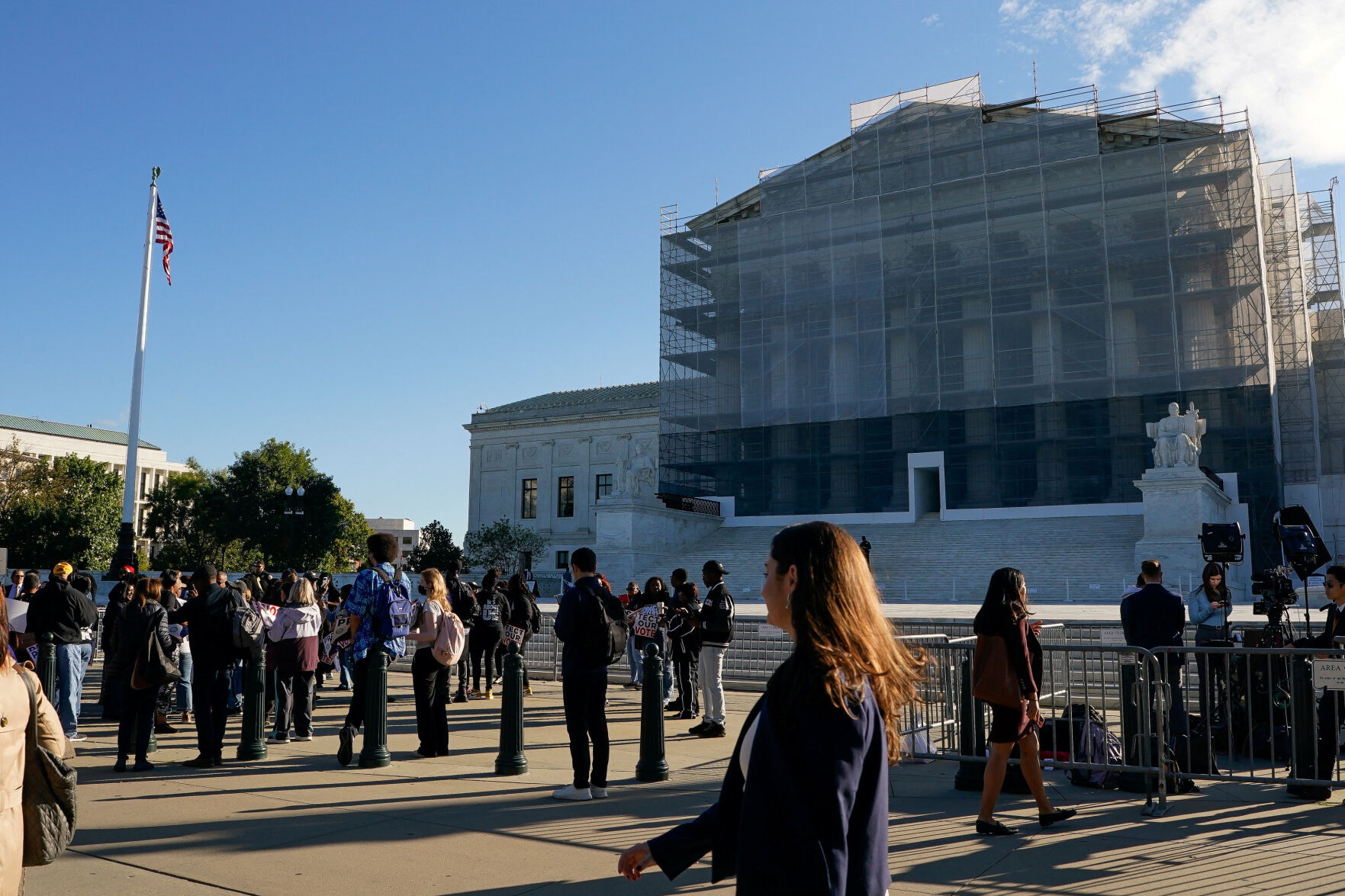
The Supreme Court appears ready to gut a key tool of the Voting Rights Act that's helped root out racial discrimination in voting for more than a half century. Such a change would boost Republican electoral prospects, particularly across the South. During 2 1/2 hours of arguments Wednesday, the court's six conservative justices seemed inclined to effectively strike down a Black majority congressional district in Louisiana because it relied too heavily on race. If that is the outcome, it would mark a fundamental change in the 1965 voting rights law that was the centerpiece legislation of the Civil Rights Movement. The court is expected to rule by early summer in 2026.