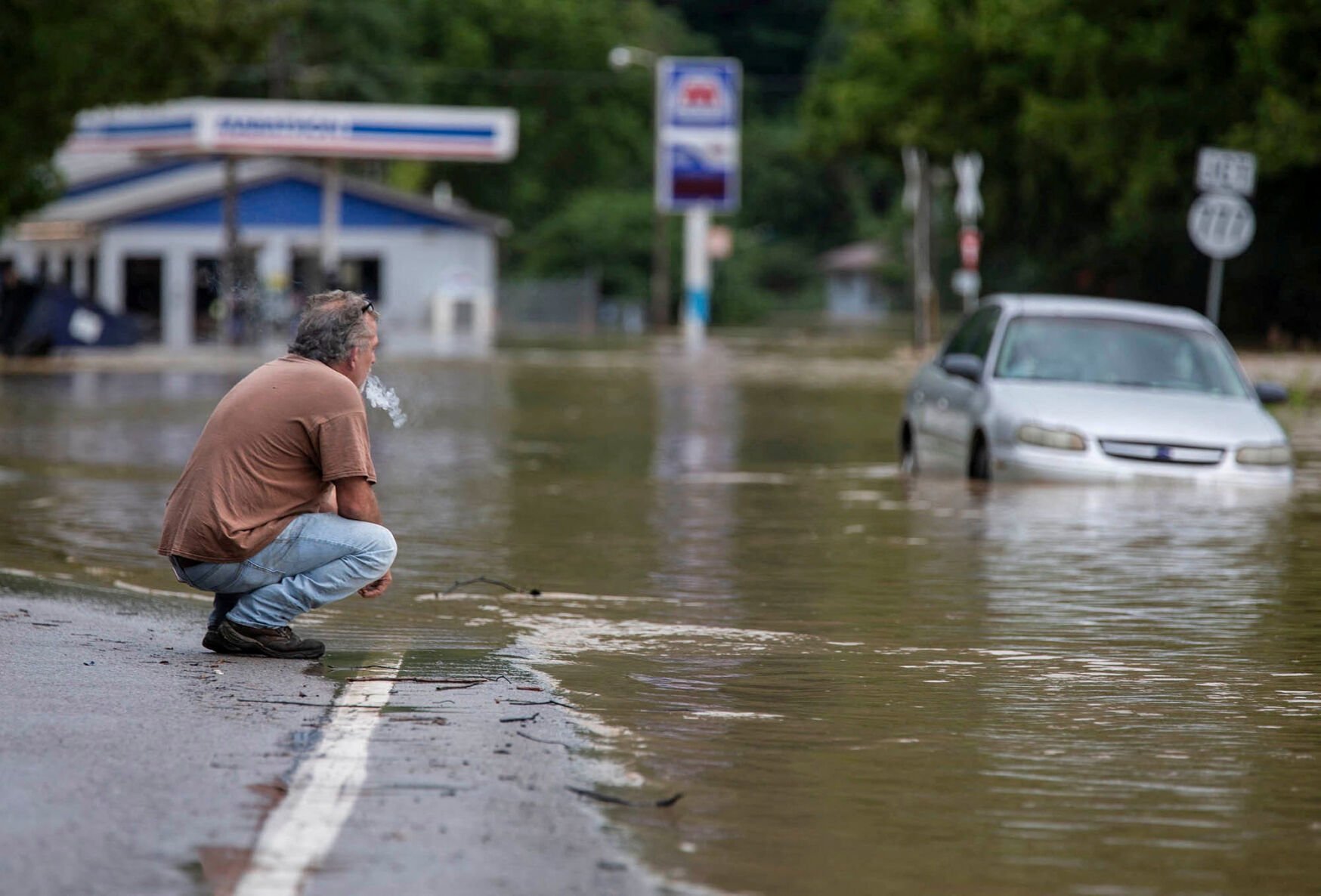
By BRUCE SCHREINER, KRISTIN M. HALL and JONATHAN MATTISE Associated Press
After days of deluges overfilled rivers to near-record levels across Kentucky, residents are anxious to return to their flooded homes and assess what is salvageable. Water is slowly receding in flooded Frankfort and officials hope most people will be able to return by the end of Wednesday. Gov. Andy Beshear urged patience and caution, asking people to wait if they couldn't get to their homes without driving through water. Inundated rivers are the latest threat from the storms that have killed at least 23 people. The National Weather Service says freeze warnings are in effect in much of Kentucky and a freeze watch has been issued for Tuesday night.
By BRUCE SCHREINER and KRISTIN M. HALL Associated Press
Updated
Rivers rose and flooding worsened across the U.S. South and Midwest, threatening communities already waterlogged and badly damaged by days of heavy rain and storms that killed at least 21 people. From Texas to Ohio, utilities scrambled to shut off power and gas, while cities deployed sandbags to protect homes and businesses. Forecasters warned that flooding could persist for days, especially in Kentucky, Tennessee and Alabama. Some rivers that inundated towns rose to near-record levels and were expected to crest Monday. Forecasters attributed the violent weather to warm temperatures, an unstable atmosphere, strong winds and abundant moisture streaming from the Gulf.
By GEORGE WALKER IV and BRUCE SCHREINER Associated Press
Parts of the Midwest and South are facing the possibility torrential rains and life-threatening flash floods. The fresh storms on Friday come as many communities are still reeling from severe tornadoes that destroyed whole neighborhoods and killed at least seven people. Kentucky's governor said floodwaters swept away and killed a boy Friday in his state. Forecasters warned of catastrophic weather on the way, with satellite imagery showing thunderstorms lining up like freight trains. Those who died in the initial wave of storms on Wednesday and early Thursday were in Tennessee, Indiana and Missouri. Forecasters say it was the opening act for days of wild weather that could bring flash floods across the nation's midsection.
Anti-abortion activists will have multiple reasons to celebrate — and some reasons for unease — when they gather Friday in Washington for the annual March for Life. The march has been held since January 1974 — a year after the U.S. Supreme Court's Roe v. Wade decision established a nationwide right to abortion. This year's gathering will be the first since the high court struck down Roe in a momentous ruling last June. Since then, 12 Republican-governed states have implemented sweeping bans on abortion. But in the same period, abortion opponents were defeated in votes on ballot measures in Kansas, Michigan and Kentucky. And state courts have blocked several abortion bans from taking effect.