By WAFAA SHURAFA, TOQA EZZIDIN and CARA ANNA Associated Press
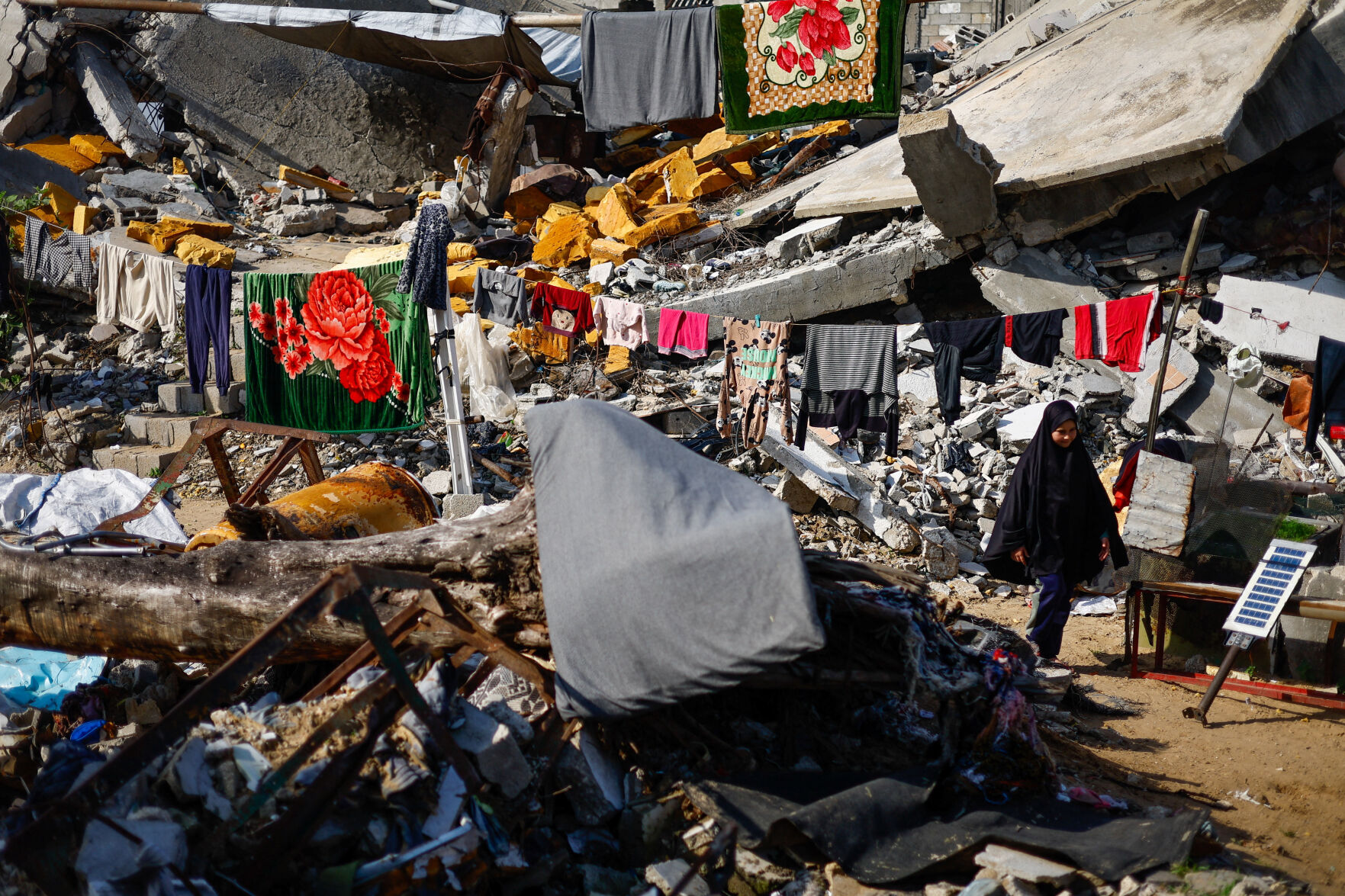
Palestinians in Gaza are reacting to a possible shift in the world's attention away from the Israel-Hamas ceasefire to a new regional conflict with Iran. Israel closed all crossings into the territory of over 2 million people in the wake of its new strikes on Tehran. The Israeli military body overseeing civilian affairs in Gaza said it closed the crossings because they cannot not be safely operated under fire. It said crossings would reopen as soon as the security situation allows. Palestinians fear new lack of access to food and other basic necessities from the outside world. Memories of hunger during last year's Israeli blockade remain fresh. The latest conflict comes days after U.S. President Donald Trump rallied billions of dollars in pledges for Gaza's reconstruction.
By WAFAA SHURAFA, SAMY MAGDY and JULIA FRANKEL Associated Press
Updated
Health officials in Gaza say Israeli strikes have killed at least 24 Palestinians, including two babies. Israel says it killed three militant leaders and that some of the strikes were in response to an attack that wounded a soldier. The strikes come as an already fragile ceasefire deal is under increasing strain. Hospital officials report that among the dead are at least five children, seven women and an on-duty paramedic. The violence since the ceasefire began on Oct. 10 has killed more than 550 Palestinians. Eight Arab and Muslim countries have condemned Israel's actions. The ceasefire deal aimed to end a 2-year-old war between Israel and Hamas.
By SAMY MAGDY, WAFAA SHURAFA and SAM METZ Associated Press
Updated
Three women from the first group of Palestinians to enter Gaza through the newly reopened Rafah crossing told The Associated Press that Israeli troops blindfolded, handcuffed and interrogated them for hours after they crossed. They said the treatment occurred at a screening station in Israeli-controlled territory. Asked about the allegations, the Israeli military said it wasn't aware of any inappropriate conduct or mistreatment. Confusion over luggage rules and tight vetting further marred the reopening, which allowed fewer people to cross than expected.
Medical evacuees from Gaza have entered Egypt as the Rafah crossing reopens, but few Palestinians will be allowed to cross in either direction daily. Monday's opening is a key step in the ceasefire between Israel and Hamas but mostly symbolic. About 20,000 Palestinian children and adults needing medical care hope to leave devastated Gaza via the crossing, according to Gaza health officials. Thousands of other Palestinians outside the territory hope to enter and return home. It was unclear if anyone was allowed into Gaza on Monday. The crossing had been closed since Israeli troops seized it in May 2024.
Israeli forces have targeted two United Nations facilities as part of their crackdown on the U.N. agency for Palestinian refugees. On Tuesday, crews bulldozed the United Nations Relief and Works Agency's offices in Sheikh Jarrah and fired tear gas at a vocational school in Qalandia. The agency's West Bank director, Roland Friedrich, said this marks the culmination of two years of measures against UNRWA in east Jerusalem. Israel's Foreign Ministry said the demolition enforced a new law banning UNRWA, claiming the agency has ties with militant groups. The U.N. has denied these claims. Israel has long claimed the agency has an anti-Israel bias, often with little evidence.
Israel has cleared the final hurdle before starting construction on a controversial settlement project near Jerusalem that would effectively cut the West Bank in two. A tender, which is seeking bids from developers, would clear the way to begin construction of the E1 project. The anti-settlement monitoring group Peace Now first reported the tender. Yoni Mizrahi, who runs the group's settlement watch division, said initial work could begin within the month. The international community overwhelmingly considers Israeli settlement construction in the West Bank to be illegal and an obstacle to peace.
By MELANIE LIDMAN and SAM MEDNICK Associated Press
Israel says it will suspend several humanitarian organizations for failing to meet its new rules to vet international organizations working in Gaza. The Ministry of Diaspora Affairs said on Tuesday that the organizations that will be banned on Jan. 1 did not meet its new requirements for sharing staff, funding and operations information. It accused Doctors Without Borders, known as MSF by its French acronym, of failing to clarify the roles of some staff that Israel accused of cooperation with Hamas and other militant groups. MSF didn't immediately comment but other international organizations have said that Israel's rules are arbitrary and could endanger staff.
The world's leading authority on food crises says the spread of famine's been averted in the Gaza Strip. But they say the situation remains critical with the entire Palestinian territory facing starvation. The new report was issued on Friday by The Integrated Food Security Phase Classification, or IPC. The report comes months after the IPC said that famine was occurring in Gaza City and was likely to spread across the territory. The report notes improvements in food security and nutrition following an October ceasefire and no famine has been detected. It warns the situation remains fragile. The IPC says all of Gaza will be classified an emergency with nearly 2,000 people facing catastrophic levels of hunger through April.
By WAFAA SHURAFA, MEGAN JANETSKY and SAMY MAGDY Associated Press
Israel says it has received human remains that Palestinian militants handed over to the Red Cross, but it is not immediately clear if they are one of three hostages remaining in the Gaza Strip. The office of Prime Minister Benjamin Netanyahu said Tuesday the remains will be taken for forensic testing and identification. The handover is the latest under the fragile ceasefire that took effect on Oct. 10. Palestinian Islamic Jihad said it found the remains earlier this week in Nuseirat, a refugee camp in central Gaza. The remaining hostages yet to be handed over are two Israelis and a man from Thailand.