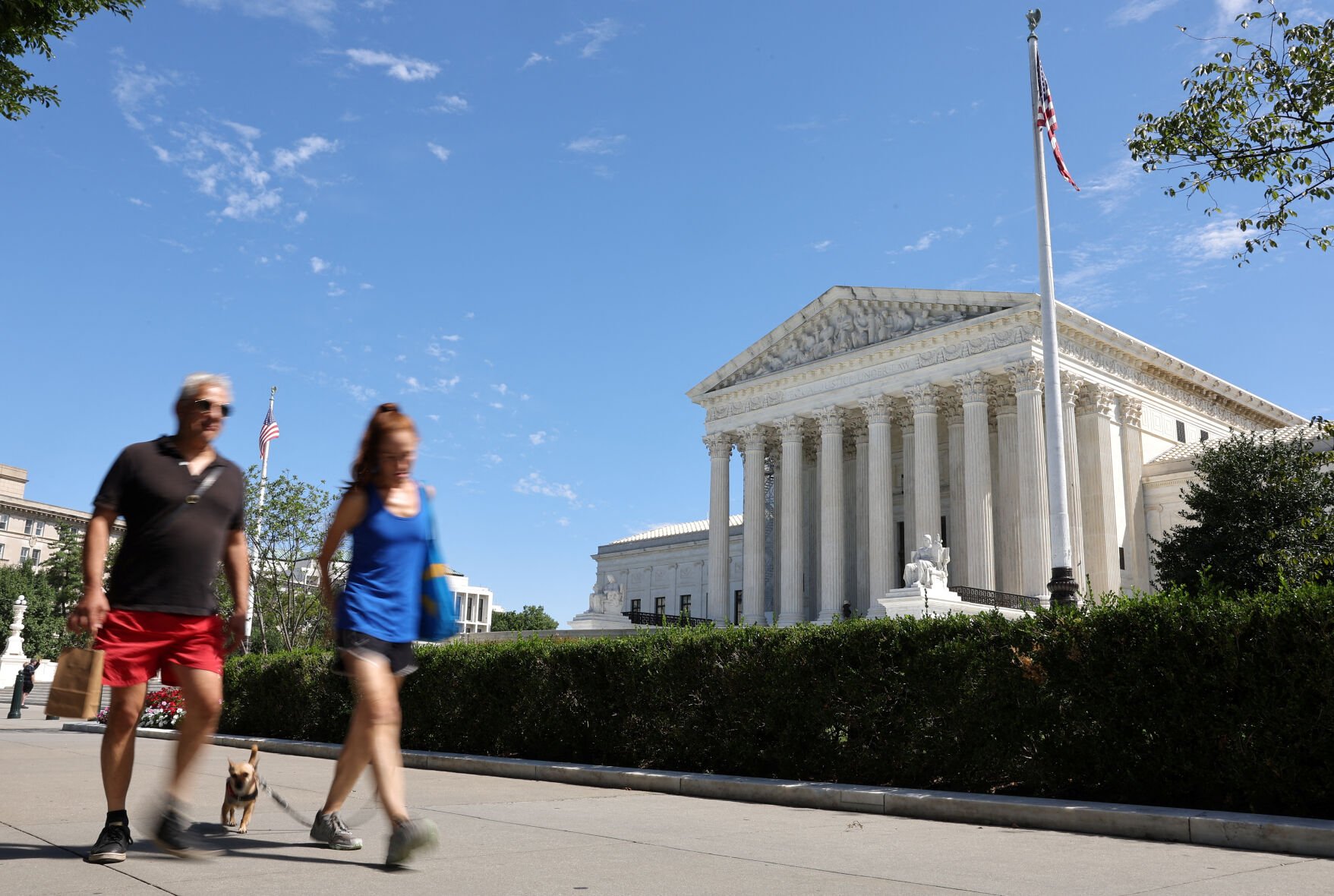
Texas' attorney general is praising a Supreme Court ruling upholding a state law aimed at blocking children from seeing pornography online. Republican Attorney General Ken Paxton said Friday companies "have no right to expose children to pornography and must institute reasonable age verification measures." Nearly half the states have passed similar age verification laws as smartphones and other devices make it easier to access online porn. The Free Speech Coalition says the Texas law puts an unfair burden on adults by requiring them to submit personal information that could be vulnerable to hacking. District courts initially blocked laws in Indiana, Tennessee and Texas, but appeals courts let the laws take effect.
The U.S. Supreme Court justices have sent Donald Trump's immunity case back to a lower court in Washington, dimming the prospect of a preelection trial. In a historic ruling, the justices said for the first time Monday that former presidents can be shielded from prosecution for at least some of what they do in the Oval Office. But rather than do it themselves, the justices ordered lower courts to figure out precisely how to apply the decision to Trump's case. The court also decided to keep a hold on efforts in Texas and Florida to limit how social media platforms regulate content posted by their users, returning to cases to lower courts.
The Supreme Court has upheld a federal gun control law that's intended to protect domestic violence victims. President Joe Biden praised the decision, saying that "no one who has been abused should have to worry about their abuser getting a gun," The justices ruled 8-1 Friday in favor of a 1994 ban on firearms for people under restraining orders to stay away from their spouses or partners. The justices reversed a ruling from the federal appeals court in New Orleans that had struck down the law. It's the justices' first Second Amendment case since they expanded gun rights in 2022. The case involved a Texas man accused of hitting his girlfriend and threatening to shoot her.
The Supreme Court has upheld a tax on foreign income over a challenge backed by business and anti-regulatory interests. The court on Thursday declined their invitation to weigh in on a broader, never-enacted tax on wealth. The justices left in place a provision of a 2017 tax law expected to generate $340 billion, mainly from foreign subsidiaries of domestic corporations that parked money abroad to shield it from U.S. taxes. The law was passed by a Republican Congress and signed by then-President Donald Trump. The case attracted outsize attention because it might have led to a decision dooming a wealth tax.