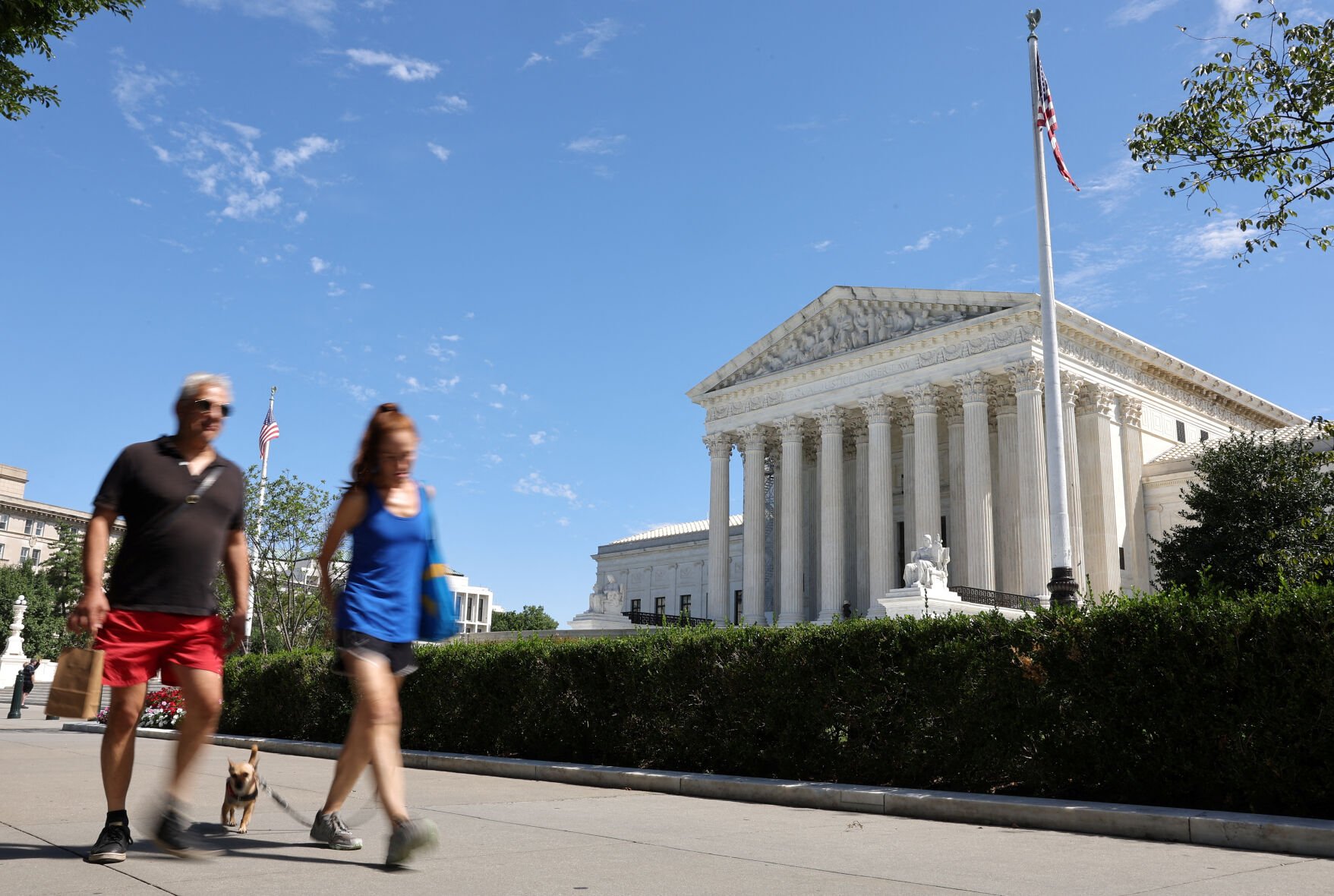
President Donald Trump says he's imposing a temporary global tariff of 10% after his far-reaching tariff regimen was struck down by the Supreme Court. The court handed him a stinging loss on an issue crucial to his economic agenda. Trump says he's "absolutely ashamed" of justices who voted to strike down his tariffs, calling the decision "deeply disappointing." Friday's 6-3 decision centers on tariffs he unilaterally imposed under an emergency powers law, including the sweeping "reciprocal" tariffs levied on nearly every other country. Trump has called the case one of the most important in U.S. history. The new tariffs would come under a law that restricts them to 150 days.
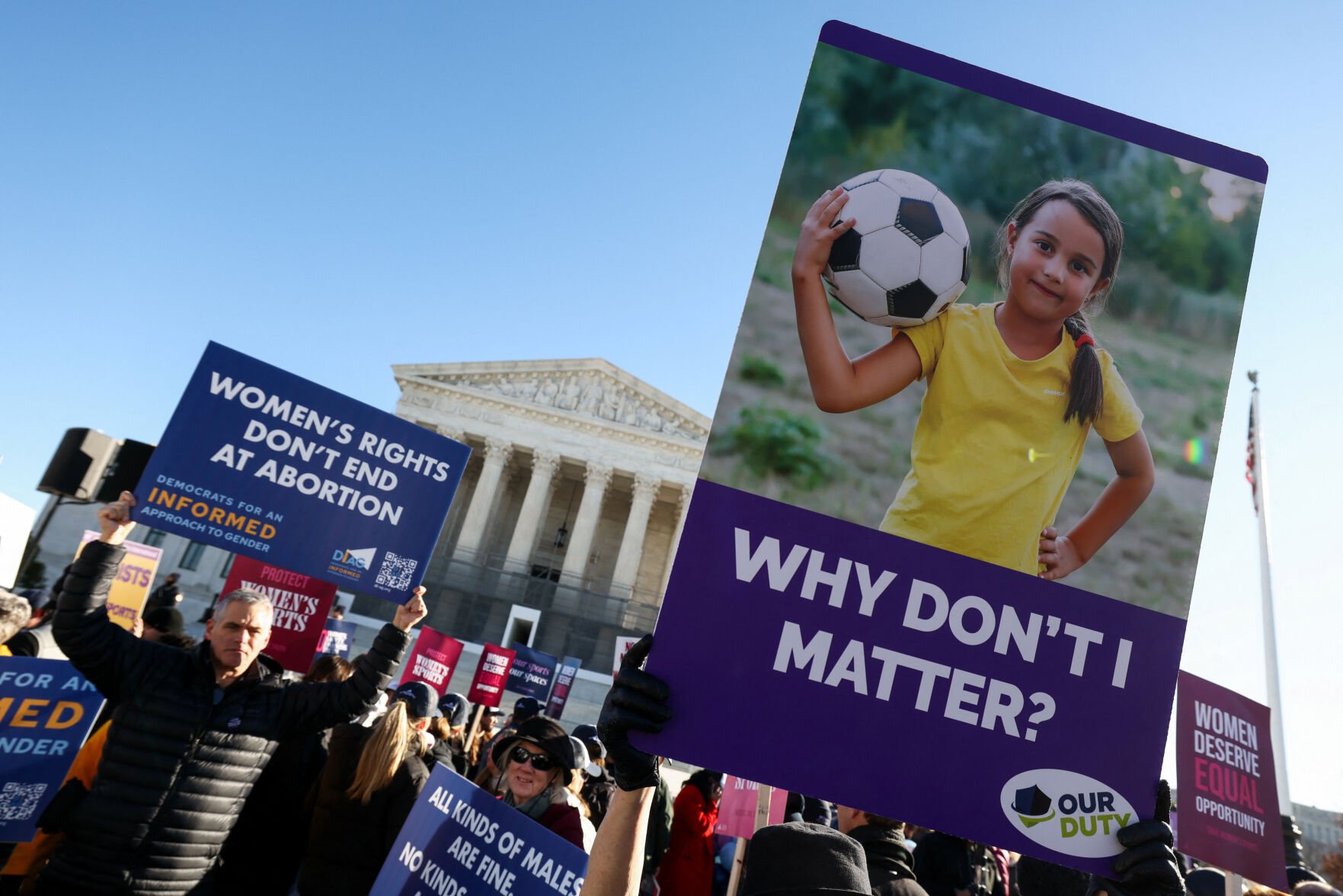
The Supreme Court seems likely to uphold state laws barring transgender girls and women from playing on school athletic teams. Lower courts ruled for the transgender athletes in Idaho and West Virginia who challenged the state bans. But the conservative-dominated Supreme Court gave no indication after more than three hours of arguments Tuesday that it would follow suit. Instead, at least five of the six conservatives on the nine-member court indicate they'll rule the laws don't violate either the Constitution or the landmark Title IX law. Title IX prohibits discrimination in education and has produced dramatic growth in girls and women's sports.
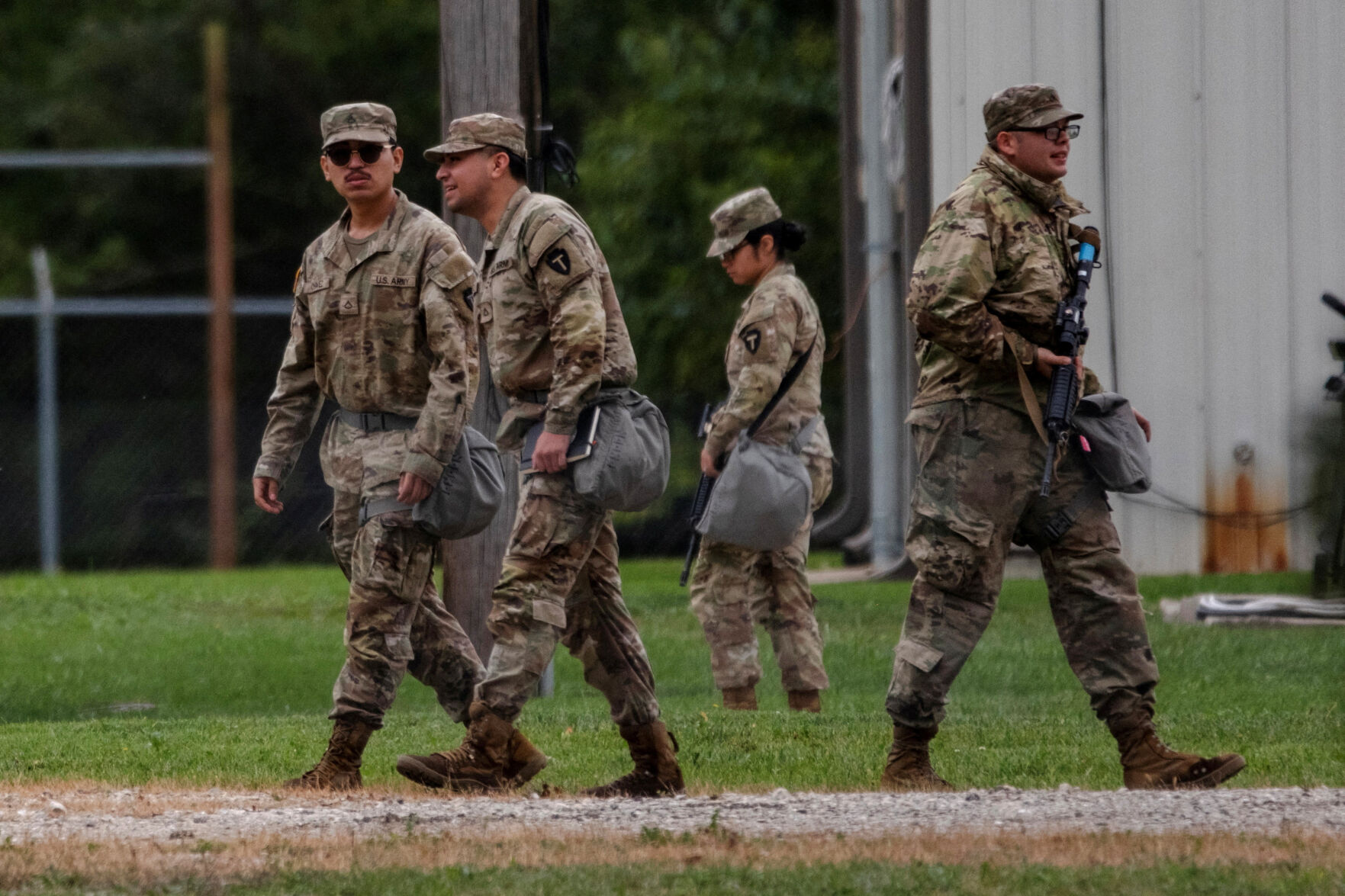
The Supreme Court has refused to allow the Trump administration to deploy National Guard troops in the Chicago area to support its immigration crackdown. The justices Tuesday declined the Republican administration's emergency request to overturn a ruling by a U.S. district judge that had blocked the deployment of troops. Three justices publicly dissented. The high court order is not a final ruling but could affect other lawsuits challenging President Donald Trump's attempts to deploy the military in other Democratic-led cities. The outcome is a rare Supreme Court setback for Trump, who'd won repeated victories in emergency appeals since taking office in January.
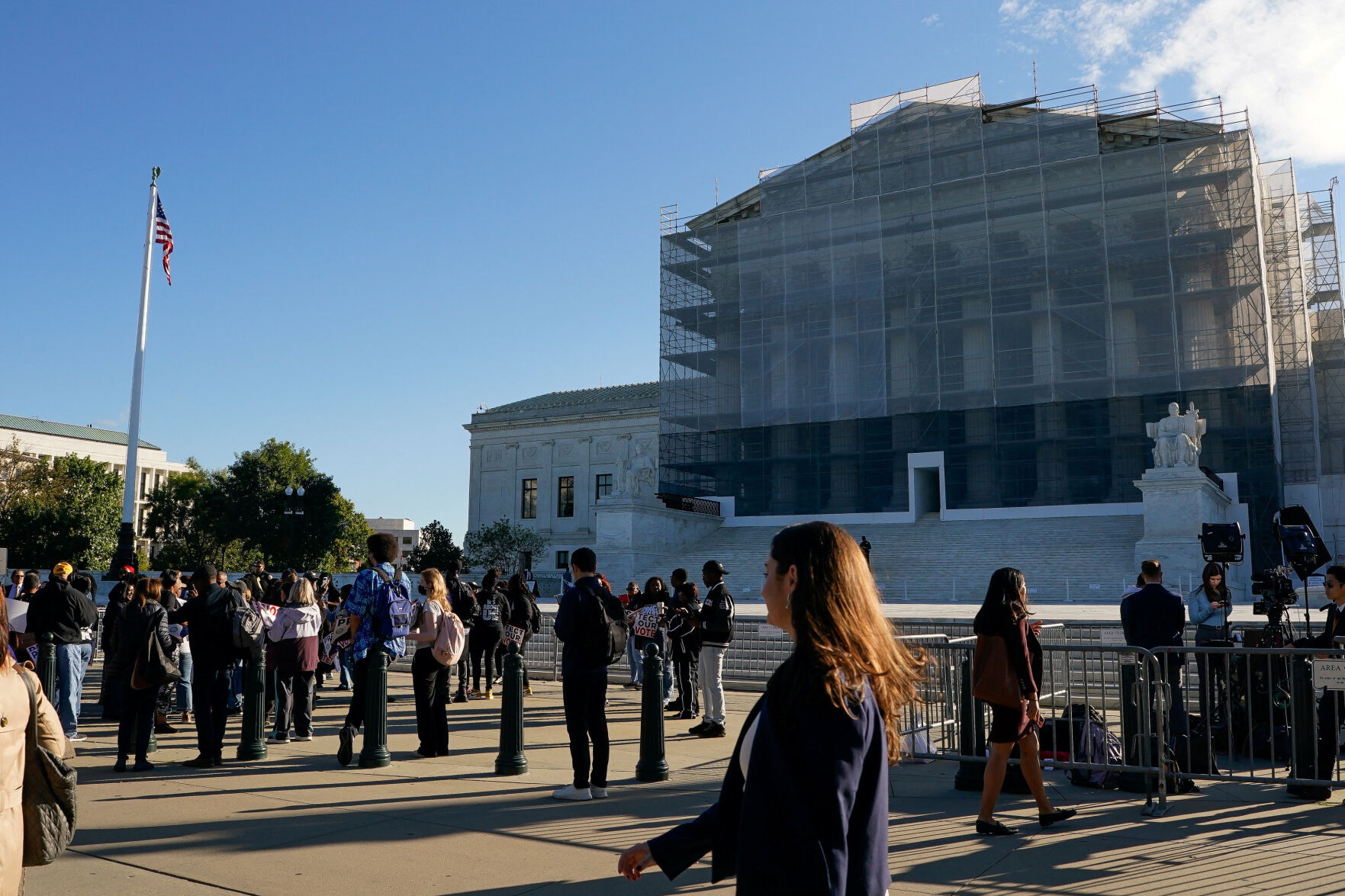
The Supreme Court appears ready to gut a key tool of the Voting Rights Act that's helped root out racial discrimination in voting for more than a half century. Such a change would boost Republican electoral prospects, particularly across the South. During 2 1/2 hours of arguments Wednesday, the court's six conservative justices seemed inclined to effectively strike down a Black majority congressional district in Louisiana because it relied too heavily on race. If that is the outcome, it would mark a fundamental change in the 1965 voting rights law that was the centerpiece legislation of the Civil Rights Movement. The court is expected to rule by early summer in 2026.
The Supreme Court is clearing the way for federal agents to conduct sweeping immigration operations in Los Angeles, another victory for President Donald Trump at the high court. The justices Monday lifted a restraining order from a judge who found patrols were conducting indiscriminate arrests in LA. The order barred agents from stopping people solely based on their race, language, job or location. The plaintiffs included U.S. citizens swept up in immigration stops. Justice Brett Kavanaugh says the lower-court judge went too far in restricting how agents can carry out brief stops for questioning. In a dissenting opinion, Justice Sonia Sotomayor says people were thrown to the ground and handcuffed because of their looks and accents.
A split Supreme Court has rejected a pair of gun rights cases, though one conservative justice predicts the court will soon consider whether assault weapons bans are constitutional. The majority did not explain its reasoning in turning down the cases over high-capacity magazines and guns like the AR-15, which are popular weapons that have also been used in mass shootings. Justice Brett Kavanaugh indicated Monday he's skeptical that the bans are constitutional and said he expects the court to return to the issue soon. The decisions in cases from Maryland and Rhode Island come three years after the high court handed down a landmark ruling that expanded Second Amendment rights.
Today in history: On Sept. 27, 1996, in Afghanistan, the Taliban, a band of former seminary students, drove the government of President Burhanuddin Rabbani out of Kabul, captured the capital and executed former leader Najibullah.
The Supreme Court has upheld a tax on foreign income over a challenge backed by business and anti-regulatory interests. The court on Thursday declined their invitation to weigh in on a broader, never-enacted tax on wealth. The justices left in place a provision of a 2017 tax law expected to generate $340 billion, mainly from foreign subsidiaries of domestic corporations that parked money abroad to shield it from U.S. taxes. The law was passed by a Republican Congress and signed by then-President Donald Trump. The case attracted outsize attention because it might have led to a decision dooming a wealth tax.