President Donald Trump says the United States is talking with Cuba and raised the possibility of a "friendly takeover" of the island without explaining what that means. Trump told reporters on Friday that Secretary of State Marco Rubio is speaking with Cuban leaders at a "very high level," but the White House offered no further details. Trump suggested that Cuba is facing economic collapse. His comments come as Cuba says it is communicating with U.S. officials after a deadly shooting involving a Florida-registered speedboat in waters off the island. Rubio has said that investigators are looking into it.
Marco Rubio is visiting the Caribbean, where he's defending the Trump administration's military operation to capture Venezuela's Nicolas Maduro. The secretary of state tells leaders from the 15-member Caribbean Community bloc that Venezuela and the region are better off as a result of that U.S. raid. Rubio said Wednesday that he offered the defense without "apology" or "apprehension." Caribbean leaders have been unsettled by the Maduro operation, particularly because it was accompanied by a significant hardening of U.S. policies in the Western Hemisphere.
By BEN FINLEY and KONSTANTIN TOROPIN Associated Press
The Pentagon says U.S. military forces have boarded a third sanctioned oil tanker in the Indian Ocean after tracking it from the Caribbean Sea in an effort to target illicit oil connected to Venezuela. U.S. Southern Command said Tuesday in a post on X that U.S. forces boarded the Bertha overnight. President Donald Trump had ordered a quarantine of sanctioned tankers near Venezuela in December to pressure then-President Nicolás Maduro before his capture. Venezuela faced U.S. sanctions on its oil for several years, relying on a shadow fleet of falsely flagged tankers to smuggle crude into global supply chains.
By WILL WEISSERT and ALLEN G. BREED Associated Press
President Trump used a Fort Bragg appearance on Friday to praise U.S. Special Forces for last month's raid that removed Venezuela's Nicolás Maduro. But his visit also felt at times more like a political rally than an official trip to fete the military. Trump even called Michael Whatley, a Republican Senate candidate in North Carolina, to the stage. Trump also told troops and their families that the operation against Maduro shows America's true military might, and makes enemies fear the U.S. The president mentioned sending a second aircraft carrier group to the Middle East amid tensions with Iran and said that the U.S. is "feared" by potential enemies.
Thirty days after the U.S. captured then-President Nicolás Maduro, Venezuela remains in turmoil. Many citizens are unsure about the current situation, with fears of further attacks and government repression. Acting President Delcy Rodríguez faces questions about her autonomy and potential U.S. influence. Despite promises of wage increases, uncertainty prevails. Maduro supporters view his capture as a kidnapping, while opposition leaders cautiously reemerge. Rodríguez's new oil sector policies mark a shift from a pillar of the self-proclaimed socialist movement that has governed Venezuela for more than two decades. Venezuelans are balancing hope for economic improvement with fear of instability, as they navigate this complex political landscape.
President Donald Trump says he's informed Venezuela's acting president that he'll open up all commercial airspace over Venezuela. And he says Americans will soon be able to visit. Trump said Thursday he instructed his transportation secretary and U.S. military leaders to open the airspace by the end of the day. Venezuela's government hasn't commented on Trump's announcement. American Airlines says it intends to reinstate nonstop service from the U.S. in the coming months. Earlier this week, Trump's Republican administration notified Congress it was taking steps to possibly reopen the shuttered U.S. Embassy in Venezuela as it explores restoring relations following the U.S. military raid that ousted then-President Nicolás Maduro.
By MATTHEW LEE, STEPHEN GROVES and JOSHUA GOODMAN Associated Press
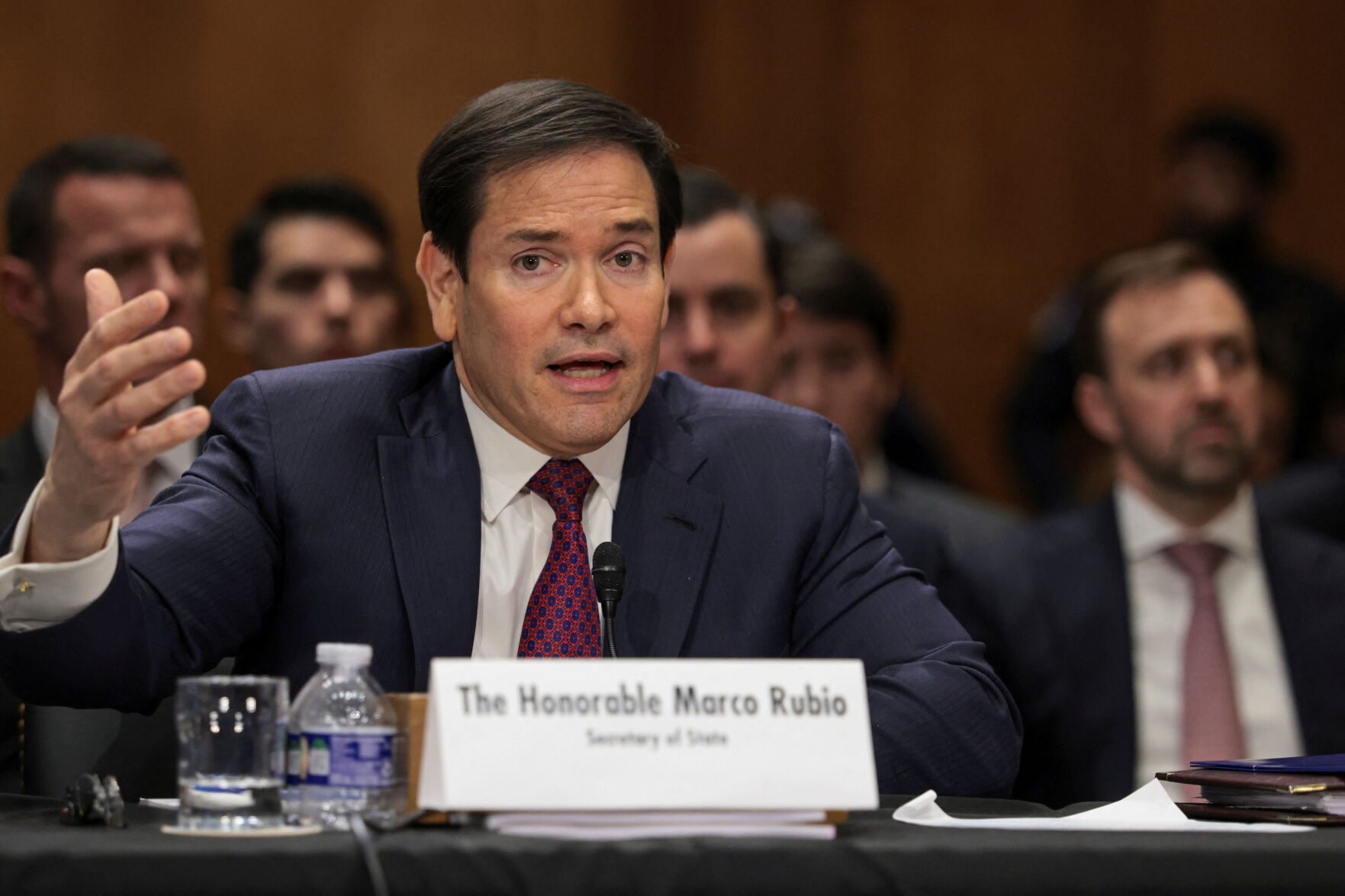
Secretary of State Marco Rubio has given a full-throated defense of President Donald Trump's military operation to oust and arrest then-Venezuelan President Nicolas Maduro. Rubio also used his wide-ranging congressional testimony Wednesday to touch on Greenland, NATO, Iran and China. In the first public hearing since the Jan. 3 intervention to depose Maduro, Rubio said Trump had acted to take out a major U.S. national security threat in the Western Hemisphere. Rubio said America was safer and more secure as a result and that the Republican administration would work with interim authorities to stabilize the South American country.
Tens of thousands of Cubans have gathered in Havana to protest the killing of 32 Cuban officers in Venezuela. The demonstration took place Friday at the "José Martí Anti-Imperialist" plaza across from the U.S. Embassy. The crowd demanded the release of former Venezuelan president Nicolás Maduro, who was arrested by the U.S. on Jan. 3. Cuba's Foreign Ministry described the protest as a response to threats against peace and sovereignty. President Miguel Díaz-Canel attended the event. The protest follows U.S. President Donald Trump's recent demands for Cuba to negotiate with him amid tightened sanctions and economic struggles.
By JOSHUA GOODMAN and ISABEL DEBRE Associated Press
Venezuelan opposition leader María Corina Machado says she's confident of her country's eventual transition to democracy after the U.S. military ousted former President Nicolás Maduro. But when pressed, she took pains to avoid giving details on her plans to return home or any timetable for elections in Venezuela. Her remarks on Friday reflect how President Donald Trump's endorsement of a Maduro loyalist to lead Venezuela for now has frozen out the nation's Nobel Peace Prize-winning crusader for democracy. Still, Machado has looked to get closer to Trump, presenting her Nobel medal to him a day earlier at the White House.