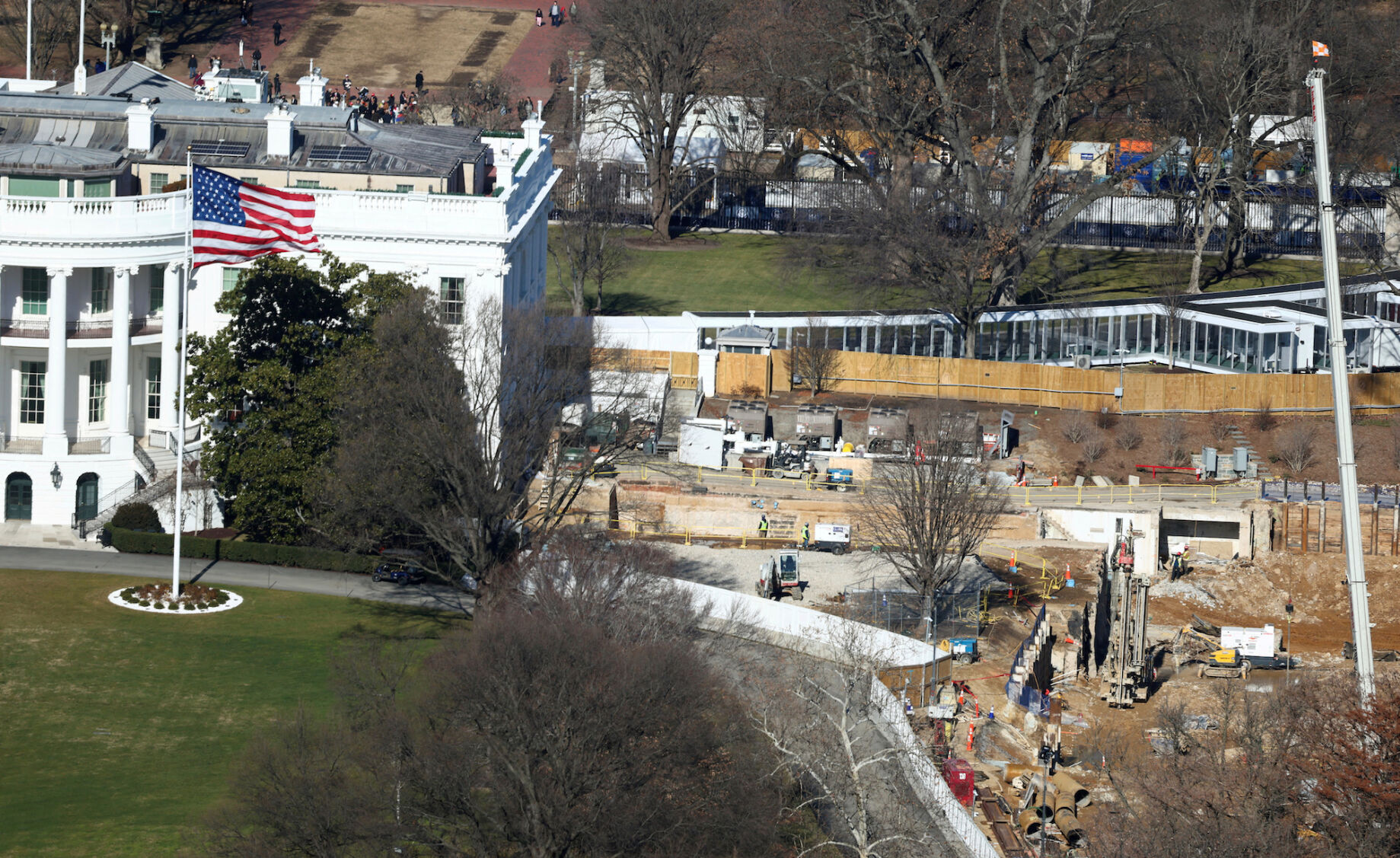
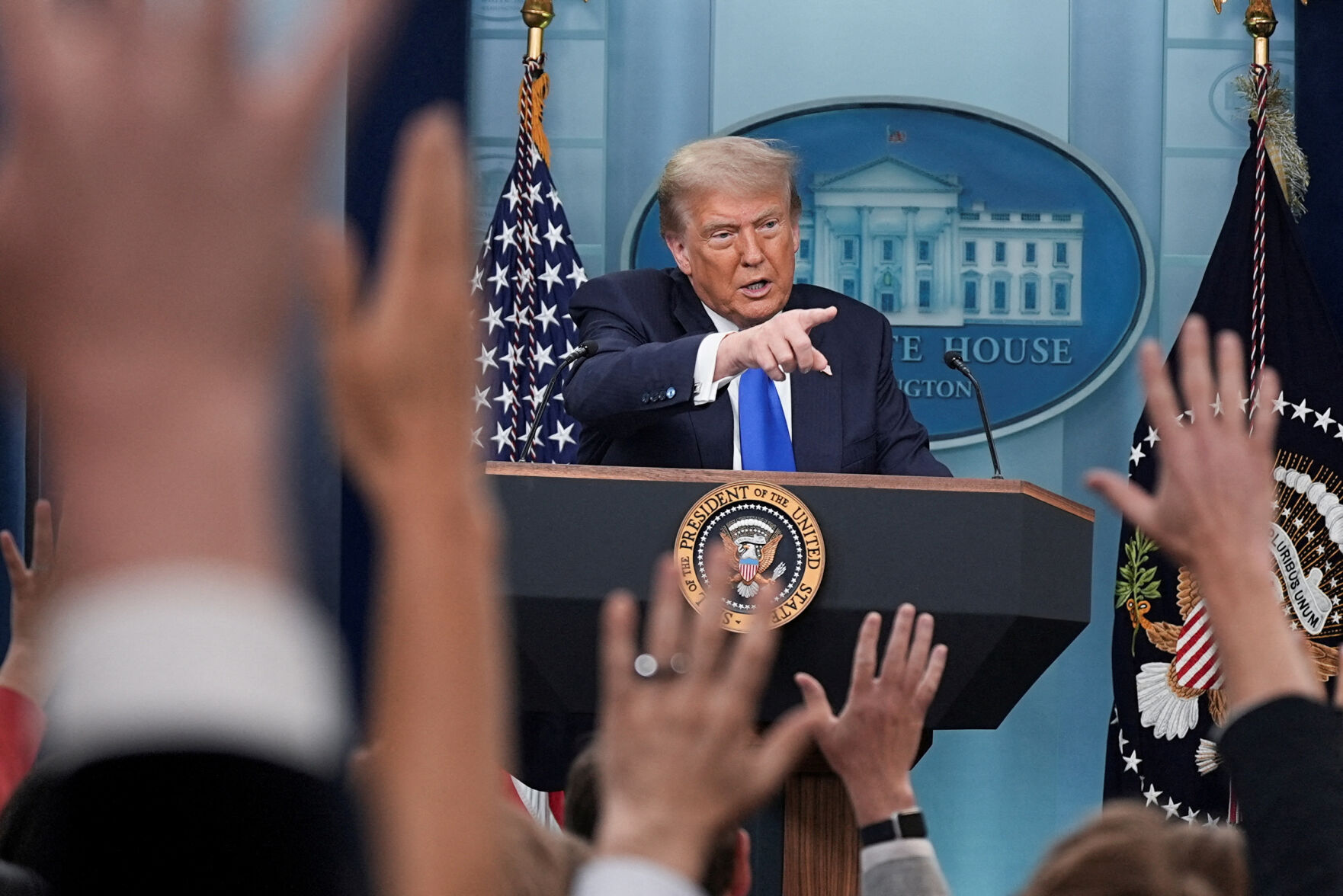
President Donald Trump has railed against a federal judge's decision that continues to block above-ground construction of a $400 million White House ballroom. The decision on Thursday allows only below-ground work on a bunker and other "national security facilities" at the site. U.S. District Judge Richard Leon in Washington issued his latest ruling Thursday in a lawsuit over the ballroom project several days after an appeals court instructed him to reconsider the possible national security implications of stopping construction. Leon said he is ordering a stop only to the above-ground construction of the planned ballroom, apart from any work needed to cover or secure that part of the project.
The Supreme Court's conservative majority sounds skeptical of state laws that allow the counting of late-arriving mail ballots, a target of President Donald Trump. The court heard arguments Monday in a case from Mississippi that also could affect voters in 13 other states and the District of Columbia, which have grace periods for ballots cast by mail. An additional 15 states that have more forgiving deadlines for ballots from military and overseas voters also could be impacted. A ruling is expected by late June, early enough to govern the counting of ballots in the 2026 midterm congressional elections. The court challenge is part of Trump's broader attack on most mail balloting.
By CHARLOTTE KRAMON, ALEX VEIGA and MARY CLARE JALONICK Associated Press
In a rare bipartisan effort for a deeply divided Congress, the Senate has passed a broad bill to make U.S. housing more accessible and affordable. The bill passed on Thursday would reduce regulations, regulate corporate investors and expand how housing dollars can be used to build affordable homes and rentals. It now heads back to the House, which passed a separate version earlier this year. It is unclear whether President Donald Trump would sign it after declaring last weekend that he won't sign any new measures unless Congress passes legislation that would require voters to show proof of citizenship.
A Texas landlord's case before the U.S. Supreme Court is challenging the U.S. Postal Service's exemption from lawsuits over lost or mishandled mail. The landlord alleges her mail was deliberately withheld for two years. The Postal Service argues that allowing such lawsuits could lead to a flood of litigation. During oral arguments last month, a government lawyer warned of numerous lawsuits if the court rules in the landlord's favor. However, the landlord's attorney claims such cases would be rare. The Supreme Court's decision could redefine the Postal Service's liability under the Federal Tort Claims Act.
A call to overturn the landmark Supreme Court decision legalizing same-sex marriage nationwide is on the agenda Friday for the justices' closed-door conference. Among the new cases the justices are expected to consider is a longshot appeal from Kim Davis, the former Kentucky court clerk who refused to issue marriage licenses to same-sex couples following the court's 2015 ruling in Obergefell v. Hodges. Davis had been trying to get the court to overturn a lower court order for her to pay $360,000 in damages and attorney's fees to a couple whom she denied a marriage license. Clarence Thomas is the only justice to call for erasing the same-sex marriage ruling.
The Supreme Court is allowing President Donald Trump to put his plan to dismantle the Education Department back on track and go through with laying off nearly 1,400 employees. With the three liberal justices in dissent, the court on Monday paused an order from U.S. District Judge Myong Joun in Boston, who issued a preliminary injunction reversing the layoffs and calling into question the broader plan. The layoffs "will likely cripple the department," Joun wrote. A federal appeals court refused to put the order on hold while the administration appealed.
A divided Supreme Court has ruled that individual judges lack the authority to grant nationwide injunctions, but the decision leaves unclear the fate of President Donald Trump's restrictions on birthright citizenship. The outcome Friday was a victory for Trump, who has complained about individual judges throwing up obstacles to his agenda. But a conservative majority left open the possibility that the birthright citizenship changes could remain blocked nationwide. The Republican president's order would deny citizenship to U.S.-born children of people who are in the country illegally. Trump says the court's decision is "amazing" and a "monumental victory for the Constitution," the separation of powers and the rule of law.
A unanimous Supreme Court has made it easier to bring lawsuits over so-called reverse discrimination, siding with an Ohio woman who claims she didn't get a job and was demoted because she's straight. The justices' decision Thursday affects lawsuits in 20 states and the District of Columbia where, until now, courts had set a higher bar when members of a majority group, including those who are white and heterosexual, sue for discrimination under federal law. The court ruled in an appeal from Marlean Ames, who's worked for the Ohio Department of Youth Services for years. Justice Ketanji Brown Jackson says federal civil rights law draws no distinction between members of majority and minority groups.
A split Supreme Court has rejected a pair of gun rights cases, though one conservative justice predicts the court will soon consider whether assault weapons bans are constitutional. The majority did not explain its reasoning in turning down the cases over high-capacity magazines and guns like the AR-15, which are popular weapons that have also been used in mass shootings. Justice Brett Kavanaugh indicated Monday he's skeptical that the bans are constitutional and said he expects the court to return to the issue soon. The decisions in cases from Maryland and Rhode Island come three years after the high court handed down a landmark ruling that expanded Second Amendment rights.