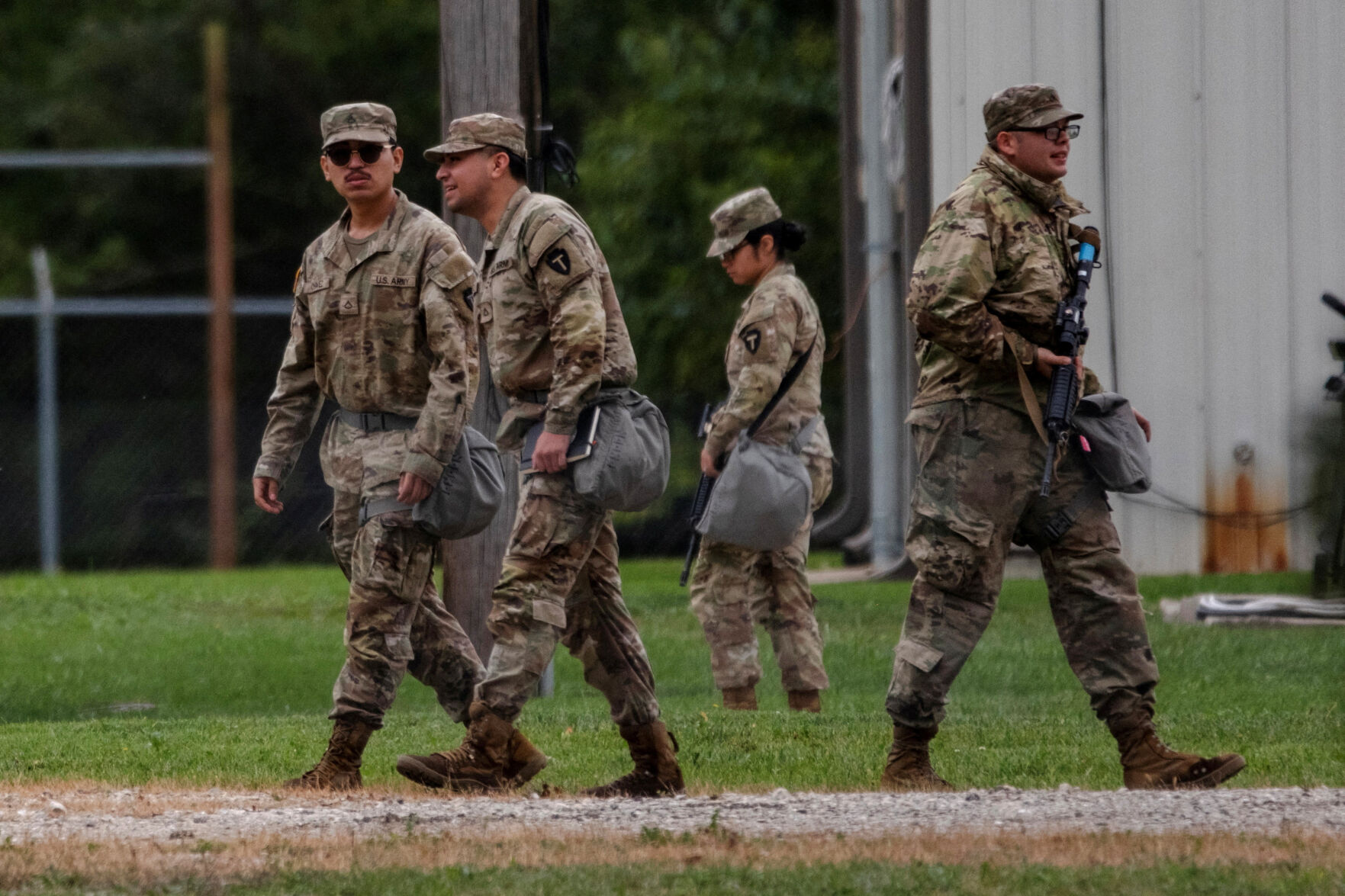
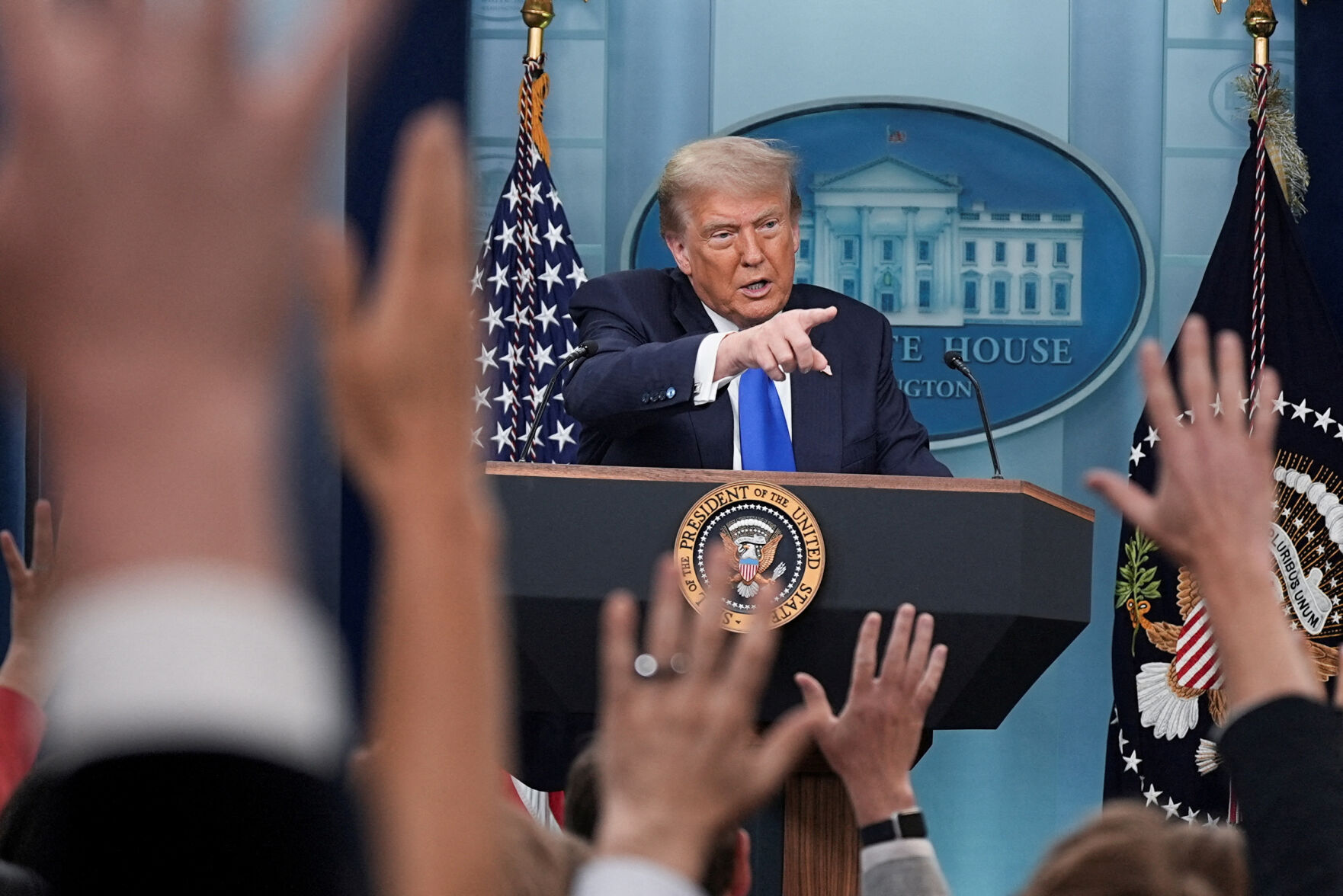
The Supreme Court has refused to allow the Trump administration to deploy National Guard troops in the Chicago area to support its immigration crackdown. The justices Tuesday declined the Republican administration's emergency request to overturn a ruling by a U.S. district judge that had blocked the deployment of troops. Three justices publicly dissented. The high court order is not a final ruling but could affect other lawsuits challenging President Donald Trump's attempts to deploy the military in other Democratic-led cities. The outcome is a rare Supreme Court setback for Trump, who'd won repeated victories in emergency appeals since taking office in January.
A call to overturn the landmark Supreme Court decision legalizing same-sex marriage nationwide is on the agenda Friday for the justices' closed-door conference. Among the new cases the justices are expected to consider is a longshot appeal from Kim Davis, the former Kentucky court clerk who refused to issue marriage licenses to same-sex couples following the court's 2015 ruling in Obergefell v. Hodges. Davis had been trying to get the court to overturn a lower court order for her to pay $360,000 in damages and attorney's fees to a couple whom she denied a marriage license. Clarence Thomas is the only justice to call for erasing the same-sex marriage ruling.
By CHRISTINE FERNANDO and GENE JOHNSON Associated Press
Updated
President Donald Trump's attempts to deploy the military in Democratic-led cities over objections of mayors and governors have brought a head-spinning array of court challenges and overlapping rulings. As the U.S. Supreme Court weighs whether to clear the way for the National Guard in Chicago, a federal judge on Wednesday said she would agree to extend a two-week block on Guard deployment in the Chicago area by 30 days. Meanwhile, a federal appeals court is hearing arguments in California Gov. Gavin Newsom's challenge to troop deployment in Los Angeles. Guard troops could also soon be on the ground in Portland, Oregon — pending legal developments there.
The Supreme Court is allowing President Donald Trump to put his plan to dismantle the Education Department back on track and go through with laying off nearly 1,400 employees. With the three liberal justices in dissent, the court on Monday paused an order from U.S. District Judge Myong Joun in Boston, who issued a preliminary injunction reversing the layoffs and calling into question the broader plan. The layoffs "will likely cripple the department," Joun wrote. A federal appeals court refused to put the order on hold while the administration appealed.
A divided Supreme Court has ruled that individual judges lack the authority to grant nationwide injunctions, but the decision leaves unclear the fate of President Donald Trump's restrictions on birthright citizenship. The outcome Friday was a victory for Trump, who has complained about individual judges throwing up obstacles to his agenda. But a conservative majority left open the possibility that the birthright citizenship changes could remain blocked nationwide. The Republican president's order would deny citizenship to U.S.-born children of people who are in the country illegally. Trump says the court's decision is "amazing" and a "monumental victory for the Constitution," the separation of powers and the rule of law.
A split Supreme Court has rejected a pair of gun rights cases, though one conservative justice predicts the court will soon consider whether assault weapons bans are constitutional. The majority did not explain its reasoning in turning down the cases over high-capacity magazines and guns like the AR-15, which are popular weapons that have also been used in mass shootings. Justice Brett Kavanaugh indicated Monday he's skeptical that the bans are constitutional and said he expects the court to return to the issue soon. The decisions in cases from Maryland and Rhode Island come three years after the high court handed down a landmark ruling that expanded Second Amendment rights.
A federal appeals court won't lift an order barring the Trump administration from deporting Venezuelan migrants to El Salvador under an 18th century wartime law. A split three-judge panel of the U.S. Court of Appeals for the District of Columbia Circuit upheld a March 15 order temporarily prohibiting deportations under the Alien Enemies Act of 1798. President Donald Trump's administration has deported hundreds of people under a presidential proclamation calling the Tren de Aragua gang an invading force. The Justice Department appealed after U.S. District Judge James Boasberg blocked more deportations and ordered planeloads of Venezuelan immigrants to return to the U.S. That did not happen.
TikTok is asking the Supreme Court to step in on an emergency basis to block the federal law that would ban the popular platform in the United States unless its China-based parent company agrees to sell it. Company lawyers and China-based ByteDance on Monday urged the justices to act before the law's Jan. 19 deadline. Content creators who rely on the platform for income and some of TikTok's more than 170 million users in the U.S. filed a separate plea. The companies say a shutdown lasting just a month would cause TikTok to lose about a third of its daily users in the U.S.
The Supreme Court seemed likely Tuesday to uphold a Biden administration regulation on ghost guns, the difficult-to-trace weapons found at crime scenes in increasing numbers. Key conservative justices seemed open to the government's argument that kits for quickly making nearly untraceable guns at home can be regulated like other firearms, with background checks and serial numbers. The court previously allowed the rule to go into effect, and ghost gun numbers have since dropped in several cities. But manufacturers and gun rights groups argue the Biden administration overstepped by trying to regulate gun parts that had long been legal with hobbyists.