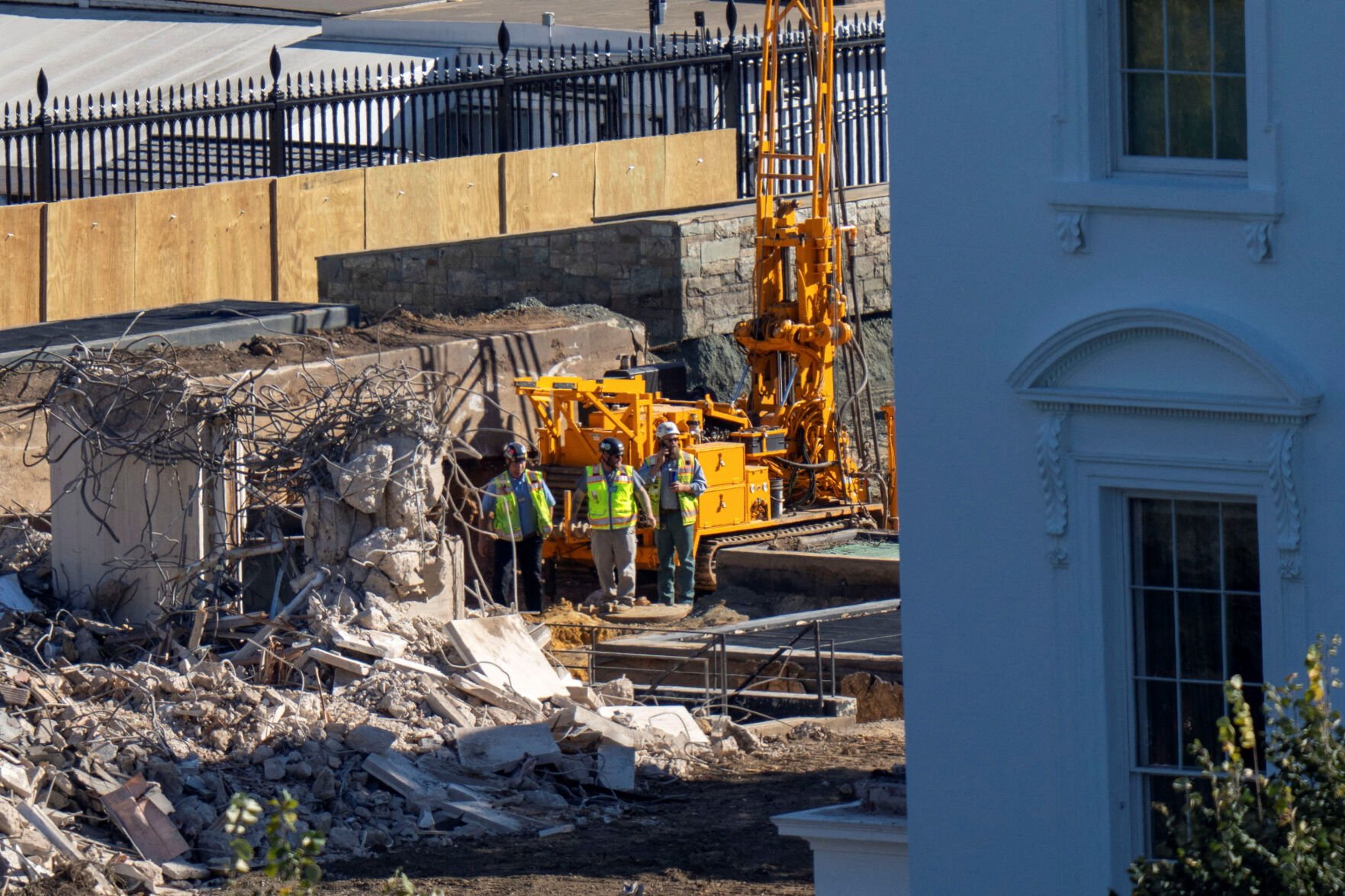
Senate Republicans are pushing $1 billion in White House security upgrades for President Donald Trump's ballroom project. A Republican bill released late Monday would give the U.S. Secret Service money for "security adjustments and upgrades" related to the ballroom. Trump and Republicans have been pushing the project since an incident last week at a media dinner where a man was charged with trying to assassinate the president. Republicans say the president needs the ballroom as a secure location to hold events. Democrats oppose funding the ballroom and The National Trust for Historic Preservation has sued to stop it.
President Donald Trump's administration appears to be recalibrating its centerpiece policy of mass deportations after a series of major immigration enforcement operations in American cities soured the public's mood on it. But that doesn't mean the Republican administration is giving up on its ambitious deportation goals. While the high-profile surges appear to have subsided for now, the Trump administration has quieter tools it can use to meet its targets. Immigrant advocates are bracing for the Trump administration to turn its attention more intently to stripping away protections for migrants with temporary legal status. Conservatives want more enforcement of workplace restrictions.
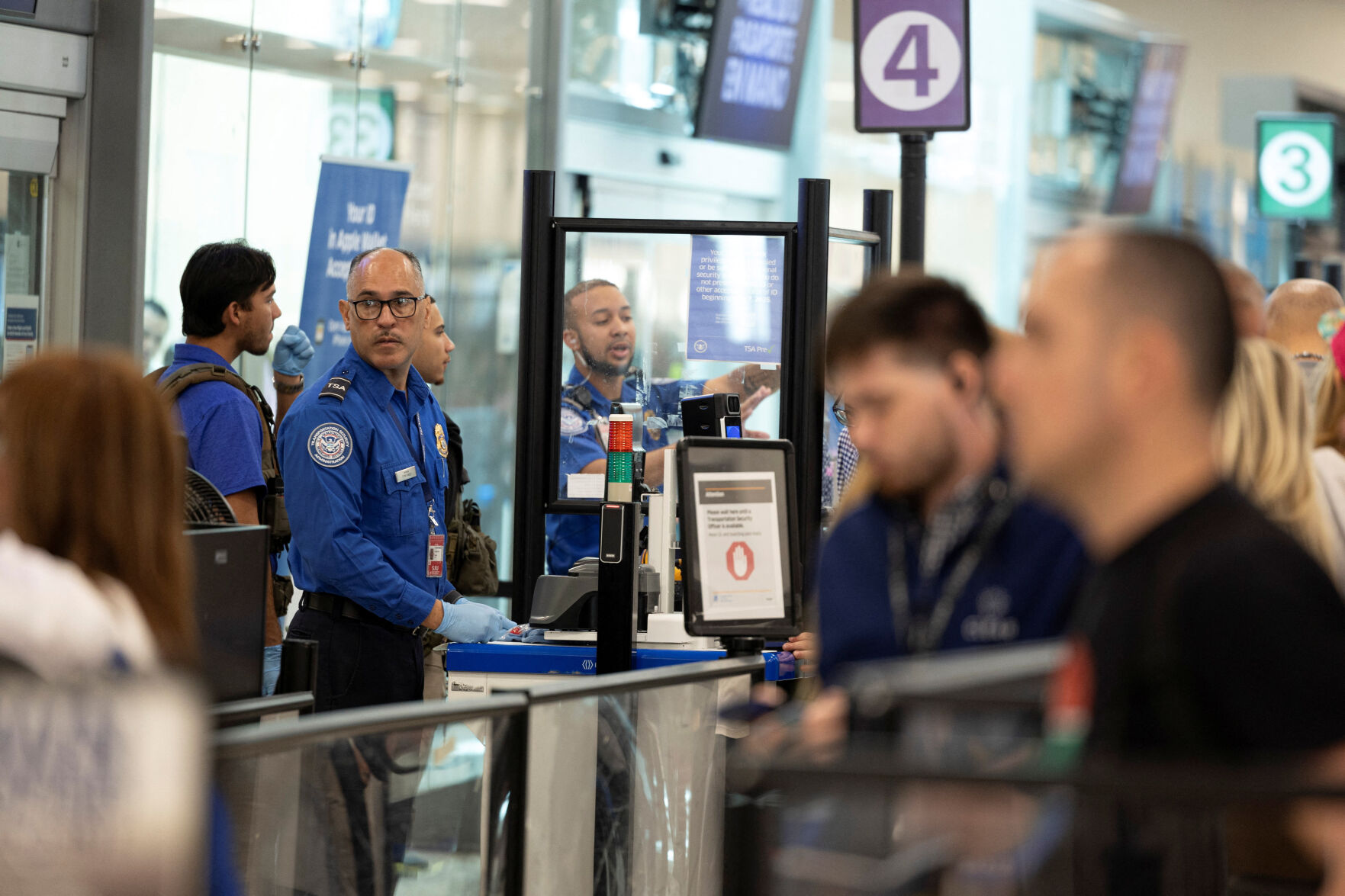
The White House is warning Congress that funds to pay Department of Homeland Security personnel will "soon run out." The Office of Management and Budget says in a Tuesday night memo that failure to pass legislation could spark new threats of airport disruptions and national security concerns. The House has come to a standstill as Speaker Mike Johnson and Republican lawmakers are tangled over various issues, including the Homeland Security funds. The memo could help the GOP leader pressure lawmakers to act. It says funding that President Donald Trump tapped to pay Transportation Security Administration and other workers through executive actions will be exhausted by May. An airline industry trade group urged Congress to act.
Some new U.S. Immigration and Customs Enforcement officers started working before passing background checks and had problems in their past. ICE announced in January that it completed an unprecedented hiring spree, adding 12,000 officers and agents to double its force. Their mission is to help carry out President Donald Trump's mass deportation campaign. But the speed with which they were brought on to the payroll, to jobs considered important for national security, has raised alarm. The Associated Press found one new ICE hire had filed for bankruptcy twice and worked for six law enforcement agencies in three years. Another was accused of lying in a police report to justify a felony charge against an innocent woman. A third quit his only prior policing job after three weeks.
By LISA MASCARO and KEVIN FREKING Associated Press
The White House is releasing details of President Donald Trump's 2027 budget, including a $1.5 trillion defense spending request. That's the largest of its kind in decades. The Republican president had indicated even before the war against Iran that he wanted to increase defense spending to modernize the military. He's also calling for a 10% cut in non-defense discretionary spending. The president's annual budget does not carry the force of law. Instead, it reflects an administration's priorities and provides a road map to Congress, which handles spending issues. But Congress is free to reject it and often does.
By KEVIN FREKING, JOEY CAPPELLETTI and COLLIN BINKLEY Associated Press
President Donald Trump says he'll soon sign an order to pay all Department of Homeland Security employees who have gone without paychecks during the partial government shutdown that has reached 48 days. He announced the unilateral move in a social media post Thursday. He's blaming Democrats for the impasse while thanking Republican leaders for their work this week in trying to end the standoff. The Republican president used a similar maneuver to resume pay for the Transportation Security Administration. Trump's latest intervention is expected to apply to other non-law enforcement employees at the department, including the Federal Emergency Management Agency and the U.S. Coast Guard and support staff.
By JOEY CAPPELLETTI and STEPHEN GROVES Associated Press
Updated
TMZ is turning its celebrity lens on Congress, tracking lawmakers on recess as a nearly six-week Department of Homeland Security shutdown drags on. Viral videos of senators in airports, Las Vegas and Disney World have fueled backlash and intensified pressure for lawmakers to return. That pressure now extends beyond social media, with unions and President Donald Trump all urging Congress back to Washington. But even if they return, there is no clear path to a deal. A bipartisan Senate agreement collapsed after House Republicans rejected it, leaving lawmakers at a deeper impasse and raising fresh questions about how — or whether — the standoff can end.
By KEVIN FREKING and STEPHEN GROVES Associated Press
House Speaker Mike Johnson and Senate Majority Leader John Thune have announced what they're calling a path forward to fully funding the Department of Homeland Security and ending a record partial government shutdown. According to the plan, most of the department could be funded through an agreement with Democratic senators, with the exception of U.S. Immigration and Customs Enforcement and U.S. Border Patrol. Republicans would then later try to fund those agencies through party-line budgeting legislation. Neither outcome is guaranteed, and the strategy certain to face opposition from Democrats, if not the GOP's own ranks.
By KEVIN FREKING, LISA MASCARO and JOEY CAPPELLETTI Associated Press
President Donald Trump has signed a promised executive action that will pay Transportation Security Administration employees, after a deal that sought to do the same stalled in Congress. Trump signed the action Friday with an eye toward easing long security lines at many of the nation's top airports. "America's air travel system has reached its breaking point," Trump said in the memo authorizing the payments. Homeland Security Secretary Markwayne Mullin says TSA workers "should begin seeing paychecks as early as Monday." Trump's action came after House Republicans rejected a Senate-passed bill to fund most of the Department of Homeland Security.