By CHRISTINE FERNANDO and GENE JOHNSON Associated Press
Updated
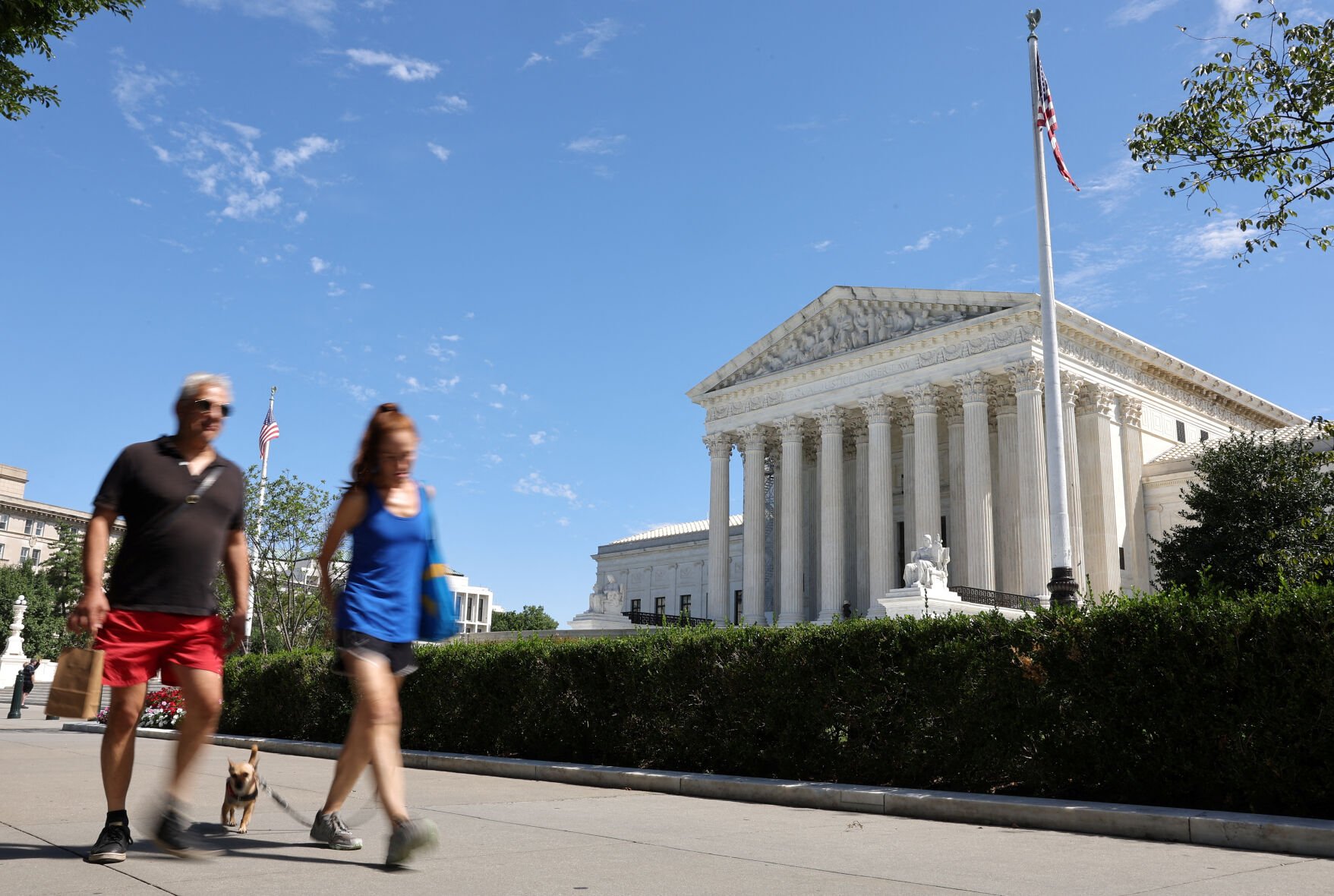
President Donald Trump's attempts to deploy the military in Democratic-led cities over objections of mayors and governors have brought a head-spinning array of court challenges and overlapping rulings. As the U.S. Supreme Court weighs whether to clear the way for the National Guard in Chicago, a federal judge on Wednesday said she would agree to extend a two-week block on Guard deployment in the Chicago area by 30 days. Meanwhile, a federal appeals court is hearing arguments in California Gov. Gavin Newsom's challenge to troop deployment in Los Angeles. Guard troops could also soon be on the ground in Portland, Oregon — pending legal developments there.
A federal appeals court says a California law requiring background checks to buy bullets is unconstitutional. Voters passed the law in 2016 and it took effect in 2019. The 9th Circuit Court of Appeals' ruling on Thursday upheld a 2024 decision by a lower court that found that the state law violates the Second Amendment. Last year, U.S. District Judge Roger Benitez decided that the law was unconstitutional because if people can't buy bullets, they can't use their guns for self-defense. Many states, including California, make people pass a background check before they can buy a gun. California went a step further by requiring a background check every time people buy bullets.
The Supreme Court has thrown out appellate rulings in favor of transgender people in four states following the justices' recent decision upholding a Tennessee ban on certain medical treatment for transgender youths. But the justices took no action Monday in cases from Arizona, Idaho and West Virginia involving the participation of transgender students on school sports teams. The court could say by Thursday whether it'll take up the issue in its next term. The high court ordered appellate judges to reexamine cases from Idaho, North Carolina, Oklahoma and West Virginia involving access to medical care and birth certificates. Those rulings all found violations of the Constitution's equal protection clause, the legal question raised in the Tennessee case.
The Supreme Court is allowing President Donald Trump's administration to enforce a ban on transgender people in the military, while legal challenges proceed. The high court acted Tuesday in the dispute over a policy that presumptively disqualifies transgender people from military service. The court's three liberal justices said they would have kept the policy on hold. Just after beginning his second term in January, Trump moved aggressively to roll back the rights of transgender people. Among the Republican president's actions was an executive order that claims the sexual identity of transgender service members "conflicts with a soldier's commitment to an honorable, truthful, and disciplined lifestyle, even in one's personal life" and is harmful to military readiness.
A federal appeals court won't lift an order barring the Trump administration from deporting Venezuelan migrants to El Salvador under an 18th century wartime law. A split three-judge panel of the U.S. Court of Appeals for the District of Columbia Circuit upheld a March 15 order temporarily prohibiting deportations under the Alien Enemies Act of 1798. President Donald Trump's administration has deported hundreds of people under a presidential proclamation calling the Tren de Aragua gang an invading force. The Justice Department appealed after U.S. District Judge James Boasberg blocked more deportations and ordered planeloads of Venezuelan immigrants to return to the U.S. That did not happen.
President Donald Trump is questioning the impartiality of the federal judge who blocked his plans to deport Venezuelan immigrants to El Salvador. Trump's criticisms come only hours before his administration will ask an appeals court to lift the judge's order. Just after midnight on Monday, President Donald Trump posted a social media message calling for Chief Judge James Boasberg to be disbarred. The judge, meanwhile, refused Monday to throw out his original order before an appeals court hearing for the case. Boasberg ruled that the immigrants facing deportation must get an opportunity to challenge their designations as alleged members of the Tren de Aragua gang.
TikTok is asking the Supreme Court to step in on an emergency basis to block the federal law that would ban the popular platform in the United States unless its China-based parent company agrees to sell it. Company lawyers and China-based ByteDance on Monday urged the justices to act before the law's Jan. 19 deadline. Content creators who rely on the platform for income and some of TikTok's more than 170 million users in the U.S. filed a separate plea. The companies say a shutdown lasting just a month would cause TikTok to lose about a third of its daily users in the U.S.