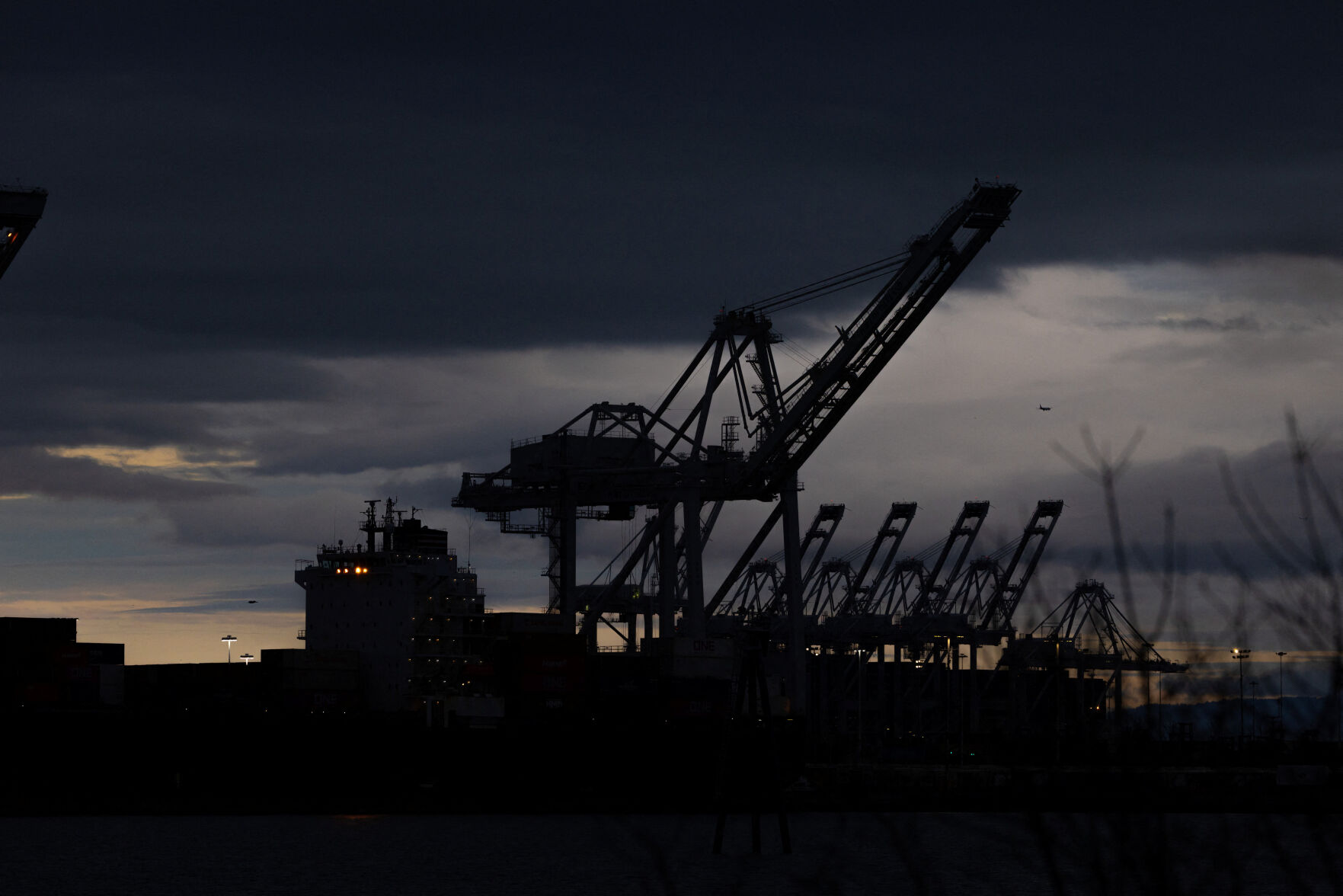
When the Supreme Court killed his favorite tariffs in February, President Donald Trump rolled out temporary import taxes to replace them. But those stopgap levies expire in less than three months. Now the administration is scrambling to put more durable tariffs in place to keep revenue flowing into the U.S. Treasury and to shore up the president's protectionist wall around the American economy. Starting this week, the government will begin hearings in two investigations — one on countries that lag in enforcing bans on forced labor, another on overproduction — that will likely lead to a new round of U.S. tariffs.
By PAUL WISEMAN and ANNE D'INNOCENZIO AP Business Writers
American employers unexpectedly cut 92,000 jobs last month, a sign that the labor market remains under strain. The unemployment rate blipped up to 4.4%. The Labor Department reported Friday that hiring deteriorated from January, when companies, nonprofits and government agencies added a healthy 126,000 jobs. Economists had expected 60,000 new jobs in February. Revisions also cut 69,000 jobs from December and January payrolls. The surprisingly weak employment picture in February adds to the economic uncertainty over the war with Iran, which has caused oil prices to surge and saddled business and consumers with unforeseen costs.
By LINDSAY WHITEHURST and PAUL WISEMAN Associated Press
Some two dozen states are challenging President Donald Trump's new global tariffs in court. On Thursday, the states filed a lawsuit over import taxes he imposed after a stinging loss at the Supreme Court. Democratic attorneys general leading the suit argue that Trump is overstepping his power with planned 15% tariffs on much of the world. Trump has said the tariffs are essential to address trade deficits. He imposed duties under Section 122 of the Trade Act of 1974 after the Supreme Court struck down tariffs he imposed last year under an emergency powers law. The new suit argues that law was intended to be used only in specific, limited circumstances.
President Donald Trump says the United States is talking with Cuba and raised the possibility of a "friendly takeover" of the island without explaining what that means. Trump told reporters on Friday that Secretary of State Marco Rubio is speaking with Cuban leaders at a "very high level," but the White House offered no further details. Trump suggested that Cuba is facing economic collapse. His comments come as Cuba says it is communicating with U.S. officials after a deadly shooting involving a Florida-registered speedboat in waters off the island. Rubio has said that investigators are looking into it.
By CHRISTOPHER RUGABER and PAUL WISEMAN Associated Press Writers
President Donald Trump sought in his first State of the Union address to sell Americans on the idea of a booming economy, falling prices, and soaring jobs, yet he faces a skeptical public with a much gloomier view. Barely 12 hours before his speech, in fact, The Conference Board, a business research group, released its latest consumer confidence report. It showed that overall confidence in the economy remains historically low, and is barely above the level it plunged to in the depths of the COVID recession. Other polling has yielded similar results: Only 39% of Americans approve of Trump's economic leadership, according to the latest Associated Press-NORC Center for Public Affairs Research survey.
President Donald Trump says he's imposing a temporary global tariff of 10% after his far-reaching tariff regimen was struck down by the Supreme Court. The court handed him a stinging loss on an issue crucial to his economic agenda. Trump says he's "absolutely ashamed" of justices who voted to strike down his tariffs, calling the decision "deeply disappointing." Friday's 6-3 decision centers on tariffs he unilaterally imposed under an emergency powers law, including the sweeping "reciprocal" tariffs levied on nearly every other country. Trump has called the case one of the most important in U.S. history. The new tariffs would come under a law that restricts them to 150 days.
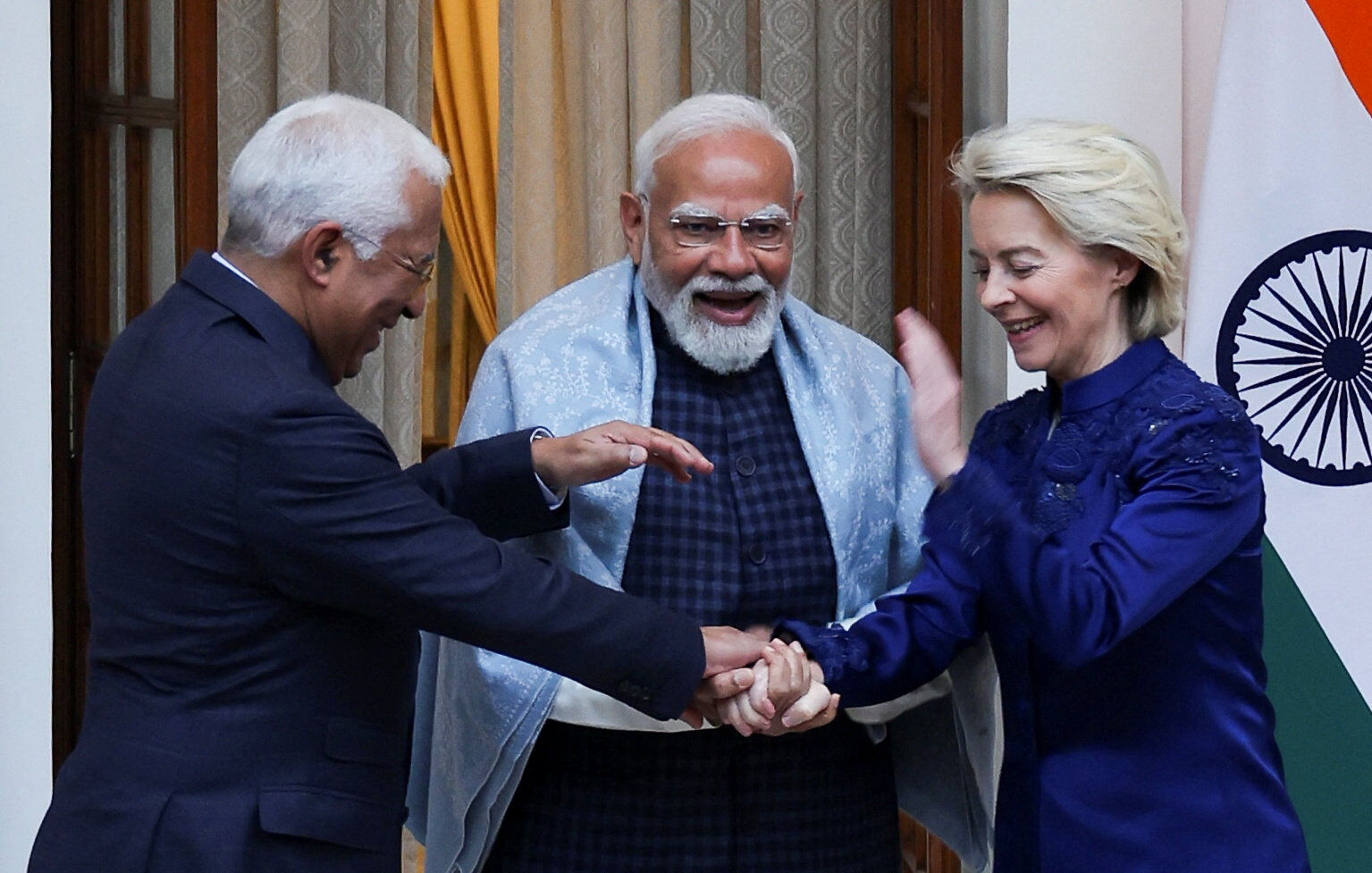
India and the European Union have reached a free trade agreement to deepen economic and strategic ties. The deal covers up to 2 billion people and was reached on Tuesday after nearly two decades of negotiations. It will likely take several months before the agreement takes effect. The deal represents 25% of global gross domestic product and a third of global trade. The agreement aims to lower tariffs, ease regulatory barriers and expand cooperation across goods and services. India will reduce tariffs on 96.6% of EU exports while the EU will reciprocate for nearly 99% of Indian shipments. The deal also includes a framework for deeper defense and security cooperation.
Russian President Vladimir Putin has held talks with Indian Prime Minister Narendra Modi at an annual summit, focusing on diversifying economic ties. The 23rd Russia-India Summit comes as the U.S. pushes for a Ukraine peace deal and global cooperation. On Thursday, Modi greeted Putin in New Delhi with a warm welcome. After the talks, both leaders announced a program to boost trade to $100 billion by 2030, emphasizing strong energy ties. India aims to bridge trade deficits by increasing exports. The U.S. is pressuring India to reduce its Russian oil imports, citing concerns over financing Moscow's war efforts.