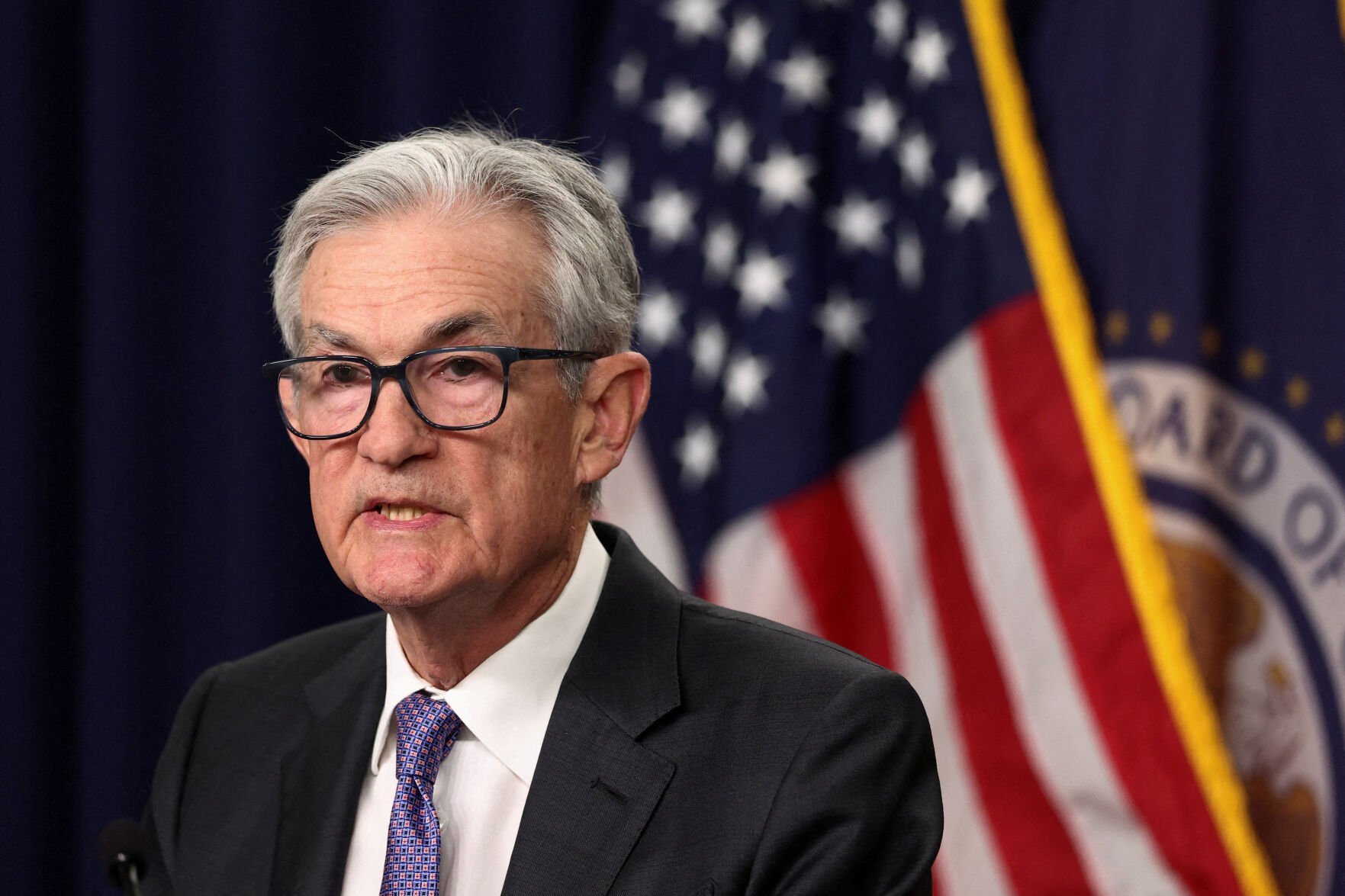
Jerome Powell isn't the first high-profile official to find himself targeted by the Justice Department since Donald Trump returned to the White House. The Republican president pledged in his inaugural address his government would apply the law fairly — unlike the way he said federal power had been turned against him. What's happened since is a string of indictments and inquiries and failed attempts at indictments against a long line of people who've crossed Trump. The list includes Federal Reserve governors who won't cut interest rates fast enough for Trump, former directors at the CIA and the FBI, and prosecutors who've investigated and even won cases against him.
By ERIC TUCKER, ALANNA DURKIN RICHER and MICHAEL KUNZELMAN Associated Press
Former FBI Director James Comey has pleaded not guilty in a criminal case that has highlighted the Justice Department's efforts to target adversaries of President Donald Trump. Comey's lawyers said Wednesday they plan to argue the prosecution is politically motivated and should be dismissed. The Comey case amplifies concerns Trump's Justice Department is being weaponized in pursuit of the Republican president's political enemies. Comey was arraigned at the federal courthouse in Alexandria, Virginia. Comey's indictment two weeks ago followed an extraordinary chain of events that saw Trump publicly implore Attorney General Pam Bondi to take action against Comey and other perceived adversaries. Comey's trial is set for Jan. 5.
By AAMER MADHANI, ERIC TUCKER and ALI SWENSON Associated Press
The Office of the Director of National Intelligence says it will dramatically reduce its workforce and cut its budget by more than $700 million annually. The move Wednesday amounts to a major downsizing of the responsible for coordinating the work of 18 intelligence agencies, including on counterterrorism and counterintelligence. Director of National Intelligence Tulsi Gabbard says the office "has become bloated and inefficient, and the intelligence community is rife with abuse of power, unauthorized leaks of classified intelligence, and politicized weaponization of intelligence." The reorganization is part of a broader administration effort to rethink how it tracks foreign threats to American elections, a topic that has become politically loaded.
By CHRIS MEGERIAN and ERIC TUCKER Associated Press
Updated
President Donald Trump faces ongoing questions about the Jeffrey Epstein case, overshadowing his administration's achievements. On Friday, reporters pressed the Republican president about pardoning Epstein's accomplice, Ghislaine Maxwell, but he deflected, emphasizing his administration's successes. Despite enacting significant policies, Trump's past ties to Epstein continue to stir controversy. Supporters demand transparency, believing Epstein's death in a New York jail cell six years ago hides a larger conspiracy. Administration officials who previously fueled theories now claim there's nothing more to reveal. Trump denies prior knowledge of Epstein's crimes and urges supporters to move on. But the Epstein case remains a challenging distraction.
By ERIC TUCKER and CHRIS MEGERIAN Associated Press
Updated
President Donald Trump is rehashing long-standing grievances over the Russia investigation that shadowed much of his first term. The Republican president lashed out Tuesday following a report from his intelligence director aimed at casting doubt on long-established findings about Moscow's interference in the 2016 election. Trump was not making his claims for the first time but delivered them when administration officials are harnessing the machinery of the federal government to investigate the targets of Trump's derision. A representative for former President Barack Obama, who Trump accused of treason, said the "bizarre allegations are ridiculous and a weak attempt at distraction."
By AAMER MADHANI, VLADIMIR ISACHENKOV and ZEKE MILLER Associated Press
The White House says President Donald Trump and Russian President Vladimir Putin have agreed on an immediate ceasefire for energy and infrastructure targets in the Russia-Ukraine war. Ukraine hasn't responded yet. The White House described the move Tuesday as the first step in a "movement to peace" that it hopes will eventually include a maritime ceasefire in the Black Sea and a full and lasting end to the fighting. The White House said negotiations would "begin immediately" on those steps. Trump and Putin held a call for more than an hour.
By AAMER MADHANI and CHRIS MEGERIAN Associated Press
President Donald Trump says he is "strongly considering" levying new sanctions and tariffs on Russia for its war against Ukraine. He's floating the possibility of applying new pressure on Moscow after the White House this week paused U.S. military aid and assistance to Kyiv. In a post on his Truth Social platform Friday, Trump said he is considering the action "based on the fact that Russia is absolutely 'pounding' Ukraine on the battlefield right now." The sanctions threat came as Trump faces criticism for increasing pressure on Ukraine to reach a deal while playing down or even denying Russia's responsibility for starting the war with its invasion three years ago.
From Iranian hacking to Russian influence campaigns, the 2024 presidential campaign is encountering a spate of efforts by foreign adversaries to weaken faith in the outcome and potentially alter the results. The Biden administration has moved aggressively in recent weeks to call out the operations in hopes of alerting Americans to remain vigilant to wide-ranging, often hidden, foreign efforts to influence their positions on hot-button positions and the candidates. The latest development came Wednesday when U.S. officials disclosed Iran's unsuccessful attempt to shop information stolen from the Trump campaign to his political adversary.
Donald Trump has changed his position on whether a presidential campaign's hacked materials should be published. In 2016 he cheered the Russian hacking of Hillary Clinton's campaign and the outlet that published some of the documents, Wikileaks. But this weekend the Trump campaign said it was hacked by Iran. It warned that any publication of its compromised documents would be doing what "America's enemies" want. The details on the current hack are murky but the compromised Clinton material was important in the 2016 campaign. Trump showed no compunction about publicizing it to win the White House.