
California is not only the nation’s most populous state; it’s also the nation’s most economically, ethnically, culturally and even geographica…
California is not only the nation’s most populous state; it’s also the nation’s most economically, ethnically, culturally and even geographica…

Young students are still struggling to bounce back academically from the pandemic, even though many were babies at the time. In new data from research and testing company NWEA, first and second graders are scoring below kids pre-pandemic in math and reading. Math scores have risen a little each year. Reading scores have stayed flat. Researchers say the problem looks bigger than impacts from the pandemic. They point to emerging data that suggest parents are reading less to kids. Some districts say stronger phonics lessons and frequent check-ins help reading recover. And some states are expanding pre-K to boost early literacy.

Thousands of school children have had their lives improved through the Charles Armstrong School in Belmont, which caters to those with dyslexia.

It’s the most wonderful time of the year (cue Andy Williams). We are all getting accustomed to the apparently beneficial time change, dressing…
Every day, the second floor of the Redwood City Public Library is filled with the turning of pages and quiet buzz of conversation as tutors an…

A new California law is pushing for phonics-based reading instruction in elementary and middle school classrooms. The law provides training for school principals and reading specialists in the "science of reading," a method focused on vocabulary, comprehension and sounding out words rather than learning words by sight. The approach has led to improved reading scores in Mississippi, Louisiana and districts like Los Angeles Unified, which adopted it several years ago. The law also updates the state's list of textbooks, flash cards and other classroom reading materials to align with a phonics-based approach. The legislature passed the bill unanimously after it was made optional for schools to adopt phonics as a learning method.

Five years after the COVID pandemic closed schools and pushed students into a year of distance learning, California test scores show that — de…
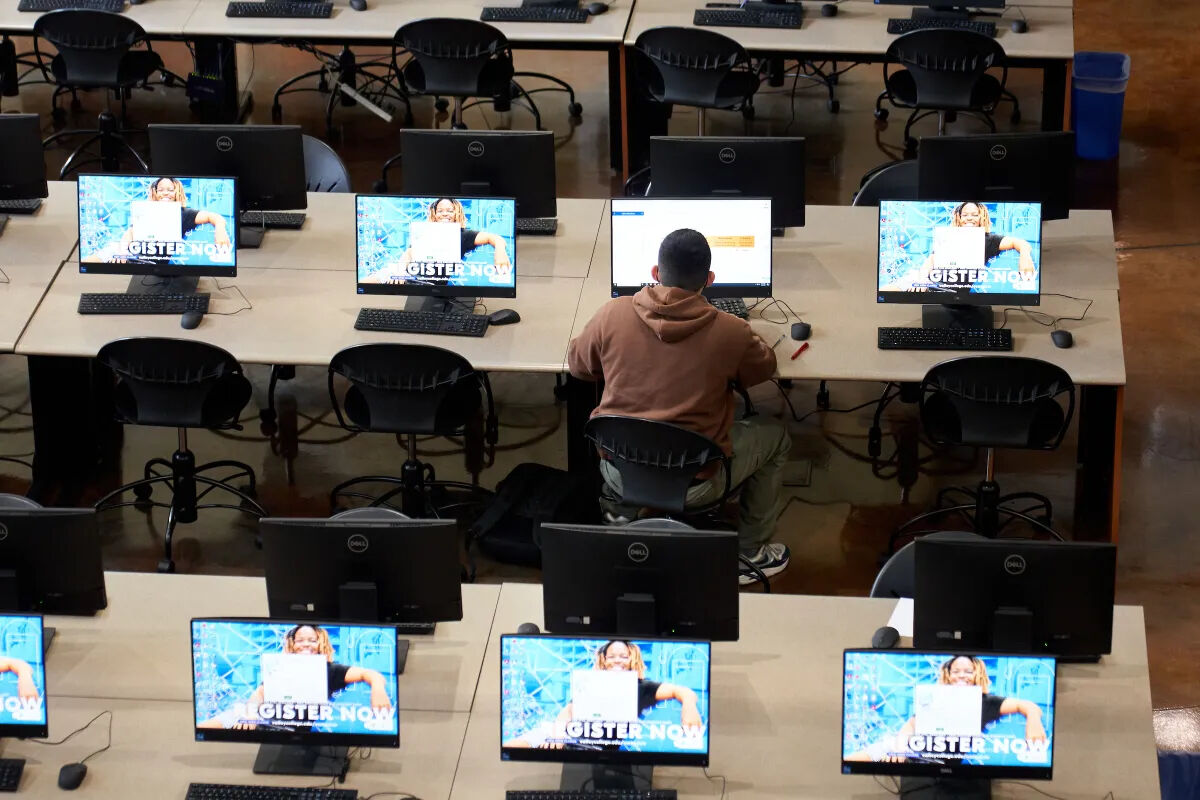
High school and college educators say that student use of artificial intelligence has become so widespread that they need to rethink how to assign and assess students. Many teachers have shifted all writing to the classroom. Some are returning to pen and paper exams to avoid cheating. As the new school year gets underway, educators say it's clear that AI is transforming how students learn and study and how teachers teach. But it is also creating new confusion over what constitutes cheating. Students say they often turn to AI with good intentions for things like brainstorming or editing help but sometimes it's hard to know where to draw the line.

Schools are still required under federal and state law to help students who don’t speak English to both learn the language and understand the …
A few months ago, at the dinner table, my dad asked my sister and me what books we had read that year for school. My sister, who was in her fr…