By MARK SHERMAN, GEOFF MULVIHILL and MATTHEW PERRONE Associated Press
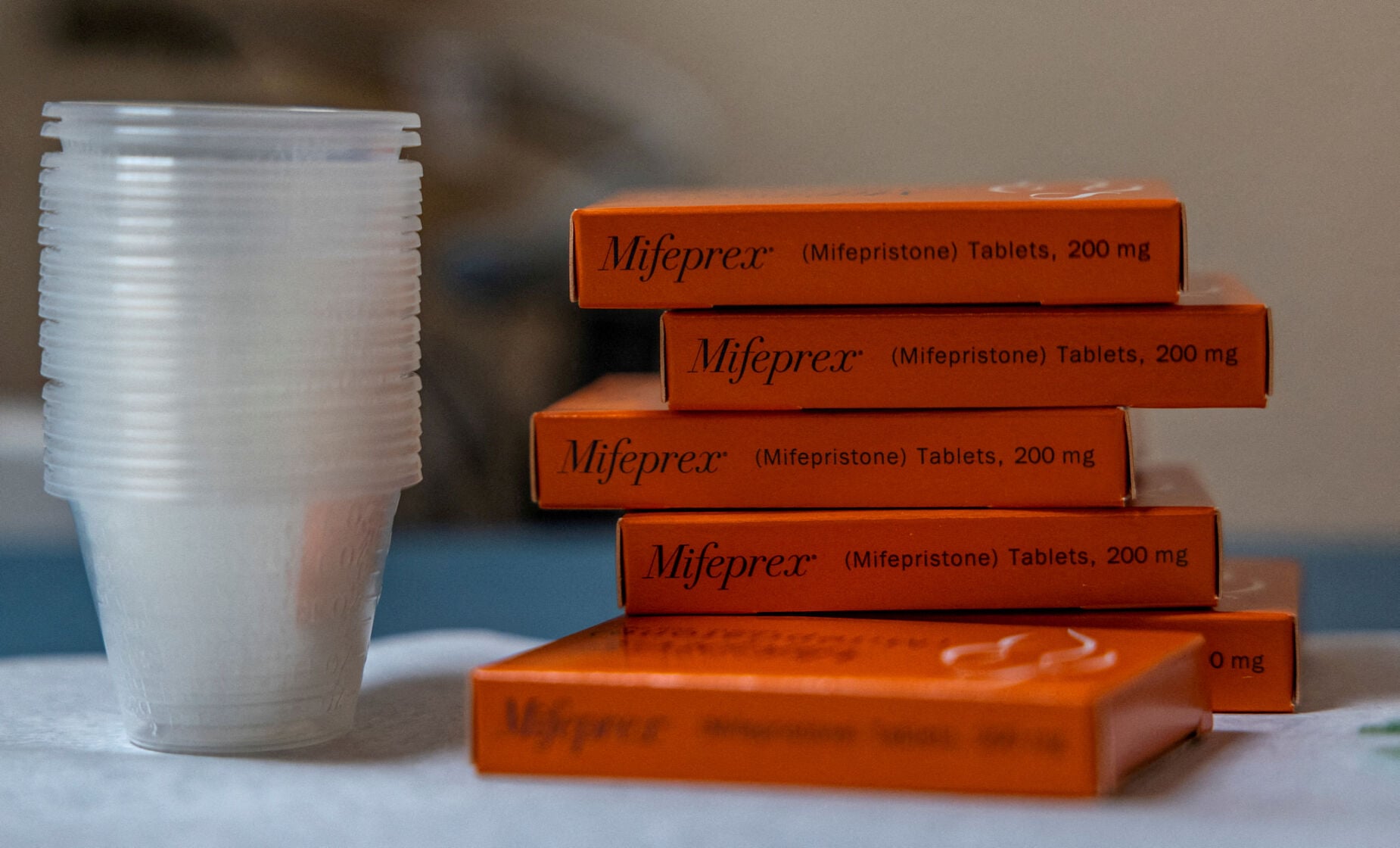
The Supreme Court is leaving women's access to a widely used abortion pill untouched until at least Thursday, while the justices consider whether to allow restrictions on the drug, mifepristone, to take effect. Justice Samuel Alito's order Monday allows women seeking abortions to continue obtaining the pill at pharmacies or through the mail, without an in-person visit to a doctor. It prevents restrictions on mifepristone imposed by a federal appeals court from taking effect for now. The court is dealing with its latest abortion controversy four years after its conservative majority overturned Roe v. Wade and allowed more than a dozen states to effectively ban abortion outright. Louisiana leads the current challenge.
By MARK SHERMAN and GEOFF MULVIHILL Associated Press
The Supreme Court has restored broad access to the abortion pill mifepristone, blocking a ruling that had threatened to upend one of the main ways abortion is provided across the nation. The order issued Monday allows women seeking abortions to obtain the pill at pharmacies or through the mail, without an in-person visit to a doctor. Those rules had been in effect for several years until a federal appeals court imposed new restrictions last week. Most abortions are obtained with medication, normally mifepristone and a second drug, misoprostol. The availability of those drugs has made abortion accessible to women in states with bans. Louisiana sued, saying mifepristone's availability undermined the ban there.
Vice President JD Vance is encouraging anti-abortion activists to celebrate progress in limiting abortion. Vance highlights the Trump administration's achievements, including expanding a ban on U.S. foreign aid for groups that support abortion services. Vance spoke Friday at the annual March for Life in Washington, emphasizing the importance of increasing birth rates in the U.S. The Republican vice president also praises the Supreme Court's 2022 decision overturning Roe v. Wade and President Donald Trump's leadership in appointing conservative jurists. The March for Life has become more celebratory since that Supreme Court ruling.
On Jan. 22, 1973, the U.S. Supreme Court, in its Roe v. Wade decision, declared a nationwide constitutional right to abortion. (The court would overturn Roe v. Wade in 2022, in the decision Dobbs v. Jackson Women's Health Organization.)
Federal health officials have approved another generic version of the abortion pill, prompting outrage from abortion opponents. Anti-abortion groups quickly criticized the move on Thursday, calling it a "stain" on the Trump administration. The groups have been pushing for a safety review of mifepristone. The FDA first approved the drug as safe and effective in 2000. The new version of the pill is from drugmaker Evita Solutions. It's not the first generic version, which the FDA approved in 2019.
On June 24, 1983, the space shuttle Challenger — carrying America's first woman in space, Sally Ride — coasted to a safe landing at Edwards Air Force Base in California.
A new report finds that the number of abortions in the U.S. grew in 2024 as more women obtained pills through telehealth. The latest WeCount project for the Society of Family Planning finds that 1 in 4 abortions uses medications prescribed by a provider who does not see the patient in person. That is up from 1 in 20 in the months before the U.S. Supreme Court overturned Roe v. Wade in 2022. The number may explain why another recent study found that fewer women crossed state lines for abortion in 2024 than the year before.
By SARA CLINE and GEOFF MULVIHILL Associated Press
A New York doctor has been indicted by a Lousiana grand jury for allegedly prescribing an abortion pill online in the Deep South state, which has one of the strictest near-total abortion bans in the country. Dr. Margaret Carpenter and her company, Nightingale Medical were charged on Friday with criminal abortion by means of abortion-inducing drugs, a felony. The case appears to be the first instance of criminal charges against a doctor accused of sending abortion pills to another state, at least since the U.S. Supreme Court overturned Roe v. Wade in 2022 and opened the door for states to have strict anti-abortion laws.