
On May 1, 2011, President Barack Obama announced the death of Osama bin Laden during a U.S. commando operation, which took place in Abbottabad, Pakistan in the early morning hours of May 2 local time.
On May 1, 2011, President Barack Obama announced the death of Osama bin Laden during a U.S. commando operation, which took place in Abbottabad, Pakistan in the early morning hours of May 2 local time.

Pope Leo XIV has carried a wooden cross at the Colosseum to mark his first Good Friday as pontiff. This is the first time in decades a pope has carried the cross to every station of the Way of the Cross. Speaking earlier, Leo emphasized the importance of spiritual leadership and carrying the world's suffering in prayer. Thousands gathered to follow the stations recited over loudspeakers. The meditation, prepared for Leo's first Good Friday, highlighted the responsibility of those in power.
On April 2, 2005, John Paul II, the Polish pope born Karol Józef Wojtyła, died in his Vatican apartment at age 84. The first non-Italian pope in over 450 years, John Paul II became one of the most influential leaders of the late 20th and early 21st centuries while playing a crucial role in the fall of communism in Europe and the former Soviet Union.
On Oct. 16, 1962, the Cuban missile crisis began as President John F. Kennedy was informed that reconnaissance photographs had revealed the presence of Soviet nuclear missile sites in Cuba.
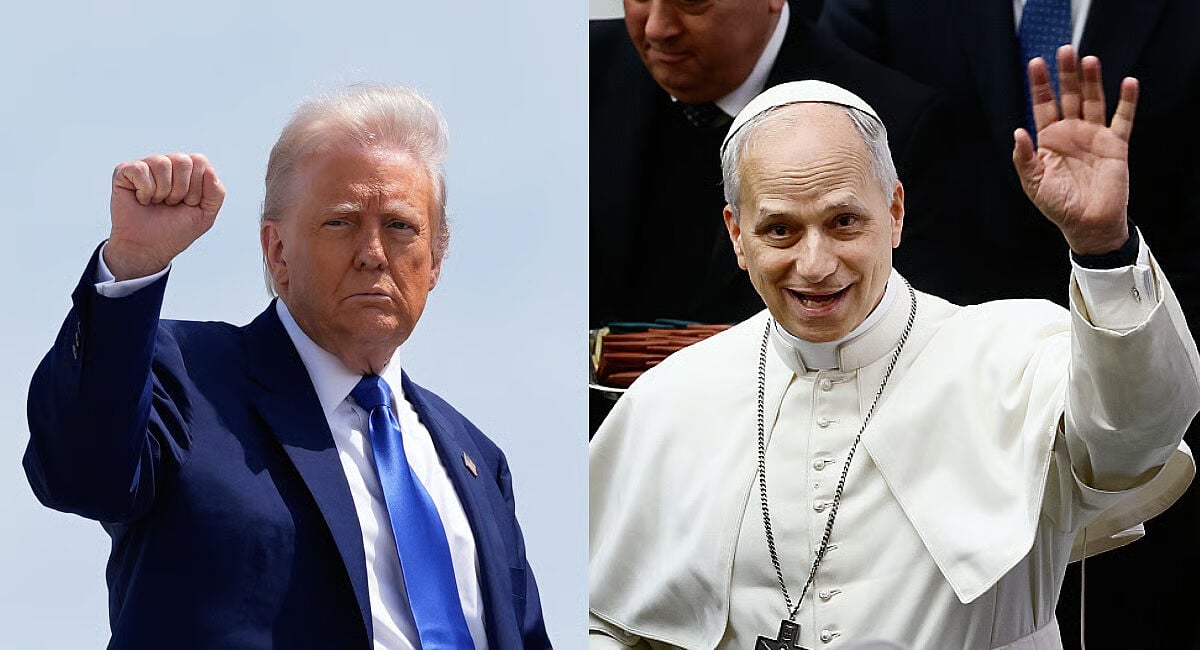
The contrast between President Donald Trump and Chicago-born Pope Leo XIV couldn't be more stark, politically, personally or in their world views. They lead in different roles and realms. But Leo's historic election last week to lead the world's 1.4 billion Catholics as the first U.S.-born pope means that the two most powerful people on the planet are Americans. That raises questions about American influence at a time when Trump's tariff wars and "one way or the other" threats have upended eight decades of global order and sparked distrust among allies toward the U.S. The prospect of too much American power in geopolitics is considered one reason that the Catholic Church had never elected an American to the papacy.
Black smoke has poured out of the Sistine Chapel chimney, indicating no pope was elected on the first ballot of the conclave to choose a new leader of the Catholic Church. The smoke billowed out at 9 p.m. Wednesday, some four hours after 133 cardinals solemnly entered the Sistine Chapel, took their oaths of secrecy and formally opened the centuries-old ritual to elect a successor to Pope Francis to lead the 1.4 billion-member church. With no one securing the necessary two-thirds majority, or 89 votes, the cardinals will retire for the night to the Vatican residences where they are being sequestered. They return to the Sistine Chapel Thursday morning.

Three days of public viewing of Pope Francis' body by ordinary mourners and statesmen alike have ended and the pontiff's coffin sealed. Francis died on Monday at age 88 after suffering a stroke. The Vatican said Friday that around 250,000 mourners filed through St. Peter's Basilica over the three days to pay their last respects as Francis lay in state in a simple wooden coffin. Hundreds of disappointed people were turned away when authorities closed St. Peter's Square hours before the viewing period ended. Francis will be buried after a funeral Mass on Saturday.

The Vatican says Pope Francis has shown further slight improvement as he battles double pneumonia, but doctors still say his prognosis is still guarded. A CT chest scan taken Tuesday evening showed the "normal evolution" of an infection as it is being treated. Blood tests have confirmed an improvement, according to the Vatican's late update. The slight kidney insufficiency detected a few days ago has receded, and Francis is continuing to receive respiratory physiotherapy. It was the first time the Vatican has said Francis was receiving physiotherapy to help him expel fluid from his lungs. Francis resumed work in the afternoon, after receiving the Eucharist in the morning.

The Vatican says Pope Francis remains in critical condition but has shown slight improvement in laboratory tests. He has resumed some work activities, including calling a parish in Gaza City that he has kept in touch with since the war there began. The Vatican's evening bulletin was more upbeat than in recent days. It said the 88-year-old Francis. suffering from pneumonia in both lungs, hadn't had any more respiratory crises. The slight kidney insufficiency detected on Sunday was of no concern. He is continuing to receive supplemental oxygen and doctors say his prognosis remains guarded. He received the Eucharist in the morning and resumed working in the afternoon.
Today in history: On Oct. 16, 1962, the Cuban Missile Crisis began as President John F. Kennedy was informed that reconnaissance photographs had revealed the presence of nuclear missile bases in Cuba.


