Medical evacuees from Gaza have entered Egypt as the Rafah crossing reopens, but few Palestinians will be allowed to cross in either direction daily. Monday's opening is a key step in the ceasefire between Israel and Hamas but mostly symbolic. About 20,000 Palestinian children and adults needing medical care hope to leave devastated Gaza via the crossing, according to Gaza health officials. Thousands of other Palestinians outside the territory hope to enter and return home. It was unclear if anyone was allowed into Gaza on Monday. The crossing had been closed since Israeli troops seized it in May 2024.
Israel says it will reopen Gaza's border crossing with Egypt in both directions over the weekend. The move announced on Friday will allow Palestinians to enter and leave the territory after nearly two years of near-complete closure. The Israeli military body in charge of coordinating aid to Gaza said in a statement Friday that "limited movement of people only" would be allowed. The reopening of the Rafah crossing on Sunday will mark an important step forward for U.S. President Donald Trump's Gaza ceasefire plan. The crossing is Gaza's main gateway to the outside world. It has been largely closed since May 2024.
By WAFAA SHURAFA and TOQA EZZIDIN Associated Press
A Gaza Health Ministry official says Israel has turned over the bodies of 15 Palestinians just days after recovering the remains of the last Israeli hostage. The transfer on Thursday marks the last hostage-detainee exchange between Israel and Hamas. The return of all remaining hostages living or dead had been a key part of the first phase in the ceasefire that paused the war in October. A spokesperson at Gaza's health ministry says the bodies handed over Thursday were taken to Shifa Hospital in Gaza City. It comes after Israel announced Monday it found and identified the remains of the last Israeli hostage at a cemetery in northern Gaza.
By SAM METZ, WAFAA SHURAFA, SAMY MAGDY and MELANIE LIDMAN Associated Press
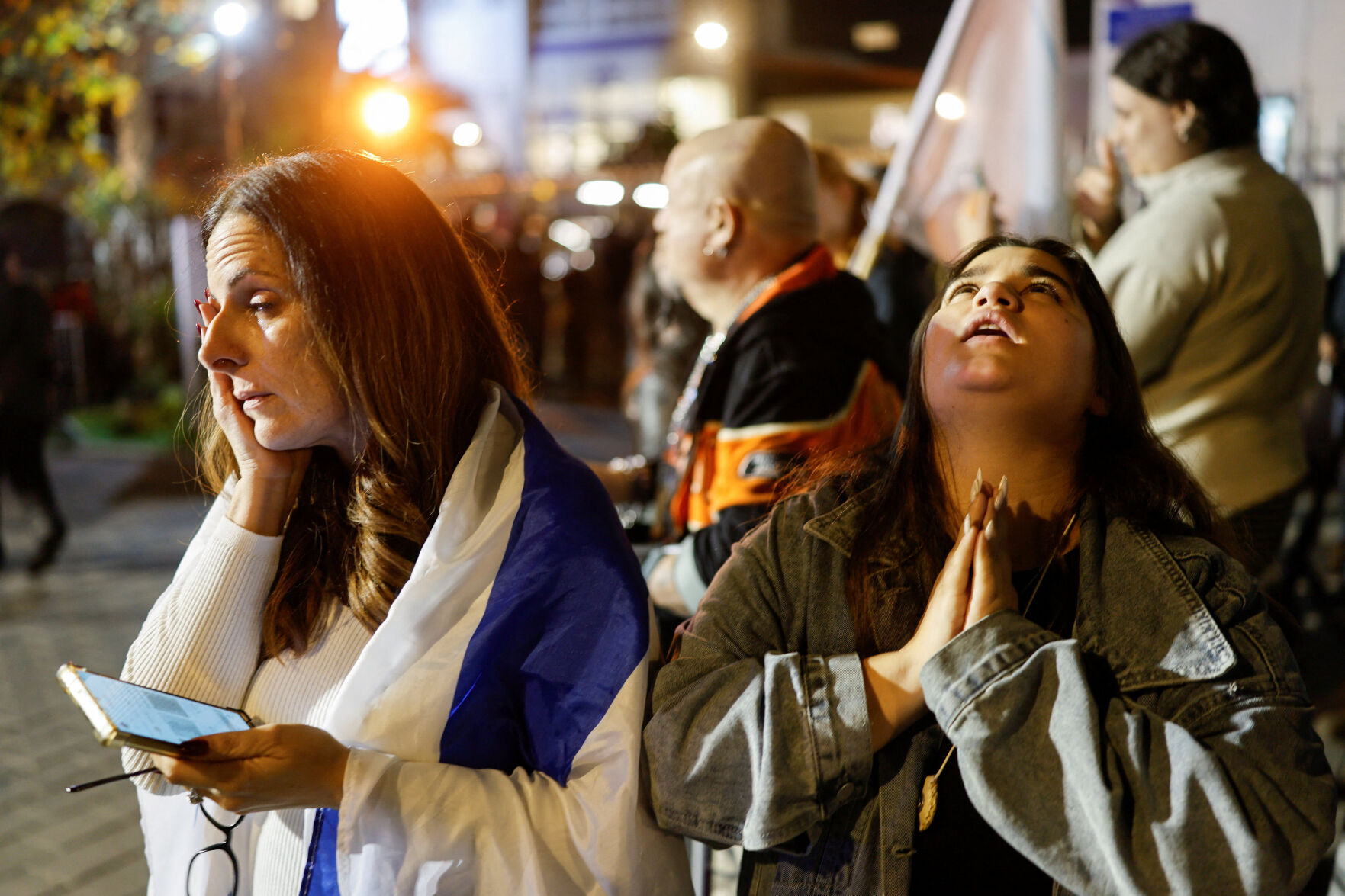
Israel is marking the end of a painful chapter after the return of the remains of the last hostage held in Gaza. Across the country, people removed yellow pins from their lapels and marked what many described as the fulfillment of a pledge to "bring them all home." The return of Ran Gvili, a 24-year-old police officer, followed days of forensic work in northern Gaza, where teams combed a cemetery to locate, exhume and identify his remains, drawing on search units, intelligence officers and forensic dentists. Prime Minister Benjamin Netanyahu said Tuesday that Israel will reopen Gaza's border crossing with Egypt in both directions, but he did not say when.
Israel says the remains of the final hostage in Gaza have been recovered, clearing the way for the next phase of the ceasefire that stopped the Israel-Hamas war. Monday's announcement came a day after Israel's government said the military was conducting a "large-scale operation" in a cemetery in northern Gaza to locate the remains of Ran Gvili. The return of all remaining hostages, living or dead, has been a key part of the Gaza ceasefire's first phase. Gvili's family had urged Israel's government not to enter the second phase until his remains were recovered and returned. Hamas says it now has committed to all terms of the ceasefire's first phase.
By JOSH BOAK, AAMER MADHANI and WILL WEISSERT Associated Press
Ukrainian President Volodymyr Zelenskyy has announced after speaking with President Donald Trump in Davos, Switzerland, two days of trilateral meetings involving the U.S., Ukraine and Russia. Zelenskyy says those meetings start Friday in the United Arab Emirates. Zelenskky met with Trump on Thursday in Davos during the World Economic Forum. Trump has struggled to get Zelenskyy and Russia's Vladimir Putin to agree to terms to end their nearly 4-year-old war. Also Thursday, Trump inaugurated his Board of Peace to try to maintain a ceasefire in Israel's war with Hamas, but many U.S. allies are opting out. Trump aims to map a future for Gaza, but those efforts have largely been overshadowed by his efforts to take Greenland.
Divisions have emerged over U.S. President Donald Trump's Board of Peace as its ambitions have grown beyond Gaza. Some Western European countries are declining to join, others are remaining noncommittal and a group of Muslim countries has agreed to sign on. The developments underscore European concerns over the expanded and divisive scope of the project. Some say it may seek to rival the U.N. Security Council's role in mediating global conflicts. Trump is looking to form the board officially this week on the sidelines of the World Economic Forum meeting in Davos, Switzerland. Norway and Sweden said they won't accept their invitations, after France also said no.
Israeli forces have targeted two United Nations facilities as part of their crackdown on the U.N. agency for Palestinian refugees. On Tuesday, crews bulldozed the United Nations Relief and Works Agency's offices in Sheikh Jarrah and fired tear gas at a vocational school in Qalandia. The agency's West Bank director, Roland Friedrich, said this marks the culmination of two years of measures against UNRWA in east Jerusalem. Israel's Foreign Ministry said the demolition enforced a new law banning UNRWA, claiming the agency has ties with militant groups. The U.N. has denied these claims. Israel has long claimed the agency has an anti-Israel bias, often with little evidence.
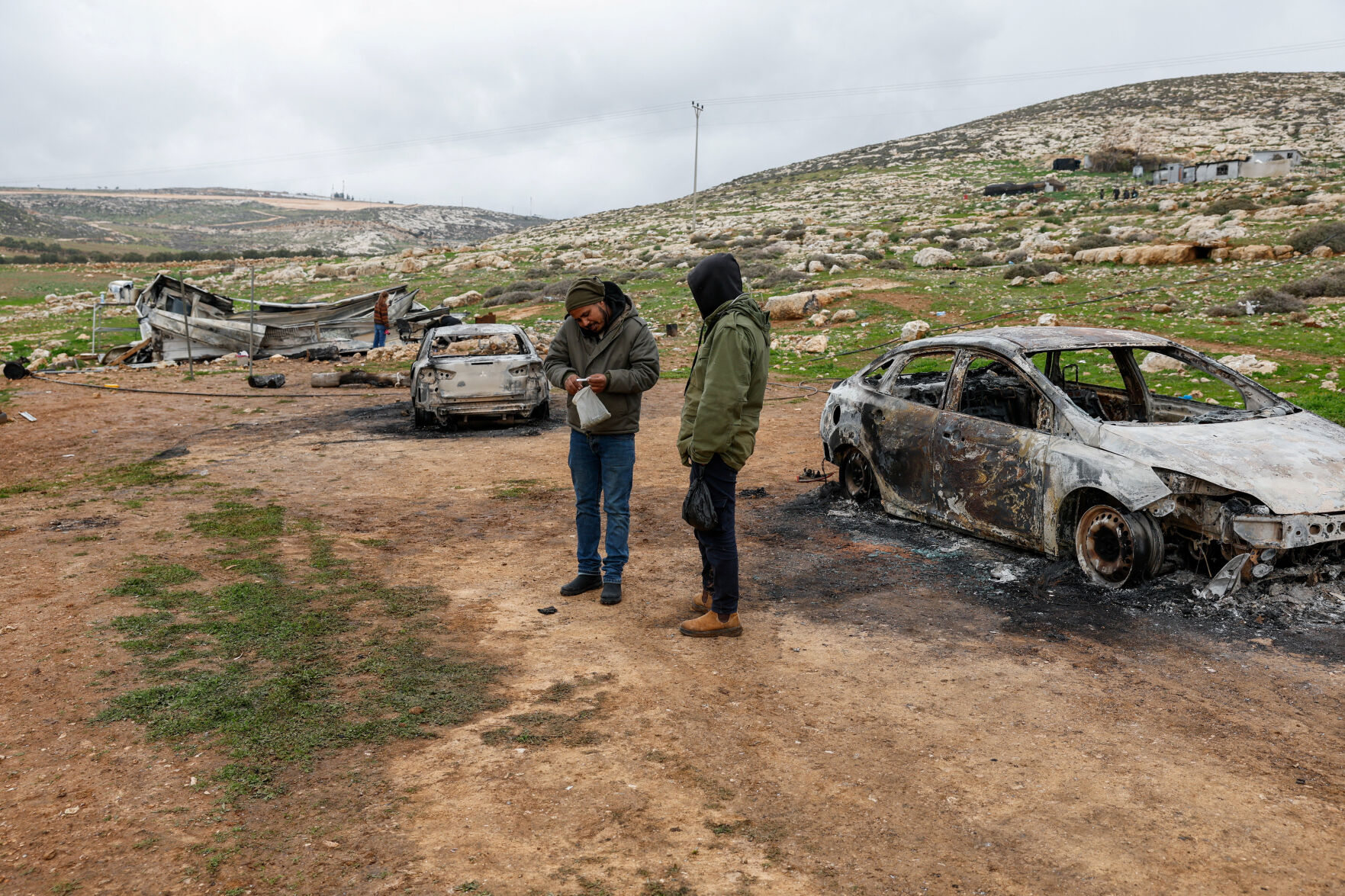
Israeli settlers are celebrating the inauguration of a new settlement in the West Bank on land where Israel and the U.S. once hoped to build a hospital for Palestinian children. The new settlement is called Yatziv and it was inaugurated on Monday at a ceremony attended by key settler leaders, including Israeli Finance Minister Bezalel Smotrich. To settlers, the site is emblematic of how far their movement has come and how emboldened they are now under Prime Minister Benjamin Netanyahu's far-right government and with President Donald Trump in office. Palestinians nearby say the land was originally theirs and the ever-expanding construction hems them in and makes it nearly impossible to establish a viable independent state.
Israeli strikes in central Gaza have killed eight people, including three women, following the U.S. announcement of a second phase in the fragile ceasefire. Israeli Prime Minister Benjamin Netanyahu called the ceasefire largely symbolic, questioning its implementation. The announcement marked progress but left many questions unanswered, including the composition of a proposed Palestinian governing committee and the deployment of international forces. Palestinians in Gaza expressed skepticism about changes on the ground, citing ongoing violence and hardships. The second phase of the ceasefire faces challenges, including disarming Hamas and transitioning governance. Reconstruction is expected to take years and cost over $50 billion.